
In this context, strengths and limitations of the open world can be summarized as follows:
| Aspect | Strengths | Areas for improvement |
|---|---|---|
| Ovum and shell search | Variety of zones and rewarding incentives | Sometimes cluttered vision, difficult orientation |
| Map and directions | Immersive atmosphere and clear progression logic | Lack of precise indicators, improvable |
| Lore/environment integration | Coherent atmosphere and subtle narrative | Exploration sometimes laborious due to topography |
The developers have indicated that some adjustments and patches could be released shortly after launch, suggesting a gradual improvement of the experience, notably in navigation and encounter balancing.
For those who appreciate open Soulslikes, this map represents a promising playground with potential to be developed.
Builds and strategic diversity: why shells transform the experience
One of the most praised elements of this sequel is the richness brought by the mortal shells system. With eight shells available, compared to four in the first installment, the variety explodes. Each offers specific stats, skills, and equipment limits which greatly influence playstyle.
This multiplicity encourages players to devise various setups or “builds” rather than sticking to a single, universal mechanic. For example, some shells favor speed and aggression, while others provide better resistance or enhanced defensive capabilities. Furthermore, since some tarstones can only be equipped on certain shells, optimization becomes a more complex and rewarding quest.
This diversity also translates into the frontal tactical approach, but also in weapon choice and combat management. By adapting their shells and tarstones, each player can find their path and rhythm, thus offering extended replayability.
Here are the concrete advantages of builds based on shells:
- Exploration of varied styles: each shell changes the way enemies are approached
- Strategic combinations: shell-specific tarstones reinforce customization
- Non-linear progression: changing shell opens new play tones
- Creativity stimulation: invent synergies between skins, spells, and weapons
This mechanic proves particularly enriching for Soulslike fans seeking a renewed challenge and a progression logic deeper than simple “grind”.
Mortal Shell II: overall positive critical reception but a difficulty that divides
The overall evaluation of the game confirms its success with critics and players, even though some reservations remain about certain elements. The game receives high scores, with 8/10 at IGN, 4/5 on Eurogamer, 8/10 at GameSpot, and a very good 9/10 on Shacknews. On Steam, player reception remains positive with 78% favorable reviews from over 5,700 feedback entries.
Despite these encouraging indicators, some feedback points to the sometimes frustrating difficulty and the punitive nature of certain encounters, reinforced by the disappearance of the stamina bar. This tension shifts the difficulty, with heavy consequences for errors in combat.
The controversy around the challenge also arises in the perception of the open world, its level of guidance and repeated navigation. While some praise the depth and complexity, others regret the obstacles related to ergonomics and gameplay comfort. These opinions highlight differing expectations, depending on whether one seeks a strictly hardcore Soulslike or a more accessible experience.
This table presents the key assessments from critics:
| Criterion | Strengths | Expressed reservations |
|---|---|---|
| Gameplay and combat | Tense pace, innovative stamina-less system | Punitive difficulty, delicate error management |
| Exploration and universe | Immersion and captivating atmosphere | Confusing navigation, improvable map |
| Playtime | About 35 hours, rich content | Some zones considered repetitive |
This feedback shows that Mortal Shell II establishes itself as an ambitious proposal in the Soulslike world in 2026, recommended for those ready to invest in demanding gameplay, rewarding patience, attention, and adaptation.
Mortal Shell II has established itself today as a must-play Soulslike, recognized for its innovative gameplay while sparking passionate debates. From its release, the video game developed by Cold Symmetry attracted attention thanks to several key elements:
- A redesign of the combat system without a stamina bar, making the action more intense and aggressive
- Exploration rewarded by collecting mortal shells and ovum, embedding the adventure in an immersive narrative
- A generous playtime nearing 35 hours, offering players a dark universe to explore in depth
- Overall positive critical reception, but divided over certain game design choices and difficulty
We will break down these aspects in detail to understand why Mortal Shell II fascinates as much as it divides, by analyzing the mechanics, universe, narrative structure, and community feedback.
The reinvented combat of Mortal Shell II: between aggressiveness and renewed strategy
One of Mortal Shell II’s major innovations lies in the removal of the stamina bar, a fundamental element traditionally present in Soulslikes. This decision radically changes the pace of battles. Eliminating the stamina gauge drives a smoother and faster combat dynamic, shifting the player’s tension towards a heightened management of attack animation timing.
In classic Soulslikes, every hit or dodge is measured by the rhythm of the stamina bar, imposing strict resource management and strategic pauses. Mortal Shell II breaks this mechanic, encouraging players to adopt a more offensive and bold style. The fights gain in liveliness but lose in margin for error. For example, a heavy attack, often slower, becomes riskier to use because of the lack of possibility to interrupt it, what is called “cancel out”.
In practice, this means mistakes can be punished quickly, creating a different tension: the player must anticipate without relying solely on their stamina bar. This setup favors a more instinctive and nervous approach, compatible with the quest for a Soulslike that remains demanding without being black-and-white.
To illustrate this renewal, specialized critics often mention a feeling of heightened immersion and control. IGN highlights this fluidity which breathes new life into the genre, while GameSpot gives an 8/10 rating praising the mastery of this change.
Here is a comparative summary of the combat mechanics:
| Mechanic | Original Soul | Mortal Shell II |
|---|---|---|
| Presence of stamina bar | Yes, mandatory for each movement | No, continuous action without resource to manage |
| Combat pace | Calculated, cautious | Aggressive, tense |
| Error management | Wider thanks to stamina management | More punitive, costly errors |
| Recommended style | Strategic and defensive | Offensive and instinctive |
This change marks a notable evolution in the tactical approach and invites players to rethink how they face the bestiary and bosses. The absence of stamina, combined with the importance of animations, offers a refined challenge worthy of a detailed analysis of the techniques to master.
The dark universe and immersive narration: a Soulslike that tells a story to discover
Mortal Shell II is not limited to its combat mechanics; it is set in a dark universe, a devastated world where warriors of the past become relics. The player embodies The Harbinger, a silent character engaged in a precise quest: to collect the ovum scattered throughout the ruined regions to bring them back to Marrow Keep.
The ovum quest structures the exploration. These elements act both as objectives and justification for the hunt for mortal shells — the physical bodies of legendary fighters that The Harbinger can embody to modify their playstyle. Each shell has unique characteristics and allows certain combinations of weapons or skills called tarstones, which cannot be equipped indiscriminately. This mechanic encourages thoughtful progression and experimenting with various directions, making each discovery valuable.
The universe is composed of a fragmented narrative thread, left to interpretation, where collected objects, weapons, and curiosities gradually reveal an enigmatic story. This approach intrigues and encourages attentive reading, highly appreciated by genre fans attached to deep immersion.
To better understand this construction, here are the driving points of the in-game narrative:
- Collecting ovum: main driver of narrative progression
- Discovering mortal shells: diversifying playstyles
- Dispersed story elements: atmospheric enrichment and immersion
- Marrow Keep: central sanctuary, respawn point, and upgrade location
Through this organization, the game distances itself from the simple “action corridor” to offer an experience where exploration and narration feed each other. An approach that recalls the inspiration of the great soulslike sagas while proposing a more accessible universe to newcomers.
Exploration and open world: a rich but improvable map
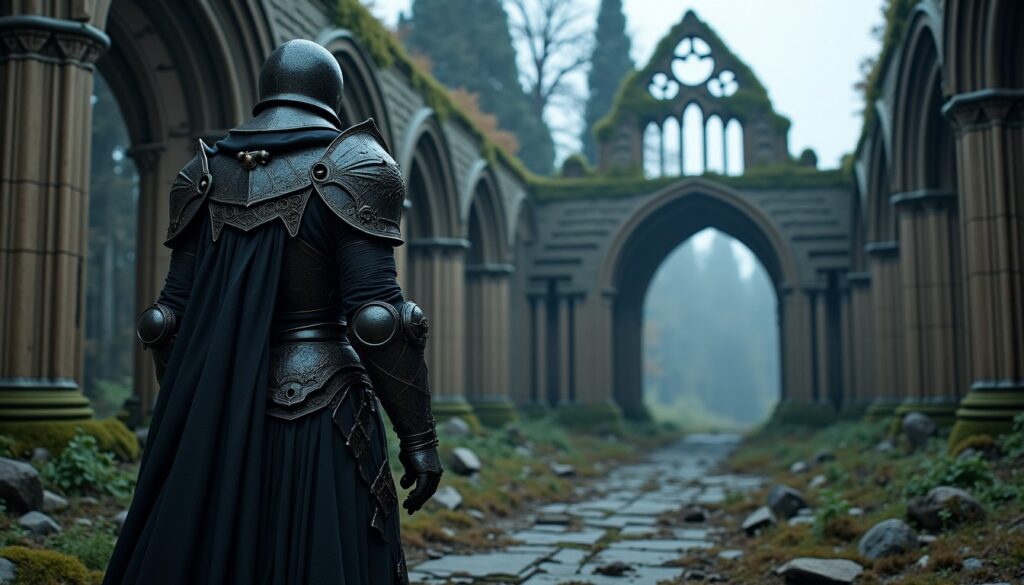
Mortal Shell II seeks to leverage the evolution desired by the Soulslike genre toward larger and more open spaces. The map, heavily marked by ruins, offers several zones where players can explore, hunt mortal shells, collect ovum, and find equipment. This dimension is appreciated for its adventurous potential but also raises recurring critiques about ergonomics and navigation.
Several users report that the map’s complexity and sometimes unclear guidance can make progression frustrating, especially when the hunt for precious shells becomes essential. Navigation does not always benefit from precise enough tools for an open world, which can hinder exploration fluidity.
In this context, strengths and limitations of the open world can be summarized as follows:
| Aspect | Strengths | Areas for improvement |
|---|---|---|
| Ovum and shell search | Variety of zones and rewarding incentives | Sometimes cluttered vision, difficult orientation |
| Map and directions | Immersive atmosphere and clear progression logic | Lack of precise indicators, improvable |
| Lore/environment integration | Coherent atmosphere and subtle narrative | Exploration sometimes laborious due to topography |
The developers have indicated that some adjustments and patches could be released shortly after launch, suggesting a gradual improvement of the experience, notably in navigation and encounter balancing.
For those who appreciate open Soulslikes, this map represents a promising playground with potential to be developed.
Builds and strategic diversity: why shells transform the experience
One of the most praised elements of this sequel is the richness brought by the mortal shells system. With eight shells available, compared to four in the first installment, the variety explodes. Each offers specific stats, skills, and equipment limits which greatly influence playstyle.
This multiplicity encourages players to devise various setups or “builds” rather than sticking to a single, universal mechanic. For example, some shells favor speed and aggression, while others provide better resistance or enhanced defensive capabilities. Furthermore, since some tarstones can only be equipped on certain shells, optimization becomes a more complex and rewarding quest.
This diversity also translates into the frontal tactical approach, but also in weapon choice and combat management. By adapting their shells and tarstones, each player can find their path and rhythm, thus offering extended replayability.
Here are the concrete advantages of builds based on shells:
- Exploration of varied styles: each shell changes the way enemies are approached
- Strategic combinations: shell-specific tarstones reinforce customization
- Non-linear progression: changing shell opens new play tones
- Creativity stimulation: invent synergies between skins, spells, and weapons
This mechanic proves particularly enriching for Soulslike fans seeking a renewed challenge and a progression logic deeper than simple “grind”.
Mortal Shell II: overall positive critical reception but a difficulty that divides
The overall evaluation of the game confirms its success with critics and players, even though some reservations remain about certain elements. The game receives high scores, with 8/10 at IGN, 4/5 on Eurogamer, 8/10 at GameSpot, and a very good 9/10 on Shacknews. On Steam, player reception remains positive with 78% favorable reviews from over 5,700 feedback entries.
Despite these encouraging indicators, some feedback points to the sometimes frustrating difficulty and the punitive nature of certain encounters, reinforced by the disappearance of the stamina bar. This tension shifts the difficulty, with heavy consequences for errors in combat.
The controversy around the challenge also arises in the perception of the open world, its level of guidance and repeated navigation. While some praise the depth and complexity, others regret the obstacles related to ergonomics and gameplay comfort. These opinions highlight differing expectations, depending on whether one seeks a strictly hardcore Soulslike or a more accessible experience.
This table presents the key assessments from critics:
| Criterion | Strengths | Expressed reservations |
|---|---|---|
| Gameplay and combat | Tense pace, innovative stamina-less system | Punitive difficulty, delicate error management |
| Exploration and universe | Immersion and captivating atmosphere | Confusing navigation, improvable map |
| Playtime | About 35 hours, rich content | Some zones considered repetitive |
This feedback shows that Mortal Shell II establishes itself as an ambitious proposal in the Soulslike world in 2026, recommended for those ready to invest in demanding gameplay, rewarding patience, attention, and adaptation.