
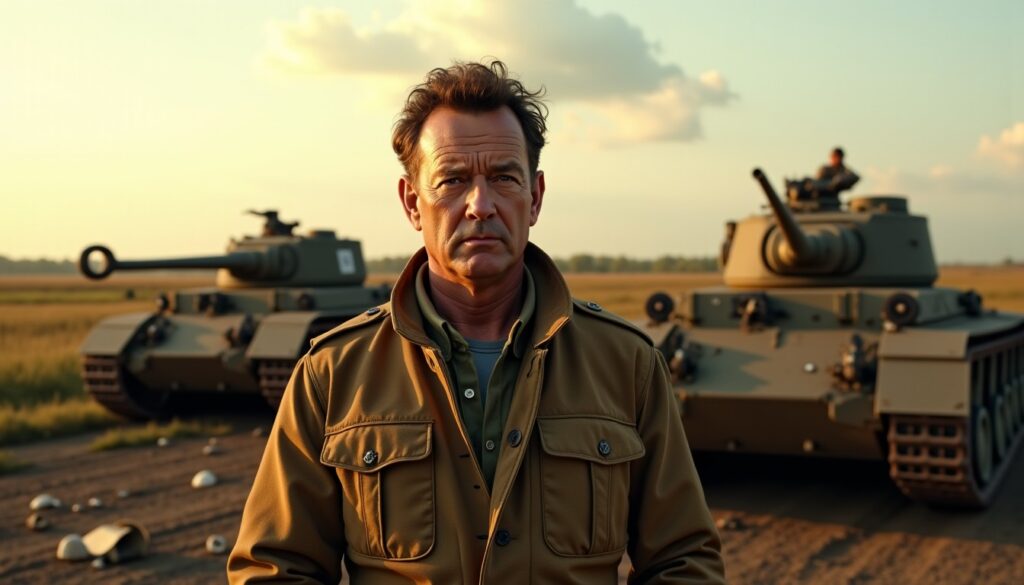
The docuseries World War II with Tom Hanks offers a unique and captivating immersion into the depths of World War II. Launched on History Channel since May 25, 2026, this ambitious 20-episode series reveals the global conflict from multiple perspectives, ranging from major battles to political stakes, through the memory of soldiers and civilian populations. Here is what we will discover:
- The format and structure adapted to an enthusiastic audience seeking to immerse themselves progressively in History.
- The richness of the content, which is not limited to military confrontations but also covers daily life and secret strategies.
- The central role of Tom Hanks, whose voice and involvement guarantee a credible and humanized narration.
- The international dimension of the broadcast and its impact on global awareness of this essential chapter of History.
- The place of this docuseries within the contemporary cultural ecosystem related to World War II.
Let’s explore these elements in detail, to better understand why this documentary has become an unmissable event for history lovers, from informed amateurs to more confirmed enthusiasts.
A format designed to gently dive into the heart of World War II
World War II with Tom Hanks stands out with a format designed to facilitate the overall understanding of the conflict and adapt to current viewing habits. This docuseries consists of 20 episodes of about 42 minutes each, allowing a clear and digestible segmentation of this historical period. Each episode covers a specific milestone, whether it be the initial invasion of Poland, major operations on different fronts, or the transition to the atomic age. This arrangement invites us to a sequenced or continuous reading, depending on our wishes.
The weekly broadcast, combined with streaming access from the next day, establishes a dynamic conducive to thoughtful binge-watching. The series’ approach thus targets both those who wish to explore events one by one and those who want to immerse themselves for several hours straight in this vast fresco. For example, by watching two episodes the same evening, we can sequentially relive the battles of Stalingrad and the battle of Normandy, two decisive moments that shaped the course of the war.
In this context, the role of rarely broadcast visual archives takes all its importance. By integrating these documents, the series breathes new life into our understanding, making the experiences of soldiers and civilians tangible. This work of audiovisual archaeology, supported by expert analyses, avoids a simple repetition of known facts and offers enhanced immersion.
Here is a list of key advantages of this structuring:
- Flexibility in viewing: only part or the entire series can be watched according to personal pace.
- Thematic clarity: each episode focuses on a specific event or period, simplifying follow-up.
- Gradual increase in intensity, allowing to grasp the complexity of the conflict step by step.
- Showcasing previously unseen archives, which revive memory and complement traditional narratives.
The attention given to this format shows a desire to open a direct dialogue with the viewer, encouraged to invest in a story often complex at first glance. This balance between pedagogy and immersion is a major strength that makes this docuseries essential for those who wish to understand the global conflict beyond clichés.
A comprehensive and nuanced historical fresco beyond the battlefields
Rather than focusing solely on battles and military strategy, World War II with Tom Hanks offers a very comprehensive overview of the conflict. For example, the series analyzes the deep causes of the conflict by reviewing the rise of Nazism in Germany in the 1930s, up to the invasion of Poland, the official trigger of the war. Throughout its episodes, it highlights not only the great figures of the era — Churchill, Roosevelt, Stalin, Hitler — but also the human and societal consequences of total war.
The documentary devotes time to topics sometimes relegated to the background, such as civilian resistance in occupied countries, life on the home front, or parallel issues like espionage and cryptanalysis. This choice enriches the understanding of World War II by revealing shadow areas less visible in classic accounts and thus meets the precision quest of history enthusiasts.
Moreover, the series gives notable place to tragic events like the Holocaust, introducing testimonies and analyses that stimulate collective memory. These accounts leave a lasting impression on the viewer, reinforcing the human and emotional impact of the documentary.
This complexity is illustrated in the table below, which summarizes the main themes covered in the series:
| Theme | Key contents | Episode examples |
|---|---|---|
| Triggering of the conflict | Rise of Nazism, pacts, invasion of Poland | Episodes 1-3 |
| Major battles | Stalingrad, Normandy, Pacific battle | Episodes 7-12 |
| Resistance and daily life of civilians | Clandestine networks, rationing, propaganda | Episodes 13-15 |
| Hidden strategic aspects | Espionage, cryptanalysis, military technology | Episodes 16-18 |
| Consequences and end of the conflict | Atomic bombs, emerging Cold War | Episodes 19-20 |
The proposed overview allows understanding that World War II is not limited to confrontations on battlefields, but fits into a major geopolitical and social transformation. The cross perspective of experts and witnesses offers a narrative richness that satisfies the appetite of history enthusiasts eager for details and broad contexts.
Tom Hanks: the iconic voice serving memory and History
The choice of Tom Hanks as narrator and producer gives this docuseries recognized authenticity and credibility. The actor, closely linked to landmark works on World War II, such as Saving Private Ryan, whose success exceeded 500 million dollars at the global box office, this time plays an exclusively narrative role. His warm and distinctive voice acts as a connecting thread between episodes, military strategies, as well as the individual destinies of soldiers and civilians.
His presence anchors the series in a strong cultural continuity, reaffirming the importance of telling the war in different forms. Tom Hanks’ commitment to production highlights a desire for historical rigor combined with a human and accessible approach. Moreover, his involvement in the film Greyhound, focused on naval warfare and nominated for the Oscars, brings complementary depth to his current endeavor.
The fact that the docuseries is not simply a recital of facts, but a narrative journey where Hanks’ voice creates proximity, is one of the major reasons for audience engagement. This humanized narration brings archives and strategic study to life, making battles more tangible and political decisions more understandable.
For those who wish to discover how an actor can positively influence historical representation in the media, this series is an excellent example. Tom Hanks succeeds in embodying collective memory while offering near-academic rigor.
A global broadcast that revives historical memory in 200 territories
World War II with Tom Hanks is a large-scale international project, broadcast in no fewer than 200 territories and translated into 40 different languages. This global reach highlights how central the memory of the global conflict remains in contemporary culture. In France, RMC Découverte has acquired exclusive rights, providing its audience privileged access under the title La Seconde Guerre mondiale avec Tom Hanks.
Broadcast methods are varied and adapted to current uses. Among options available in the United States are:
- Linear broadcast on History Channel
- Full streaming from the next day on the History platform
- Access via services like Hulu Live TV
- Purchase individually or in full on VOD via Amazon
This flexibility allows integrating the series into nighttime routines, where many enthusiasts appreciate quality content at a time when other programs offer very different entertainment. The two episodes broadcast every Monday evening allow for a deep and regular exploration of the historical context, in line with the expectations of a demanding audience.
This phenomenon also illustrates the rising influence of documentaries enriched by modern media, allowing a new form of cultural appropriation. For history lovers and the curious, it is an ideal appointment to relive this essential chapter that is World War II.
The cultural ecosystem around World War II enhanced by Tom Hanks’ docuseries
The release of this docuseries fuels a genuine narrative ecosystem dedicated to World War II, reinforced by multiple projects around the conflict. Within this ensemble, Tom Hanks remains an emblematic figure, notably with the preparation of the filming of Greyhound 2 planned in Sydney at the beginning of 2026. This second installment promises to extend the maritime narrative evoked in the first film, thus completing the audiovisual panorama on the war.
It is interesting to note that the popularity of World War II with Tom Hanks also pushes toward exploring other forms of entertainment and culture linked to this period. For example, strategic board games such as Risk are experiencing renewed interest, offering players a way to immerse themselves in military strategies in a playful and interactive manner.
Moreover, streaming platforms offer action films and documentaries related to the war and its stakes, accessible to a wide audience. To discover the latest releases, one can consult resources like Netflix Action Films 2025, which list major productions around these themes.
Thanks to this synergy between documentaries, fiction, games, and intellectual debates, the collective memory linked to World War II is thus nurtured and perpetuated. Tom Hanks’ docuseries does not merely revisit a past, it fits into a cultural movement that keeps the flame of historical knowledge alive.