
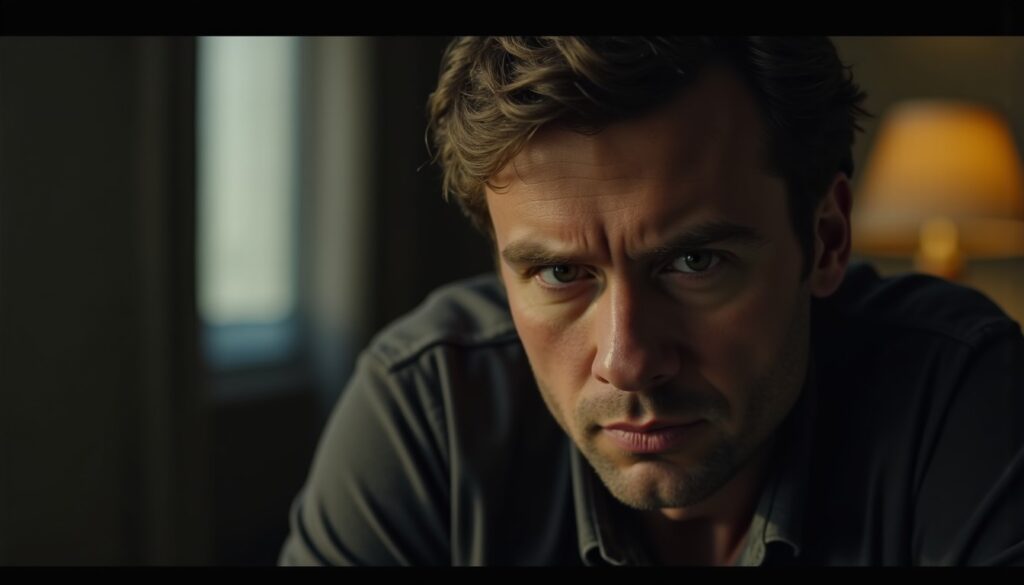
Time to Hunt establishes itself as a captivating thriller mixing hellish robbery, relentless hunting, and intense suspense, available on Netflix since 2020. This South Korean film plunges us into a breathless chase where adrenaline is at its peak every moment. By choosing this feature film, you embark on:
- an immersion into a dystopian Seoul plagued by poverty and chaos,
- a plot centered on a close-knit group of friends attempting a risky robbery,
- a tense confrontation against a ruthless killer in a relentless death hunt,
- a soundtrack and direction that reinforce tension and pace,
- a underlying reflection on survival and hope in a dark future.
Let us continue together exploring this intense film which, beyond the action, offers a unique atmosphere full of distress and intertwined hope.
A heist resembling a getaway plan in a Korean dystopia
Time to Hunt is not limited to a simple robbery story; it offers a dystopian universe where the economy collapses and society is out of breath. We follow Jun-Seok and his companions, who, in a world marked by misery, see the robbery not only as a financial coup but as a real opportunity for survival and escape.
The city of Seoul is depicted here between dark alleys and dilapidated buildings, with a very refined aesthetic that perfectly reflects the state of emergency and anxiety. This backdrop gives a particular flavor to the actions of our protagonists, highlighting that every decision can be a matter of life or death.
To better understand the mechanics of the robbery, let us examine the key points that make this hold-up a crucial moment:
- A precise but fragile plan: the organization of the heist is detailed, every movement in the preparation reflects the group’s tension.
- The role of friendship: Jun-Seok is not only making a move for himself but for his companions, strengthening the human bond in a dehumanized society.
- An economic and social stake: in this context, money represents more than a gain; it is a passport to a better future, a tangible dream to escape.
This context makes the robbery essential to the story and allows us to understand the depth and complexity of the social stakes specific to this dystopia.
The dystopian universe as setting and narrative engine
The dystopian aspect of the film, although not overly developed in technical details, is crucial in establishing a humid and oppressive atmosphere. One constantly feels the weight of collective failure, a kind of world out of breath where crime is only the direct consequence of social and economic fractures.
Poverty is not simply visible; it is read in the glances, the abandoned neighborhoods, and contributes to a suffocating atmosphere where every legal option seems closed. This stylistic choice allows the viewer to feel a palpable tension between the need to flee and the dead-end in which the characters find themselves.
Through this approach, the film invites reflection on contemporary despair, which resonates in several recent Korean works, but also in social tensions observed in many countries at the dawn of this year 2026.
The infernal hunt: a breathless chase where every move counts
After the robbery, the tension rises a notch: the hunt begins. This aspect truly sets Time to Hunt apart among thrillers of the genre. The group of friends becomes the prey of a merciless killer embodied by a charismatic and formidable antagonist. The mechanics of the manhunt unfold relentlessly, creating an almost constant tension until the very last minute.
What strikes here is the alternation between frantic action and suspenseful moments where adrenaline grabs you and doesn’t let go. The scenes are generally very well paced, with dynamic sequences that maintain a high level of stress and make the imminent danger palpable.
We can detail the specifics of this chase:
- A methodical hunt: the killer does not just run after his victims, he tracks them with military precision, multiplying traps.
- The cityscapes: the hunt makes wonderful use of various urban landscapes, from rooftops to underground passages, amplifying the suspense and limiting escapes.
- Sensory stress: the cinematography plays heavily with shadows and colors to intensify the feeling of suffocation, reinforcing immersion.
The result is a spectacle as nervous as it is aesthetic, plunging us into a breathtaking escape where every second counts.
The antagonist’s character: an obsessive threat
The killer, played by Park Hae Soo, transcends his role as a classic enemy. He embodies a permanent, almost obsessive threat, whose mere presence resonates in every chase scene. This figure sets an additional psychological tension because his relentless nature allows no respite.
In the narrative frame, this antagonist elevates the hunt beyond a mere physical confrontation to make it an oppressive psychological duel. His charisma contrasts sharply with the fragility of the protagonists, reinforcing the precarious balance between hunt and survival.
Direction and visual style serving suspense and action
The direction by Yoon Sung-hyun stands out by its subtle balance between intense action and moments of breathing space, allowing tension to last without tiring the viewer. The care given to the aesthetics – played with carefully crafted lighting, red-orange tints, and deep blue – helps strengthen this feeling of urgency and anxiety, creating an atmosphere where every image tells a story.
Dynamic shots and fluid action sequences avoid overkill and focus on the nervousness of the fights and escapes, which leads to an immersive and credible experience.
| Visual element | Impact on the viewer | Example in Time to Hunt |
|---|---|---|
| Play of shadows and lights | Amplifies tension and the impression of danger | Night scenes in Seoul’s alleys, playing on contrasts |
| Bicolor chromatics | Differentiates emotions and spaces, reinforcing the narrative | Red-oranges for violent scenes, blue for suspenseful moments |
| Dynamic camera | Strengthens rhythm and adrenaline | Escapes across roofs and stairs, giving a vertigo effect |
This aesthetic care is one of the reasons why the film remains a visual reference in the catalog of action films offered on Netflix recently, particularly for fans of thrillers that are both stylish and tense.
Friendship at the heart of survival: a quartet combining tension and emotions
The story is anchored primarily in the human element. Jun-Seok and his friends share a bond that transcends the criminal stake. This friendship acts as a powerful emotional engine, without which the film would be reduced to a series of shootouts and frenzied chases.
The group unites its forces in this race against death, mixing solidarity and strategy. This fragile bond in the face of external pressure strengthens the viewer’s empathy, who becomes more involved in the risks faced by the characters. Every collective decision thus becomes a stake where trust and loyalty are at play.
Here are the fundamental aspects that underline this dynamic:
- Jun-Seok’s leadership: a central figure bearing the weight of the group, embodying hope and determination.
- Internal tensions: between fear, anger, and despair, revealing the complexity of human relationships in extreme situations.
- A sincere attachment: illustrating how friendship can become a true pillar in times of crisis.
This relational framework adds great depth to the story, preventing the action from becoming purely mechanical.
Strengths and limits of a dystopian thriller not to miss on Netflix
Time to Hunt offers a cinematic experience where tension, action, and chase combine with careful direction. The film meets several essential criteria to capture attention, including:
- A rising suspense that keeps eyes glued to the screen despite a duration of 2h14,
- A heavy and sticky atmosphere, true to the codes of the dystopian genre,
- A soundtrack and aesthetic supporting each scene without faltering,
- A charismatic and disturbing antagonist offering a credible and constant threat,
- An emotional plot focused on friendship and survival, balancing violence and the hunt.
Despite these strong points, some aspects must be accepted that may divide opinions:
- A certain slowness in the second part, where the hunt can seem repetitive,
- A conventional plot where the twists remain limited,
- A dystopia more suggested than developed, which may frustrate fans of detailed science fiction.
If you are looking for a thriller where escape, suspense, and a raw atmosphere prevail, while being ready to commit to a narrative that takes its time, this film is an excellent choice. To explore other similar productions and discover a top 10 of films suitable for those who like this style, you can visit this updated selection.