
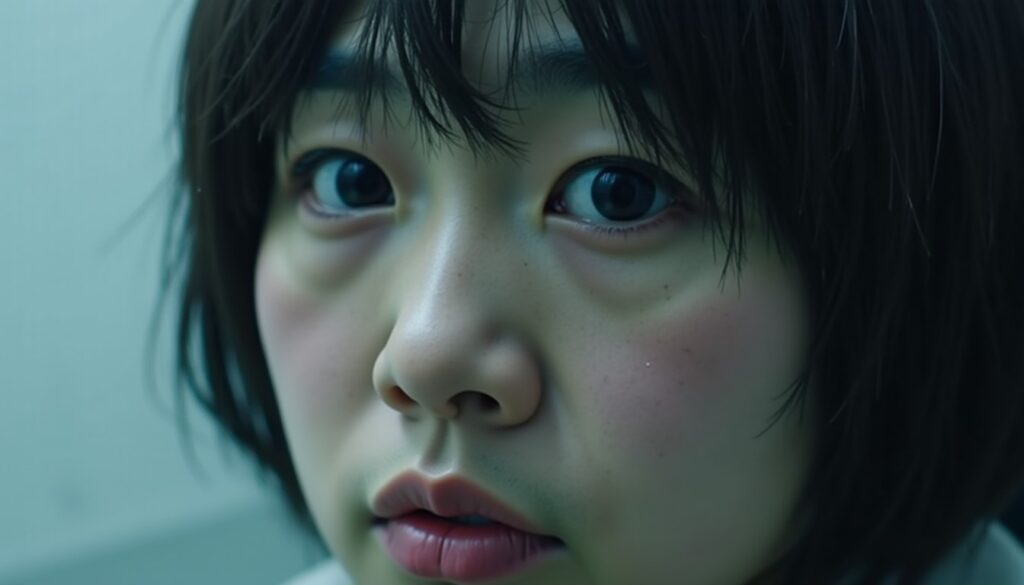
Yes, Konami aims for a new Silent Hill episode every year, according to Motoi Okamoto, producer of the saga. After a first wave gathering the remake of Silent Hill 2, Silent Hill f, and Silent Hill: Townfall, the publisher is already considering new productions, without announcing a detailed schedule or additional titles.
This ambition reflects a change of pace for a franchise that has long remained discreet. It does not mean that a game will automatically be released every year: Okamoto mentions a production goal, while the teams, platforms, and dates of the upcoming projects remain unknown. To understand what this orientation implies, we can distinguish three elements:
- An encouraging assessment for the three games of the first wave.
- Reflection already underway on a second and third wave.
- An annual new episode considered, but no guaranteed release schedule.
The main concrete reference for the future remains the remake of the original Silent Hill, announced for 2025 and entrusted to Bloober Team. Around it, the fog remains: Konami affirms wanting to extend the video game saga, without turning its game development tracks into official announcements.
Silent Hill and the new annual episode: what Motoi Okamoto actually confirmed
Motoi Okamoto expressed this ambition in issue 1965 of Famitsu, at the moment when Konami was making a first assessment of its relaunch. The producer indicated that the company was considering several additional production phases, after a first wave composed of three games. His statement gives a direction to the franchise but does not constitute the presentation of a dated program.
The nuance matters for players. Saying that Konami aims for a new annual episode does not allow concluding that a specific title will arrive on a fixed date, nor that each year will necessarily see a new game. The pace will notably depend on the progress of the teams, the quality of the productions, and the choices of the publisher.
To make this distinction concrete, imagine a female player who has followed the series since the first episode. She can reasonably note that Konami wants to keep Silent Hill in the news and prepare several projects. She cannot yet write in her calendar a game identified for a given year, because no official complete schedule has been communicated.
A production goal, not a launch promise
In video game development, a regular pace requires several projects carried out in parallel, at different stages. While one team finishes an episode, another can work on the design of a following title, while a third project is only in the study phase. This organization makes an annual release conceivable, but it does not eliminate either delays or creative adjustments.
Konami has already worked with several external studios to renew the series. This method allows entrusting distinct proposals to different teams, rather than asking a single studio to produce all episodes. It can promote diversity, provided that each game has a clear identity and an appropriate creation time.
The producer’s statements thus serve as a strategic reference: they reveal a will for continuity, not a firm obligation. To follow the evolution of the saga, we must separate announced ambitions from verifiable information, such as a studio name, a platform, or a release date.
Why the pace must remain compatible with horror
Survival horror relies on pace, atmosphere, and the progression of tension. An episode is not simply a succession of encounters with monsters: it builds a feeling of unease through its settings, sounds, silences, and staging choices. A successful annual production must therefore preserve these qualities without giving the impression of a formula repeated on an assembly line.
A simple example allows measuring the challenge. If two games are released a year apart but feature very different locations, characters, and mechanics, regularity can enrich the universe. If each installment reprises exactly the same setting and the same devices, the frequency risks instead wearing out the surprise that is the series’ strength.
Okamoto’s statement must therefore be read as an ambition accompanied by a requirement: to remain present without sacrificing uniqueness. It is this search for balance, rather than the figure of one game per year, that will determine the credibility of Konami’s project.
The first wave of Silent Hill games: three approaches to relaunch the franchise
The first wave was presented in October 2022, during a program dedicated to Silent Hill. Konami brought together three productions of different natures: the remake of Silent Hill 2, Silent Hill f, and Silent Hill: Townfall. This choice showed that the relaunch would not be limited to reproducing an old episode or to taking up only one narrative formula.
The remake of Silent Hill 2 was released in 2024 and marked the concrete return of the series to the market. It is based on a game already central in the history of survival horror, while allowing a new generation to discover its story and atmosphere. For veteran players, the challenge was also to find a familiar place under a renewed presentation.
Silent Hill f then broadened the geographical and cultural references of the franchise. Its arrival in 2026 illustrated the possibility of moving the action outside the American landscapes associated with several historic episodes. The series can thus keep its psychological themes while exploring other settings and traditions.
Silent Hill: Townfall completes this first batch with a distinct production. According to the information provided for this period, the game was released in Japan on September 24, 2026 and is also available on PC and PlayStation 5 worldwide. This positioning helps make the wave a set of proposals rather than a uniform series.
An assessment that opens the way to other projects
Okamoto described the launch and reception of these three titles as a relief for Konami. This appreciation comes after a period when players were waiting for concrete signs about the franchise’s future. For the publisher, seeing several games completed and reaching the public reduces the risk associated with a relaunch conducted on a single project.
The diversity of formats is also instructive. A remake addresses the memory of fans and the discovery of a classic; a new episode can test new settings; another project may attempt a different structure or narrative approach. These paths do not all guarantee the same commercial outcome, but they give the series more room to maneuver.
One can compare this strategy to a publishing house that releases several novels in the same universe, each led by its own team and angle. Readers remain attached to the brand, while the stories avoid merging. For Silent Hill, this variety is particularly useful: the atmosphere constitutes a strong bond, but it should not confine all games to a single town or a single type of protagonist.
Useful references for the audience
A player discovering the series can start with the remake of Silent Hill 2 to familiarize themselves with its codes, then focus on the more recent episodes to observe the evolutions. People who have followed the license since its beginnings can, for their part, compare how new projects reprise or move its themes. In both cases, the first wave serves as a large-scale test for what follows.
The favorable reception mentioned by the producer is therefore an encouraging sign, but it is not enough to establish the content of the following waves. Konami still has to reveal which projects are advanced enough to be presented and how they will fit into its release schedule. The assessment of the first phase makes continuity more plausible; it does not replace upcoming announcements.
To place these titles in the broader context of the genre, we can also consult this selection of free horror games available on Steam. It gives an overview of the different ways studios approach fear today, from independent experience to more ambitious productions.
Second and third Silent Hill waves: information still unknown
Konami’s reflection on a second and third wave confirms that the publisher envisions the franchise over several years. It does not reveal, however, the content of these phases. No new title, no specific sequel, and no additional studio have been publicly associated with these expressions in the available information.
This distinction avoids a common confusion in video game news: a strategy can be real without each project it could include being officially launched. A team can study an idea, produce prototypes, or evaluate several tracks before the publisher gives the green light to a full production. As long as no announcement is made, the public cannot know the result of this work.
Many elements are missing and easy to identify:
- The studios involved in the still unannounced projects.
- The targeted platforms, whether consoles, PC, or other supports.
- The launch windows and the release order of upcoming titles.
- The nature of the games: new episode, sequel, remake, or derivative experience.
- The possible link with the annual pace mentioned by Motoi Okamoto.
In the absence of this information, assigning a project to a studio or announcing a date would be speculative. Caution does not reduce the interest of the statement: it rather allows seeing clearly what is definite and what remains to be confirmed.
Collaborations can expand possibilities
Konami has already shown that it can rely on different teams to give varied forms to Silent Hill. Such an organization can help sustain multiple productions in development at the same time. It also allows seeking different artistic sensibilities, which fits well with a series where each location can translate the particular fears of the characters.
This method requires careful coordination. Common references must be preserved — unease, ambiguity, the psychological dimension — while avoiding dictating to each studio an identical recipe. Episodes can share an identity without necessarily resuming the same mechanics or geography.
For a development team, the challenge would be, for example, to build a new story in an environment that does not immediately recall previous installments. The alleys of a North American city, a Japanese village, or a closed space can each support a different fear experience. The setting is not merely a backdrop: it influences encounters, narration, and the player’s sensations.
An annual pace to be evaluated over several years
One release per year requires a project portfolio large enough to absorb delays. If a game is delayed six months, a publisher with only one production ready risks losing its rhythm. Several teams and several stages of production make the goal more realistic, but they also require resources, supervision, and coherent editorial decisions.
For players, the first indicators will be concrete: studio announcements, trailers, confirmed platforms, gameplay details, and release dates. The existence of an additional wave does not allow predicting these stages or their schedule. We can follow Konami’s ambition without confusing an industrial orientation with a public roadmap.
The new annual episode thus remains a target, not an automatic promise. The strength of the strategy will be measured by the actual regularity of releases and by the difference between the experiences proposed.
To observe another side of video game horror, this presentation of a free horror game linked to Silent Hill allows seeing how the brand can also circulate in experiences more accessible and distinct from the main productions.
The remake of the first Silent Hill, next official reference from Konami
Among the projects mentioned around the series, the remake of the original Silent Hill is the one whose existence is most clearly established after the first wave. Konami announced it in June 2025 and entrusted it to Bloober Team, the studio that made the remake of Silent Hill 2. The original game, released in 1999, is an important milestone in the video game saga.
The release date of the remake has not been specified in the available information. It should thus be distinguished from projects that Okamoto mentioned without naming. Its existence is official, its developer identified, but this does not reveal either its exact position in the second and third waves or the period when players will be able to access it.
Revisiting the first episode raises a particular creative question. The teams must make its universe accessible to current players while preserving the elements that marked the beginnings of the series. The original game was based on a deserted town atmosphere, a mysterious narration, and technical constraints typical of its era; a new version will have to choose what it modernizes and what it keeps.
Bloober Team’s responsibility
The previous Silent Hill 2 remake gives Bloober Team direct experience with the license. This background does not allow prejudging the result of the next project, but it provides a useful comparison point: the studio has already worked on reinterpreting a historic game in the franchise. Public expectations will be high, as the first episode represents for many the gateway to the universe.
A successful remake is not limited to improving textures or controls. It must consider the rhythm of exploration, the readability of locations, and how narrative information is revealed. A street plunged into fog can keep its unsettling power if the player advances without fully understanding what awaits them, even when visual technologies have progressed.
Modernization can also expand the audience. A person who has never played the 1999 title could discover its characters and imagination without having to adapt to the technical conventions of an older generation. Fans, for their part, will compare staging choices and measure what the remake transforms or preserves.
A known announcement but still scarcely detailed
For now, the public has no precise date or elements allowing a complete schedule to be drawn up. Confirmed information mainly concerns the announcement of the project and Bloober Team’s involvement. A release period, gameplay sequences, or platform details would be necessary to better situate this remake in the annual strategy.
This lack of schedule is not unusual in game development. An announcement can occur well before those responsible are ready to confirm a launch, especially when a project demands a thorough revision of a classic. Players benefit from waiting for dated information rather than building expectations solely on the idea of an annual pace.
The remake thus provides a solid beacon in a period when many projects remain anonymous. It also reminds us that Konami can alternate between reinterpreting a historic title and creating new experiences. It is this coexistence, rather than the mechanical repetition of the same model, that can give depth to the coming years of Silent Hill.
Silent Hill beyond North America: paths to confirm
Motoi Okamoto also mentioned the possibility of exploring environments different from North America. This orientation aligns with choices already visible in the first wave, notably with Silent Hill f. It opens a path for renewal for the franchise, without confirming the setting of a future game nor the presence of a specific project in production.
The location plays a central role in survival horror. It determines how characters move, the sounds they hear, and the forms of threat they encounter. A culturally distinct setting is not just a visual change: it can alter legends, collective fears, and the relationship between past and present.
Silent Hill f helped show that the identity of the series could be expressed in a setting different from its usual North American references. This evolution can broaden narrative possibilities without erasing the elements that make it recognizable. The balance is played between renewing the context and continuity of the emotional experience.
Changing location without losing the series identity
To measure this challenge, imagine an episode set in a small isolated community rather than in an American city. The roads, homes, and local traditions could shape the exploration, while the story would focus on fears specific to the characters. The setting would then become an active part of the story, not just a backdrop.
This freedom must be accompanied by research work and attentive representation of the places mentioned. A studio cannot rely solely on symbols familiar to the public; it must build credible characters and coherent situations. In horror video games, a single accurate detail — a space, a ritual, a daily habit — can make strangeness more convincing than an accumulation of spectacular effects.
Geographical diversity can also prevent each release from seeming to tell the same story. Different environments allow renewing silhouettes, sound atmospheres, and exploration paths. For a player who already knows the series, this difference maintains curiosity: what type of place could next translate a new fear?
Possible extensions beyond video games
The brand could also extend beyond video games. Roy Lee, associate producer of the Resident Evil film planned for 2026 and the Amazon TV series God of War, would be involved in an audiovisual project around Silent Hill. Its form is not confirmed: the available information does not allow saying whether it will be a film or a series.
This potential development must remain separate from game announcements. Konami has not presented a detailed joint program outlining how an audiovisual adaptation would align with upcoming interactive productions. A work intended for cinema or television responds to different constraints: duration, point of view, narrative pace, and relationship with the audience are not the same as in an exploration game.
For enthusiasts, these paths widen the possibilities of rediscovering the universe, but they do not replace concrete announcements about consoles and PC. An adaptation can introduce the franchise to new viewers, while a game offers an experience where the player’s participation directly shapes progression. Silent Hill’s development could gain momentum if each medium retains its own identity.
At this stage, Konami’s line is readable: extend a franchise whose first wave received an encouraging reception, study several productions, and aim for more regular presence. The remake of the 1999 game remains the main known project, while the second and third waves remain to be detailed. Upcoming announcements will have to specify how this ambition of a new annual episode will translate into games, teams, and dates.