
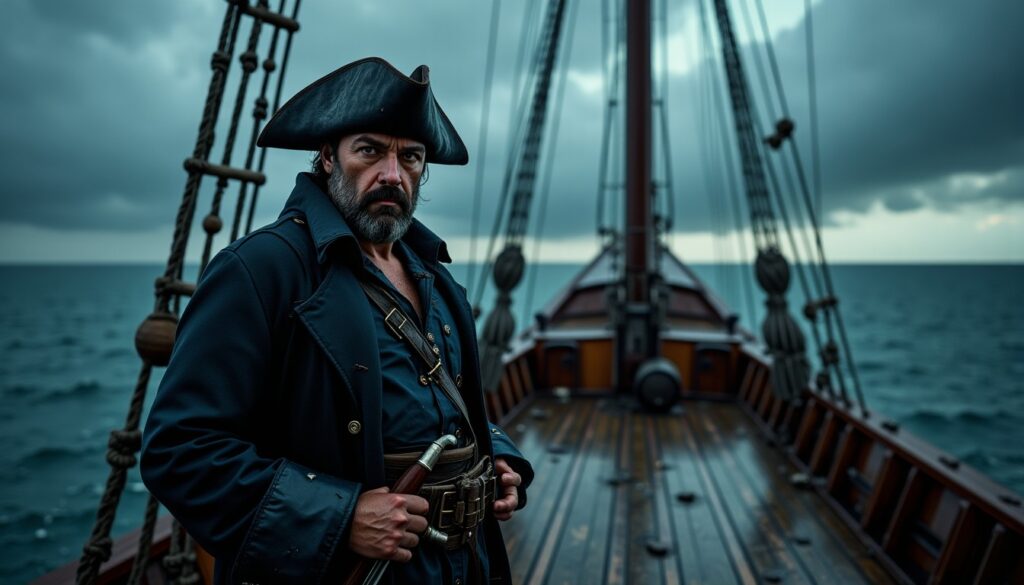
Yes: Keelblade, an open-world pirate game with Soulslike-inspired combat, has been officially announced by Digital Confectioners for 2027 on PC via Steam. Formerly known as Triarchy, this action role-playing game aims to combine sailing, island exploration, shipbuilding, and challenging confrontations in a fantasy universe.
We will be able to embark solo or form an online crew of six people. The ship will serve both as a means of transportation and a mobile base, while gathered resources will fuel crafting and upgrades. The promise lies in this blend: every stopover can lead to treasure, a workshop to build, or a creature that won’t let you leave quietly.
- Planned release in 2027, without a more precise date announced.
- Exploration playable solo or up to six players.
- Soulslike-inspired combat, with dodges, parries, and guard breaks.
- Customizable ship, designed as a living space and progression hub.
To understand what distinguishes this announcement, we can examine the name change, the role of the ship, combat mechanics, and cooperation choices. The project brings together familiar ideas, but its appeal will depend on how they are organized over time.
Keelblade: the official announcement of an ambitious pirate game
Digital Confectioners presented Keelblade as an open-world pirate action RPG, expected on PC via Steam in 2027. The New Zealand studio will handle both development and publishing of the game. No exact day or month of release has been communicated: for now, the yearly window is the concrete milestone to keep in mind.
The project did not appear without precedent. It was previously known as Triarchy, then adopted the Keelblade identity to accompany its public presentation. This change better evokes maritime imagery and confrontation, without alone revealing further details about the content or production schedule.
The proposal combines several genres players quickly recognize: open world, exploration, survival, building, and challenging combat. The risk with such a combination would be to juxtapose systems without real connection. To convince, Keelblade will need to ensure that an expedition yields resources useful to the ship, that the ship opens new possibilities, and that opponents give a reason to prepare one’s gear.
We can imagine a crew landing on an island in search of a crafting blueprint. A creature guards access, turning collection into a confrontation; the gathered materials are then used to outfit the ship, which will allow reaching another area. This loop provides a thread linking the announced activities and theoretically prevents the adventure from being reduced to a series of isolated fights.
Comparisons with other productions help situate the game, without prejudging its final personality. Fans of pirate survival may also discover the mechanics of Windrose, while Keelblade particularly highlights its Soulslike-inspired combat and cooperation for up to six people.
More complete demonstrations will be necessary to know how activities chain together and how much freedom the archipelago really grants. At this stage, the official announcement establishes a clear direction: a crew, an evolving ship, and creatures to face throughout a fantastic adventure.
An open-world pirate setting organized around the ship
In Keelblade, the ship is not presented as a simple vehicle between two levels. It accompanies travel but must also become a customizable floating base. This distinction matters: if the player regularly returns aboard to craft, store, or prepare, the ship can provide continuity to expeditions and become the concrete center of progression.
The announced archipelago invites alternating between sailing and land exploration. One island may provide materials, another shelter a treasure or crafting blueprint, while a third enforces a confrontation with a creature. This layout makes each stop potentially useful, provided that environments offer varied enough objectives to avoid a repetitive collecting loop.
Gathered resources must enable upgrades to both character and building. Crafting thus becomes a link between action and preparation: after a costly outing in terms of healing or materials, the crew can bring loot back aboard, manage reserves, and prepare the next crossing. A player who prefers exploring shores can focus on gathering, while another may seek plans or scout nearby dangers.
The announced facilities already give an idea of possible uses. They are not merely a list of decorative items; they suggest practical needs that can rhythm returning to the ship.
- Storage spaces to keep resources and loot acquired on islands.
- A workshop dedicated to crafting and equipment upgrades.
- A kitchen usable onboard, likely supporting preparation for outings.
- An integrated shelter contributing to the outfitting of this mobile base.
The deck can be built and arranged from materials found in the world. This construction brings the title closer to survival games, but it takes place in an adventure oriented towards action. If every upgrade requires resources obtained during risky expeditions, the player will have to balance investing immediately in the ship or saving materials for personal equipment.
The ship will not be safe from hazards: a dragon is presented as able to attack it with flames. This threat turns the crossing into a combat situation rather than a simple transition between two zones. It also poses an interesting design question: will players have to protect the ship, dodge attacks, or respond to damage on their facilities? Details are not yet established, but the announced danger gives a dramatic function to the floating base.
This idea of progression through stopovers links, from another angle, to games that make traveling and discovery an essential part of the adventure, as shown by this approach to treasure hunting in Assassin’s Creed. For Keelblade, success will largely depend on how exploration feeds life aboard and prepares the following fights.
Soulslike combat against archipelago creatures
Keelblade announces Soulslike-inspired confrontations, a formula that requires reading enemy movements and choosing actions with care. The goal is not simply to hit as fast as possible: one must observe an attack, evaluate its range, then decide whether to dodge, block, or look for an opening. In such a system, a successful parry can reverse the rhythm of a duel, while a rushed attack exposes to a counterattack.
Actions mentioned include dodging, defending, parrying, and guard breaking. These options provide several possible responses to the same threat. Against a massive opponent, for example, staying distant and dodging may be safer than chaining hits; against an enemy protecting its flank, a guard break might provide a chance to regain initiative. Exact rules and timing windows have not yet been specified.
The game should also offer different weapons, magical abilities, and character customization options. This variety can encourage multiple playstyles: focusing on melee attacks, relying on magic, or adopting a defensive approach before counterattacking. In a group, different equipment would allow role distribution without imposing official classes. Such complementarity would be especially useful if a boss exerts simultaneous pressure on several crew members.
The announced bestiary spans several registers. Trolls and giant crabs add a fantastic dimension to stopovers, while more unique foes may surprise players used to classic medieval monsters. Among shown creatures are a marine humanoid armed with a cannon, a shark with canine features, and a dragon capable of targeting the ship.
These silhouettes suggest fights designed around distinct threats. An opponent equipped with a cannon could force the group to move to avoid its shots; a marine creature may evoke a danger linked to the shore, while a dragon attacking the ship expands the duel beyond the character. These examples remain leads drawn from presented elements: precise behaviors and arenas have not yet been detailed.
Bosses integrated into the open world should punctuate exploration. Their presence can make travel tenser, since an unknown zone will not necessarily be just a resource reserve. The player will need to learn to distinguish an approachable encounter from a threat that demands better gear or help from other pirates. This reading of danger can add depth to progression choices.
A Challenge mode will allow replaying certain fights under harder conditions. It is aimed at players who wish to test their mastery after an initial victory or compare different strategies with their crew. It’s a way to extend the lifespan of fights without each encounter having to be entirely new; its value will depend on the variety of parameters and the quality of the bosses involved.
The announced fights thus give piracy a tone less light than a simple treasure hunt. For each encounter, observation and coordination could matter as much as the equipment found during expeditions.
Online cooperation designed for six pirates
Keelblade will be playable solo or in online co-op with up to six participants. This scope sets the project apart from an adventure designed only for a duo and opens the door to larger group outings. The team can gather players who explore, fight, or gather, with the ship as a rally point between expeditions.
Cooperation is presented as continuous. The game shouldn’t rely on one-time summons, nor require players to reconnect to the group after each death or boss. This choice can make progression smoother: if a member falls during a fight, the crew doesn’t necessarily have to interrupt their entire session to rebuild the game from menus.
Members of the same group should also not be required to stay side by side all the time. Some can explore one area while their companions pursue another activity, before meeting up later. This freedom adds flexibility to sessions, especially when participants do not all have the same pace or priorities. However, it must remain clear enough to prevent a player from missing an important event without knowing where the rest of the team is.
Quest progression will be shared within the group. This point can avoid a common situation in cooperative games: one player advances in their objective while others remain stuck at a previous step. If common goals are properly synchronized, the six pirates can participate in the same adventure without having to repeat the same sequences multiple times to validate each person’s progression.
A session can thus organize spontaneously. Two players search for materials on an island, another examines a passage inland, while the remaining members prepare the ship or pursue a nearby quest. The group then meets for a boss and returns aboard to turn loot into upgrades. This scenario is not a confirmed feature in its details, but it illustrates how exploration, cooperation, and crafting could complement each other.
No mandatory specialization has been detailed. Weapons, magical abilities, and crafting suggest varied contributions, though we cannot yet talk about imposed roles such as tank, healer, or scout. This freedom may suit friends improvising their crew; it will require the game to offer sufficiently clear tools so each finds a role during a difficult fight.
The six-person format also poses a balancing challenge. A boss designed for a single player could lose interest facing a full group, while an enemy too tough in solo might discourage lone pirates. Developers will need to adjust difficulty, attacks, and possibly rewards according to group size. The promise of continuous cooperation is appealing, but its success will rely on this concrete adaptation.
Beyond the number of players, the point to watch is thus the quality of sharing: freedom of movement, synchronized quests, and adapted confrontations must make the crew a true way to play, not a mere power multiplier.
Keelblade release on Steam: schedule and expectations for 2027
The full version of Keelblade is not yet available, and its release is announced for 2027. Digital Confectioners has communicated neither a precise date nor a detailed launch schedule. For players following the project, this means upcoming useful information will concern notably progression content, confirmed platforms, and stages allowing to test the game.
Steam is the officially highlighted platform. Information mentions Windows and Linux compatibility, but Linux presence does not appear on the game’s official page. It is therefore necessary to distinguish confirmed elements from possibilities mentioned elsewhere: for the moment, Steam remains the public reference point, without a console release announced in available data.
Tests on Steam have been reported for September 2026, with a session announced from September 11. A first public demo was then announced as part of the Steam Next Fest in October 2026. A period from October 20 to 27 was communicated for a Chinese version featuring an interface and subtitles in simplified Chinese. These stages offer opportunities to observe the project, but do not replace a full release date.
A playable demonstration could notably answer questions that announcements alone leave open: is navigation active or mostly automated? Is the ship controlled as a group? Do fights remain clear when six players are on screen? Do gathering and building create interesting decisions, or mainly serve to prolong travel? Answers to these points will help measure the coherence of the whole.
| Element | Information communicated | What remains to be specified |
|---|---|---|
| Full release | Planned for 2027 | Day and month not announced |
| Highlighted platform | PC via Steam | Possible console versions |
| Gameplay | Solo or co-op up to six | Balancing according to group size |
| Tests and demos | Sessions reported in September and October 2026 | Availability and content by region |
The name change from Triarchy to Keelblade marks a new presentation step, but the game’s personality will mainly take shape through its playable sequences. A project can display several popular trends without reducing to an assembly of references; sailing, combat, and cooperation must naturally interact.
For fans of demanding action games, the mix with piracy offers an unusual proposition: the next boss could emerge around an island, while the ship built by the crew would serve to prepare the counterattack. Until the planned release in 2027, tests and presentations will verify if this promise takes the form of a truly coherent adventure.