The Blood of Dawnwalker offers a solo RPG adventure in dark fantasy where every decision profoundly impacts your character’s destiny. This game, set to release on September 3, 2026, marks a new milestone in the genre, blending open world exploration, a dark universe steeped in vampiric mysteries, and reactive storytelling. Here is what you will discover in this article:
- An immersive Carpathian medieval universe enhanced by a dark fantasy atmosphere;
- The unique system of 30 days and 30 nights that paces every choice and quest;
- The crucial importance of player decisions on the forces at play and the overall balance;
- The richness of social interactions and combat in a context both fantastic and realistic;
- The narrative and technical ambitions carried by Rebel Wolves and Bandai Namco for a groundbreaking RPG experience.
Explore with us the facets of this highly anticipated title which strengthens the presence of solo dark fantasy RPGs in the video game landscape.
A medieval dark fantasy universe for full immersion in The Blood of Dawnwalker
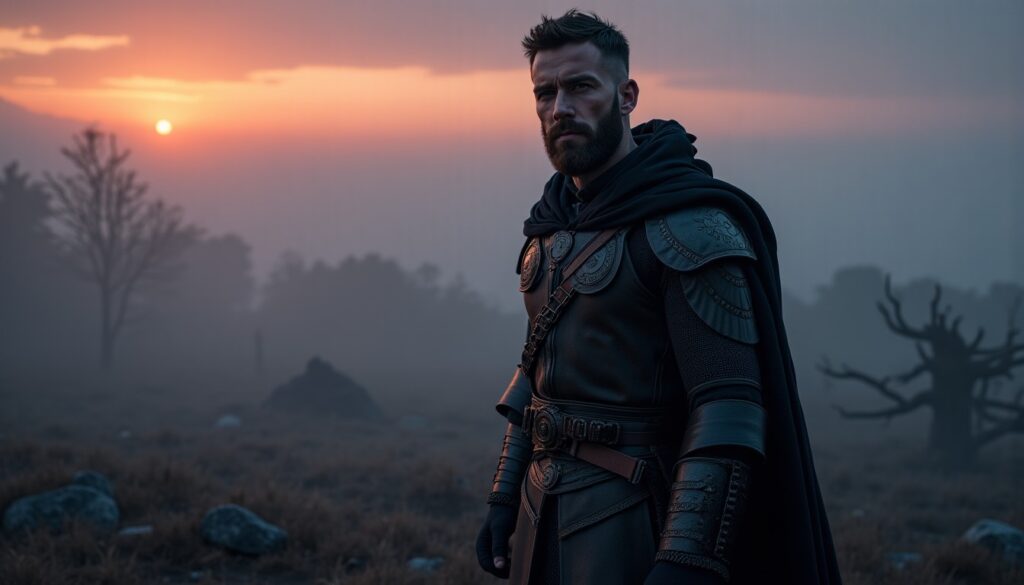
The Blood of Dawnwalker is set in a unique historical setting, a Carpathian valley in the 14th century, where superstition and the vampiric threat weave a heavy and immersive atmosphere. This setting, rare in action RPGs, enriches the narrative by confronting Coen, our protagonist, with a backdrop mixing real elements and dark fantastical ones. Coen, the eldest son of a peasant family, sees his destiny overturned when he is abducted by vampires, including the charismatic Brencis. The player thus discovers a medieval European campaign ravaged by vampiric influence, which can be felt even in the sound environment and visual details.
The open world design strives to recreate the social and political tensions of the era while introducing a tangible fantastic element, where fear blends with subtle dark magic and uneasy alliances. Rebel Wolves has carefully crafted this atmosphere relying on precise level design and narrative writing led by Piotr Kucharski, which ensures historical and fantastic coherence throughout your progression. For example, rural villages under the fragile protection of certain families coexist with fortresses corrupted by the vampiric night.
This choice of density between medieval realism and supernatural shadows provides fertile ground for full immersion, along with constant tension, where every alley can hide enemies or mysteries. The day/night duality is more than a mere mechanic; it creates a tangible sense of urgency and danger, reinforcing the player’s investment in this captivating universe.
The time mechanic of 30 days and 30 nights: a major innovation to guide your strategic choices
A remarkable feature of The Blood of Dawnwalker lies in its time constraint: after an introductory prologue, Coen has 30 days and 30 nights to complete his mission to save his family and counter the vampiric hold. This mechanic introduces a dynamic rhythm that departs from classic RPGs which often offer unlimited temporal freedom.
Each day and night pass even if you do not act, creating a feeling of urgency and pushing you to plan your actions carefully. You will have to juggle between main quests and numerous side quests without losing sight of deadlines. For example, if you neglect a particular alliance for several days, its support might no longer be available or could become hostile, directly affecting your ability to progress effectively.
Here are some key aspects related to this time system:
- Quest planning: Some missions are timed and require you to complete them before a specific deadline under penalty of major consequences.
- Changing conditions: The world evolves with time: an area controlled by humans during the day can shift under vampiric domination at night, altering difficulty and tactical options.
- Character evolution: The protagonist and his allies must be managed to maintain strength and resources over the long term, or risk seeing their effectiveness decrease.
This time constraint, combined with a narrative system called a “narrative sandbox,” offers apparent freedom to the player who fundamentally must always choose when to act and how to optimize each day. It turns exploration into a race where the storyline’s progression varies according to your decisions at every moment.
Weighty decisions that shape the balance of forces in the Vale Sangora valley
The notion of choice in The Blood of Dawnwalker goes beyond simple narrative branching: each decision directly influences the Vale Sangora area. This valley, the stage of constant tensions between humans and vampires, is an environment where your daily activity permanently changes the course of events. Consequently, everything you undertake, from alliances you forge to methods employed in combat, transforms the political and social backdrop.
The evolution of the forces at play is based on a complex system of contextual responses. For example, an aggressive and frontal approach against vampires can provoke massive reprisals, while a more diplomatic strategy can buy time and allies. Each orientation has its advantages and risks, allowing for a very personalized experience for every player.
Below is a summary table of types of decisions and their effects in the valley:
| Type of decision | Immediate consequences | Long-term effects |
|---|---|---|
| Directly confront the vampires | Gain respect & terror | Increase in vampiric attacks |
| Forge local alliances | Access to resources & support | Increased stability in certain regions |
| Spy or sabotage | Privileged information | Destabilization of enemies in the long run |
| Spare or recruit enemies | New strength in your favor | Possibility of complex relationship evolution |
This system also strengthens the impact of dialogues and social interactions, where trust and suspicion shape relationships, even allowing for potential romances with certain characters. This richness of interactions energizes the experience while anchoring Coen in a credible and living social network.
A dark atmosphere driven by gameplay combining combat, exploration, and interaction in an immersive solo RPG
The gameplay relies on an action-RPG system mixing dynamic combat and deep exploration of an open world. You navigate between encounters with vampiric creatures, clue hunting, and dialogues with inhabitants, in a solo experience where everyone can adapt their style. The day/night duality also influences your condition: human by day and vampire by night, Coen must manage his dual nature to take advantage of his abilities without losing ground.
Combat exploits a fluid and varied system, where medieval weapons and vampiric powers complement each other. For instance, you can chain sword attacks and supernatural night abilities to vary strategic approaches. The dependency on resources and damage management adds a demanding tactical layer.
The exploration phases are rich with side quests of varied stakes, inviting you to search every corner and interact with multiple NPCs. These exchanges are not trivial: they can open leads, reveal secrets, or influence allies’ morale, proving that The Blood of Dawnwalker is much more than a simple combat RPG.
- Duality management: Adapting to day and night conditions that modify skills and threats.
- Guided exploration: Each area carries clues influencing tactical and narrative decisions.
- Lively dialogues: In-depth interaction that gives body to the world and its inhabitants.
Rebel Wolves and Bandai Namco: behind the creation of an ambitious narrative solo RPG
The partnership between Rebel Wolves, a Polish studio founded by Konrad Tomaszkiewicz, a recognized figure after his work on The Witcher 3, and the publisher Bandai Namco Europe, announces a high-quality production. This collaboration relies on an experienced team with Piotr Kucharski as the writer, Daria Bury-Zawada directing gameplay animation, Maciej Wiśniewski in level design, and Dorota Rutkowska in production.
The use of Unreal Engine 5 guarantees cutting-edge graphical quality, while immersion is enhanced by motion capture performed with Jan Błachowicz, former UFC champion, embodying the vampire antagonist Bakir. This technical care reflects a strong will to bring this solo dark fantasy RPG to life with intensity and realism, both in action scenes and more narrative moments.
In a market where solo RPGs sometimes have overly open but unreactive universes, The Blood of Dawnwalker aims to establish itself as a balanced experience between freedom and consequence, with a living story and rising tension linking the player to their destiny. This promise meets the desire of many players who await a solo dark fantasy RPG where every quest, every decision truly alters the game’s trajectory.
To deepen your knowledge of similar games in the genre, you can check the news around The Witcher 4 or the upcoming launch of Path of Exile 2, two major references that also exploit the interaction between RPG, narrative, and fantasy.