
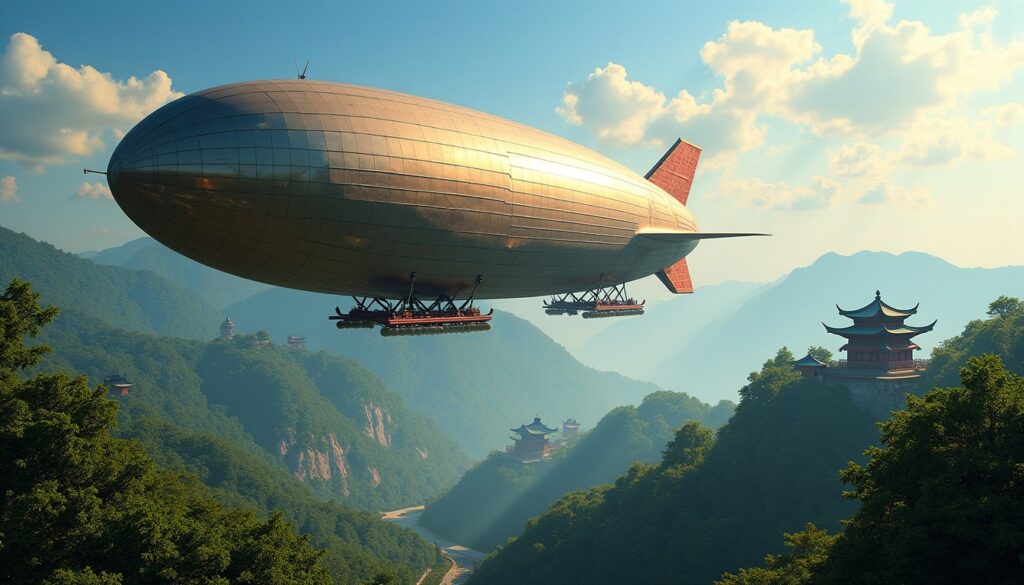
Part 3 of the FF7 Remake offers a new major step in the exploration of the Final Fantasy universe, with the legendary Highwind and the mysterious Wutai finally officialized. This final chapter of the trilogy generates palpable excitement among enthusiasts, marking a significant narrative and technical advancement. Several key points deserve special attention, including:
- The smooth and promising development of the third episode confirmed by Square Enix and Naoki Hamaguchi.
- The central role of iconic locations such as Wutai, Rocket Town, and the famous Highwind in the gameplay and story.
- The innovations and improvements to the game mechanics, including Queen’s Blood and the Chocobos.
- The broadening of the audience thanks to increased availability on multiple platforms.
- The prospects of an imminent reveal and bets on new features.
All these data outline an adventure that promises to be as faithful to its heritage as it is rich in new features. Let us focus in more detail on each of these aspects to understand what this saga’s conclusion has in store for us.
A stable and reassuring development of FF7 Remake Part 3
The work on the third and final part of the FF7 Remake is progressing exemplary, demonstrating a well-honed organization and a seriously engaged team. Final Fantasy is a saga traditionally based on rigour and precise control over every stage. By announcing in April 2026 that the production strictly follows the schedule, Naoki Hamaguchi offers a token of confidence to the players awaiting the conclusion.
One of the strengths of this stability is the human continuity. Nearly 95% of the collaborators who participated in Rebirth are still mobilized for Part 3. This encourages narrative, artistic, and technical coherence, indispensable for such an ambitious trilogy. This factor also reduces the delays related to learning and implementing tools, since they retain their mastery of Unreal Engine 4, the engine supporting all three episodes.
This consistency results in a refocus on quality of experience: the team can now devote maximum time to fine-tuning combat balancing, ergonomics, and environmental interactions rather than solving fundamental technical issues.
Indeed:
- The development follows the established roadmap, at a stage where the major foundations are finalized.
- The gameplay and structure are validated, allowing an intense polishing phase.
- An official announcement is expected very soon, which rightly fuels expectations.
This assurance in production is far from trivial in a sector where delays are not uncommon, which guarantees players that the release will probably not be postponed indefinitely. It also promises a much smoother experience than at the launch of some previous major Japanese RPG titles.
Solid milestones for a polished and immersive RPG
This situation provides a reassuring framework for longtime fans and newcomers alike, as it avoids inconsistencies that could have arisen with a fragmented team or a complete overhaul of the graphics engine. The focus on a mastered technical environment maximizes the chances that Part 3 can capitalize on the work already done, while introducing renewed content adapted to modern standards.
In this spirit, Square Enix displays a clear trend: transforming the remake’s foundations of a 90s classic into a complete, well-balanced, and intensely immersive experience, avoiding unnecessary risks that could have delayed the release.
This point lays the groundwork for story and gameplay content that rides on recognition, without sacrificing the pleasure of a new adventure, nourished with surprises even for the most seasoned fans.
Expanded exploration: Wutai and the Highwind, pillars of the final journey
The third installment of FF7 Remake shines a spotlight on two key elements that contributed to the franchise’s legend: the Wutai region and the Highwind. These locations, well known to experienced players, finally take center stage, officialized by Square Enix in this last part.
Wutai is known for being a geopolitically unique area, rich in traditions and conflicts with Shinra. Long mentioned but little developed in the original game, this mysterious region has its story expanded. Its presence promises fans of the universe a deeper connection with Yuffie and the stakes surrounding this island faction. It is a suitable ground for side quests, narrative revelations, and renewed gameplay centered on Wutai’s culture and typical techniques.
The Highwind, on the other hand, will not be limited to a simple vehicle. This legendary airship is announced as a central gameplay element with a role deeply integrated into world exploration. This bold choice opens impressive perspectives:
- Expanded freedom to travel across different regions.
- Greatly amplified exploration through dynamic mechanics related to piloting.
- Enhanced nostalgia for veteran players who see here a vibrant tribute to the original.
Rocket Town, associated with Cid, completes the trilogy of strong locations. This town is significantly highlighted in the plot and gameplay, notably offering the chance to discover new mechanical improvements thanks to Cid and his expertise in flying machines.
This combination of locations shows a clear intention to blend homage and innovation, balancing historic zones and gameplay ambition. The challenge will be to preserve this identity while avoiding redundancy with Rebirth.
An epic and renewed breath of exploration
Thinking of Prime Airship Highwind already implies imagining an immersive staging where the player no longer just moves from one point to another, but truly experiences an aerial journey. An advanced integration of the Highwind could also introduce management elements or specific interactions, such as missions to be carried out from the airship, or free exploration phases.
On this point, the team indicated that the gameplay relies on new features designed to enhance the diversity of the experience. Encounters could thus be mixed with exploration, with unexpected events in mid-air, making each crossing an adventure in itself.
This tour of regions, enriched by piloting, is envisioned as an ode to this universe, while extending the level of freedom offered to the player. This epic breath marks a notable evolution, consolidates the trilogy’s identity while revaluing key elements that fans have long awaited.
Gameplay innovations for a richer and more varied experience
The additions around gameplay confirm a desire not simply to deliver a final transitional chapter but a full-fledged episode with its own identity. Among these innovations, note the reintroduction of Queen’s Blood, the flagship mini-game of Rebirth, returning in a revisited version. Its enhancement shows attention offered to players who enjoyed this strategic challenge, while opening the door to new tactics.
The return of the Chocobos, iconic to the series, also comes with a significant overhaul. Their system will differ compared to Rebirth, which could include new exploration options, unprecedented interactions, or even mini-games complementary to the main storyline.
Generally, the novelties focus on:
- The in-depth piloting of the Highwind with mechanics linked to exploration and movement.
- The refinement of Queen’s Blood to make it more strategic and captivating.
- The introduction of several new mechanics to diversify combat, movement, and interactions.
- The transformation of the Chocobo system to increase the richness of equestrian gameplay.
These changes somewhat redefine the game’s dynamics and should satisfy fans of a more strategic and varied gameplay, while retaining Final Fantasy’s DNA. This approach aligns with Square Enix’s desire to make this final chapter memorable.
A balance between novelty and respect for expectations
The goal is not to lose players in an avalanche of complicated novelties but to offer clear, progressive improvements that enrich the experience without distorting it. This positioning echoes the explicit expectation of fans: to live a faithful adventure but with controlled surprises.
Supporting already appreciated mechanics while adapting them to the context of this last part is a smart strategy that should embrace the nostalgic and narrative side alongside more competitive and varied gameplay.
For example, enhanced Queen’s Blood adds a strategic, even competitive layer, strengthening engagement during sessions. Chocobos, legendary elements in the saga, receive an evolution designed to rekindle players’ desire to explore them and experiment with various interactions with these mythical creatures.
A balanced cocktail between past, present, and innovation is being prepared, which confirms the saga as a monument of Japanese video games.
A multiplied audience and expectations supported by new platforms
The FF7 Remake is more multiplatform than ever in 2026. Available since January on Nintendo Switch 2 and Xbox Series, it opens up to a broader target of players who did not necessarily have access before. This multiplatform expansion fits into a clear strategy aimed at strengthening the community and preparing the ground for the trilogy’s culmination.
The upcoming launch of Rebirth on these same systems confirms this approach, as this release is expected for June 2026. Final Fantasy VII Remake thus benefits from increased visibility, multiplying engagement opportunities with more versatile players.
This dynamic is illustrated by several concrete initiatives:
- A rise in power thanks to easy global access on popular consoles.
- An improved player base for the final installment, ensuring a spectacular reception.
- Speculations related to possible multiplayer or co-op features, which could further enrich the experience.
Some rumors based on clues like an Instagram post from Cody Christian, English voice of Cloud, suggest the start of recordings, a sign that audio production is progressing in parallel. Questions remain open about adding requested features like co-op or additional characters, with no details yet.
This multiplatform context offers a promising horizon for everyone following the saga. The popularity of this RPG is undeniable, both in sales and critical reception. Expanding its reach satisfies both loyal fans and newcomers.
This extension also fits into a broader trend visible on AAA games available on multiple platforms, illustrating a willingness to adapt to the contemporary market. Likewise, the growing interest around the franchise, especially looking forward to new titles like Fallout 5, helps maintain an active and involved community.
| Aspect | Details | Expected Impact |
|---|---|---|
| Development | Schedule respected, stable team at 95% | Assured quality, release on time |
| Key areas | Wutai, Rocket Town, Highwind | Rich and immersive exploration |
| Game mechanics | Improved Queen’s Blood, new mechanics, revamped Chocobo system | Varied and strategic gameplay |
| Multiplatform | Switch 2, Xbox Series | Increased potential audience |