
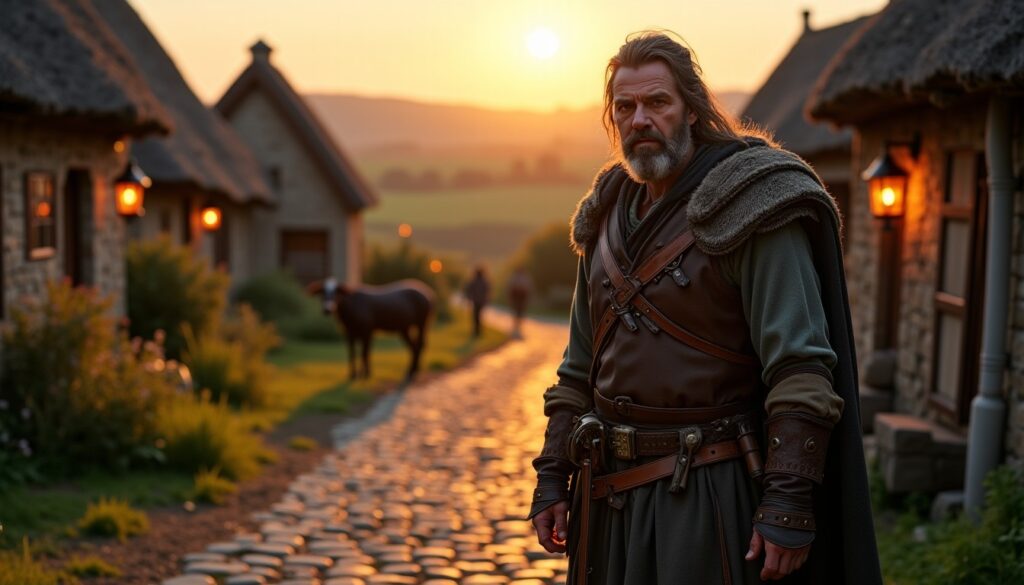
Emberville marries the dark action of an action-RPG with the softness of a bucolic village: you fight monsters, then gather resources, cook, and develop your home. Cygnus Cross’s game is announced on PC via Steam in early access on October 27, 2026, with an initial playable solo version.
This blend of dark fantasy and agriculture is not just due to its visual contrast. Its success will depend on the links between exploration, combat, crafting, and village life: the collected resources must serve a purpose, while domestic preparations must transform the following expeditions. The available information comes from the studio presentation and the Steam page, not from a direct trial of the version.
- Action: fast confrontations and chains of attacks are announced.
- Daily life: mining, woodcutting, gathering, cooking, and harvesting are among the presented activities.
- Challenge: the coherence of the game will depend on how these systems feed into each other.
To follow this promise, let’s imagine Mila, a player who goes out to look for components before returning to prepare her next outing. Her journey raises the central question: will each step provide a concrete reason to move to the next?
Emberville, an action-RPG between Diablo and Stardew Valley
Emberville combines two video game pleasures that seem initially opposed. On the one hand, action pushes you forward into dangerous zones, to defeat creatures and improve your gear; on the other, farming activities invite you to take your time, organize your resources, and grow a familiar place. The studio’s bet is to make these rhythms coexist without giving the impression of playing two separate games.
The reference to Diablo evokes progression focused on combat, weapons, and skills. Stardew Valley suggests a calmer routine built around the land, gathering, and connections with a space that you gradually transform. Emberville seeks its identity in the back-and-forth between these two poles, rather than in the simple juxtaposition of a dungeon and a garden.
A promise carried by contrasting rhythms
For Mila, a successful outing is not just about the number of monsters defeated. If she brings back wood, plants, or components, then uses them to prepare a meal and improve her possibilities, the break in the village extends the adventure rather than interrupting it. Conversely, if domestic tasks do not change anything about her expeditions, they risk feeling like a chore list between two fights.
The contrast can also affect the atmosphere. A dark forest crossed to gather some plants does not mean the same as a peaceful walk in a threat-free setting: the danger gives specific value to the collected resources. Then the return to calm allows measuring what has been gained, whether a rare ingredient or the materials needed for a new tool.
The presentation thus combines pixel art, adventure, and management activities. This aesthetic choice can reinforce the opposition between hostile zones and warm village, provided the places are distinct enough to guide the player. An enemy silhouette must remain identifiable in the action, while living spaces must make changes visible as development progresses.
The announced Steam launch concerns Windows and will be in early access, solo. Cygnus Cross is also publishing the project. This first step will allow judging not only the amount of content but also how the essential systems fit together from the first hours.
The charm of the mix will thus play less in its references than in their circulation. The village must give a reason to leave, and the expedition a reason to return.
Farming, harvesting, and crafting: a loop to make useful
The game presentation mentions several gathering activities: mining, woodcutting, picking plants, and collecting various components. Defeated creatures must also provide ingredients for cooking and potions, prepared notably around cooking fires. These elements outline a potentially coherent loop: explore, gather, transform, then leave better prepared.
For this mechanic to work, each resource must have a comprehensible function. An ore used to craft a weapon, a plant part of a healing potion, or wood needed for a building give the player concrete objectives. Without an identifiable use, the inventory fills up and harvesting loses its interest. Satisfaction comes from the visible transition between raw material and a new advantage.
From loot to preparation for the next outing
Let’s take a fictional day of Mila, as an example and not as a confirmed game recipe. She could spend her first outing gathering plants and defeating some enemies, then use her finds to prepare a potion and a meal before a longer expedition. The value of this day would then depend on the felt benefit: better endurance, increased safety margin, or access to a previously too risky area.
A resource table can help understand the expected relationships. The uses below illustrate design possibilities based on the announced activities; they do not constitute an official list of recipes or guaranteed results.
| Illustrative Resource | Possible Announced Source | Usage Giving Meaning to Gathering |
|---|---|---|
| Wood | Cutting trees during exploration | Crafting or improving village equipment |
| Plants | Gathering in explored zones | Preparation of potions or cooking ingredients |
| Monster Components | Loot after fights | Recipes and preparations for a new expedition |
| Ore | Mining activity | Crafting objects or tool upgrades |
The comparison with Stardew Valley recalls a familiar risk: hoarding resources “just in case” without knowing when they will be useful. To avoid this, the game can signal upcoming needs without turning every task into an obligation. A visible recipe, a tool to unlock, or an identifiable village project gives direction while leaving room for improvisation.
This loop can also regulate the tempo. If preparations are quick, the player quickly returns to exploration; if they require a long sequence of menus and tasks, the action loses its momentum. Harvesting will have its place if it feeds choices and not a mechanical routine.
Cooking and crafting can thus become the bridge between Emberville’s two facets. Their interest will measure by what they really change during the next outing.
Combat and progression: what the action system must demonstrate
Cygnus Cross highlights fast confrontations based on chains of attacks. The presentation information mentions main and alternate strikes that can lead to a more powerful finishing blow. Weapons, skills, and classes should bring several levels of progression, but the available details do not yet allow measuring the full variety of playstyles.
This approach promises a more active intervention than a held attack until an opponent’s health bar disappears. For the player to feel the difference, every action must be readable and clearly respond to their choices. A successful dodge, a well-placed final hit, or a skill used at the right time can give depth to an encounter, even against an ordinary enemy.
Readability of attacks and character mastery
A fight against a Spider Matriarch appears among the visual examples associated with the game. This type of creature would allow judging the readability of its attacks, the delay left to dodge, and the weight of impacts. In a pixel art universe, the silhouette and animations have a precise task: quickly make clear what the enemy is preparing and where the danger lies.
Readability becomes more difficult when several foes, projectiles, and elemental effects occupy the screen. If a spectacular animation masks an attack, the player can take damage without understanding why. Coherent colors, anticipatory gestures, and good separation of effects would help maintain precision, even in dense melee.
Progression must also link improvements to gameplay choices. A new weapon can favor fast attacks or powerful hits; a skill can offer a way to control multiple enemies; a class can give a stronger orientation to the adventure. These options only have value if they produce perceptible differences, without imposing a single effective build.
Imagine Mila facing a group of creatures: a main attack serves to start an opponent, an alternate attack opens another possibility, then a finishing blow rewards a mastered combo. For this scenario to be convincing, the controls must remain natural and the consequences of actions clear enough. The player must understand why a combination works, not just see a damage number increase.
The comparison with more traditional action-RPGs highlights this challenge. Character building and loot can feed preparation, but skill must remain present once the fight begins. The balance between equipment, skills, and execution will determine if Emberville offers accessible action, demanding mastery, or a balance between the two.
The essential test will not be the presence of many effects, but the clarity of every decision at the heart of combat. Readable action makes victory satisfying and failure understandable.
Emberville Early Access: village, content, and points to watch
The announced release on October 27, 2026, is planned as early access on PC via Steam. The initial launch will be solo, and the first information describes a project where action, exploration, crafting, and management must coexist. Early access allows evolving a game as its systems are tested, but it also makes their development state particularly visible to players.
Among the elements presented before release, some masteries related to gathering and crafting were indicated as unavailable at this stage. The town also did not appear in the mentioned images, although its construction and management are among the announced ambitions. These elements signal points to follow at launch; they are not enough to establish what each future development step will contain.
The town as a progression engine
The bucolic village cannot remain a simple backdrop between two combat zones. To fit into the adventure, its evolution must modify the player’s possibilities: open access to crafting, offer services, welcome new inhabitants, or make certain resources more useful. These examples describe design paths, not features confirmed one by one.
The parallel with Moonlighter illustrates the interest of a well-connected loop: the items obtained in dungeons have an economic outlet, which then supports equipment and future outings. Emberville can aim for a comparable logic through cooking, potions, farming, and local development. If each activity feeds the others, returning to the village becomes a strategic step rather than an imposed break.
Early access can also serve to adjust costs and rewards. If an upgrade requires too much wood for little benefit, players will quickly notice; if ingredients abound to the point of making preparation useless, gathering loses its function. Feedback will be particularly interesting for these systems, as their balance often reveals itself over many playthroughs rather than a short presentation.
For players, some concrete criteria will help evaluate the first hours: does harvesting provide access to useful choices? Do preparations influence combat? Does the village evolve noticeably? Are fights still understandable when several enemies appear? These are observation markers, not a promise about the final content.
Mila could thus return from an expedition with rare components, discover they serve an expected upgrade, then leave with a different strategy. This kind of change would give a narrative thread to her progression. Conversely, if she repeats the same tasks without noticeable effect on her equipment or possibilities, the alternation between action and relaxation risks dulling.
The release date sets a first appointment, while early access leaves the project’s evolution open. For Emberville, the village will take its full value when expeditions transform it and when its progress, in return, changes the way of facing the world.