
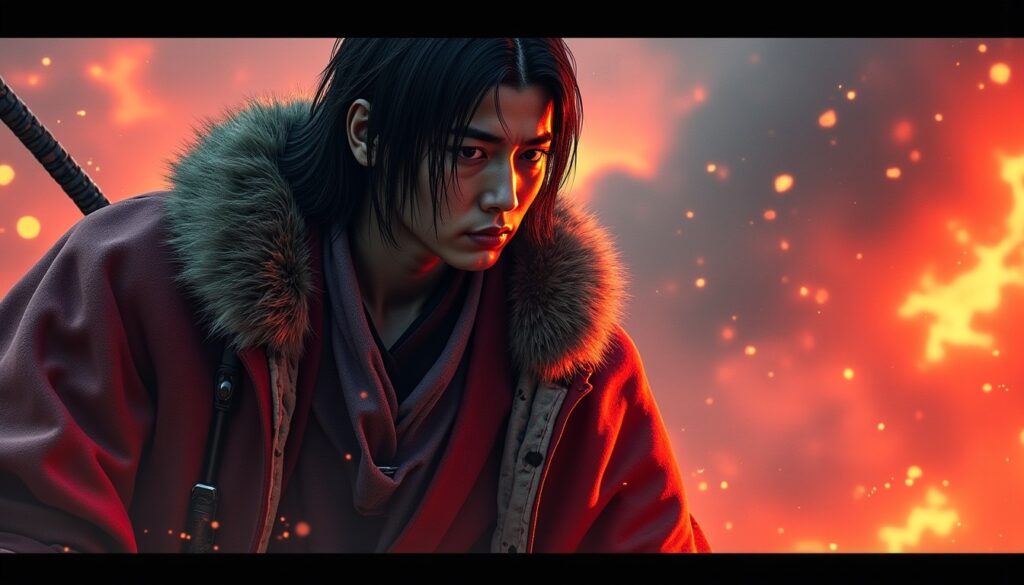
Onimusha Way of the Sword offers a brilliant and long-awaited return of the Capcom franchise after almost two decades of absence. This revival of the series places the sword and mastery of combat at the heart of an enchanted Kyoto, blending history and dark fantasy in a refined visual setting. Here are the key points we will address:
- The overhaul of the combat system focused on timing and parries
- The historical setting and its fusion with immersive dark fantasy
- The structure and progression of the solo campaign
- The technical contributions and multi-platform aspects in 2026
- The expectations and critical feedback on this new samurai adventure
This detailed overview will help you better understand the scale and scope of this remake, which is not just a simple recycling but a true reinvention of the Onimusha universe.
A refined combat system: sword mastery at the heart of Way of the Sword
One of the most striking aspects of Onimusha Way of the Sword lies in its gameplay focused on precise swordplay. The formula adopted by Capcom does not aim to chain frantic strikes without thought but invites the player to adopt a balanced defensive and offensive stance. Launching the Issen counterattacks, iconic to the series, requires perfectly timed execution to perform deadly ripostes against enemies. This system reminds us that success depends less on brute force than on perfect synchronization between attack and parry.
Musashi Miyamoto, the embodiment of the fearless samurai, navigates this fast-paced action system with an arsenal including quick attacks, heavy strikes, dodges, and parries. Each encounter then becomes a tactical duel where the slightest timing mistake is costly, especially against bosses with fast and punishing movements. For example, a boss can perform up to two consecutive attacks at a speed that severely tests the player’s reflexes.
The Oni weapons, new to the gameplay, bring a breath of fresh air by allowing special attacks that briefly create a strategic opening on the battlefield. The Gauntlet, another central element, reuses the orb absorption system known by fans of the franchise, contributing to reinforcing the feeling of continuity with past episodes while integrating modern mechanics.
However, it is important to highlight certain notable limitations, especially regarding the camera, which can struggle to follow aggressive enemies moving quickly from varied angles. The repeated use of the same bosses, who return several times with almost unchanged patterns, tends to dull the freshness of combat in the latter part of the game.
Enchanted Kyoto: between history and dark fantasy, a captivating yet uneven story
The world of Onimusha Way of the Sword transports players to a Kyoto blending historical heritage and supernatural invasion. The Japanese capital of the Edo period undergoes an invasion by the forces of Malice and Genma demons, animating a setting that is both rich and oppressive. Musashi Miyamoto, a charismatic hero, sets out on a very personal initial quest only to eventually grasp a threat weighing over the entire country.
The numerous and well-crafted cinematics help establish this immersive and dynamic setting. This narrative offers an interesting contrast between intense story moments concentrated at the beginning and end of the campaign, and a middle portion more devoted to side activities and repetitive missions. This structural choice may seem unbalanced, with storytelling that ignites in bursts instead of a continuous and smooth development.
A summary table highlights the different key moments of the narrative as well as the calmer intervals in the hero’s development:
| Game Phase | Estimated Duration | Narrative Focus |
|---|---|---|
| Start | 4 hours | Introduction of the threat, presentation of the hero and context |
| Middle | 8 hours | Side activities, Malice purges, exploration of the Kyoto hub |
| End | 8 hours | Major conflicts, boss fights, resolution of the plot |
This breakdown shows a journey oscillating between thrilling moments and more repetitive phases, where narrative density varies according to the pace chosen by Capcom. The mix of characters from Japanese history with original creations enriches the atmosphere while underlining universal themes linked to combat, strength, and samurai resilience.
Kyoto as a central hub: a living but repetitive environment
The choice to make Kyoto the point of departure and constant return in the campaign introduces both immersion and constraints. This city, becoming the heart of a dark universe, is divided between contaminated districts and active zones where the population evolves amid chaos. Exploring the hub allows access to side quests, random events, and specific challenges. There, players meet NPCs whose interactions add a touch of realism and variety.
However, the repetitiveness of purification tasks in certain contaminated areas harms the feeling of novelty. Players often find themselves doing missions with similar objectives: eliminating groups of Genma and eradicating malicious plants. This routine, although integrated into the scenario as a constant struggle, can give the impression of systematic work rather than a spontaneous adventure.
Here is a list of the main activities offered in Kyoto:
- Chance Encounters: unexpected fights in certain districts
- Mysteries of Kyoto: exploration quests offering unique rewards
- Malice purge missions: elimination of corrupted areas to progress
- Interactions with NPCs: information exchanges and opening of new plotlines
- Gradual access to linear zones for scripted fights
The streets of fantastic Kyoto thus present remarkable visual diversity, even if the underlying mechanics could benefit from deepening. This city acts as both a refuge and a battleground, structuring progression in successive layers between exploration and action.
Techniques and platforms: a return shaped for 2026
Onimusha Way of the Sword is designed for multi-support release: PlayStation 5, Xbox Series X|S, PC, and Nintendo Switch 2. Each version stands out with technical features adapted to the hardware:
| Platform | Resolution and Framerate | Specific Features |
|---|---|---|
| PlayStation 5 | Native 4K, enhanced for PS5 Pro | Reduced loading times, optimized graphics |
| Xbox Series X|S | Native 4K, Xbox Play Anywhere | Cloud save and cross-play experience |
| PC (Windows 11 64-bit) | Variable depending on configuration, recommended 16 GB RAM, 50 GB SSD | Advanced customization and keyboard-mouse support |
| Nintendo Switch 2 | 1080p TV, 900p handheld, 30-40 FPS variable | Gesture controls support for sword and bow |
This diversity allows a wide audience to enjoy the experience, whether you are a demanding PC player or a fan of gaming on the go with Switch 2. The integration of gesture controls on the latter confirms the attention given to more tactile and instinctive immersion.
On PC, the technical recommendations help anticipate a smooth experience, notably thanks to memory management and SSD storage. For Xbox owners, the Xbox Play Anywhere function facilitates simplified transfer between multiple Windows devices and Xbox consoles, which proves practical for those juggling platforms.
A mixed reception: who is this remake primarily for?
The profile of Onimusha Way of the Sword mainly appeals to those seeking a challenge based on demanding, technical, and fast-paced combat. The quest for a perfect duel through parry and counterattack refers to the very essence of the historic gameplay, without yielding to the Soulslike style trend widespread among other action titles.
Critics highlight the robustness of the combat system as an undeniable strong point, while other elements undergo a harsher review, particularly the repetitiveness of exploration phases and the second half of the campaign, judged too redundant. The total duration, approximately 20 hours, reveals some imbalance between a rich start and an ending that struggles to renew the experience.
Players who appreciate the intensity of duels and the finesse of swordplay will find here a challenge up to their expectations. Conversely, those who prioritize a dense story or constantly renewed adventure will have to deal with less inspiring moments in progression.
We recommend discovering more about this installment through the in-depth analyses already available on Gamers-Land and learning more about upcoming video game world novelties at Paris Games Week 2025.