
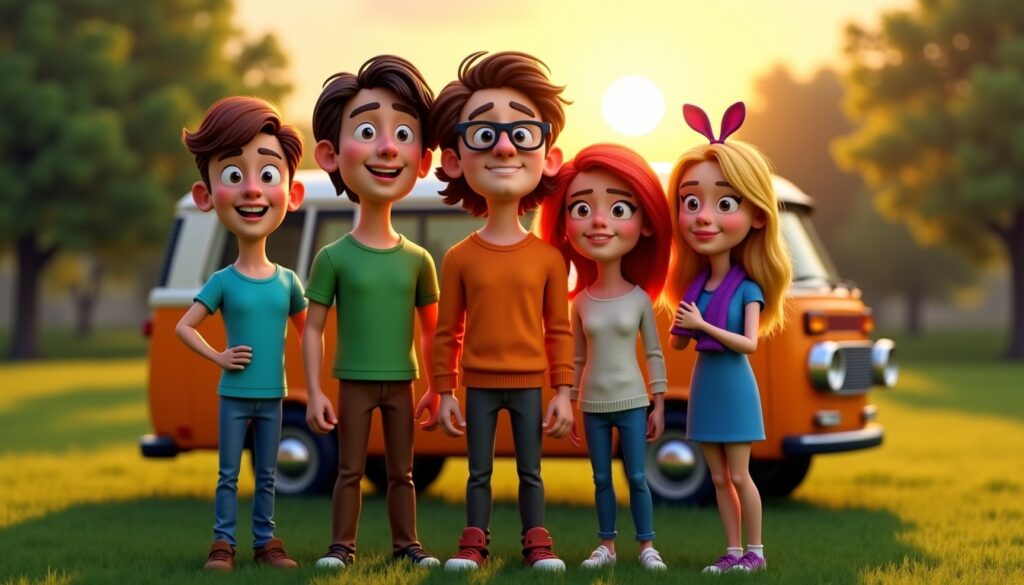
Warner Bros. announces an unprecedented return to the Scooby-Doo universe with Scooby-Doo! Gokko, an animated series in a chibi style and short format, scheduled for release in 2027. This new animation symbolizes several major transitions for the franchise: a redesigned look, storytelling adapted to mobile uses, and a resolutely humorous tone. Here are the key points to remember:
- An animated style inspired by Japanese anime, super deformed chibi version, favoring strong and immediate visual expressiveness.
- A series of web shorts designed for very short episodes, prioritizing physical gags over the usual complex investigations.
- A youthful positioning, aligned with current digital entertainment codes, particularly social networks and video games.
- A broadcast window set for 2027, with no official broadcaster confirmed to date, suggesting a potential distribution focused on digital platforms.
- A link with other Japanese-inspired projects signed by Warner, highlighting a global strategy to adapt classic franchises to contemporary tastes.
This overview highlights a strong will to conquer a new generation while renewing the relationship with the iconic characters of Mystery Inc. The perspective we will take on Scooby-Doo! Gokko will detail its visual universe, its narrative mechanics, but also Warner’s strategy around this reinterpretation. Let’s enter the often mysterious but here joyfully offbeat world of Scooby-Doo Gokko version.
- 1 Scooby-Doo! Gokko: an innovative approach in Warner Bros animation
- 2 The chibi style in Scooby-Doo! Gokko: a compact and expressive design
- 3 Short format and distribution strategy of Scooby-Doo! Gokko in 2027
- 4 Scooby-Doo! Gokko and its narrative stakes: from mysterious investigation to immediate gag
- 5 Warner’s overall strategy around anime adaptations: Scooby-Doo! Gokko, a key link
Scooby-Doo! Gokko: an innovative approach in Warner Bros animation
Warner Bros. Animation unveils with Scooby-Doo! Gokko a project that fits into the continuation of a clear strategic ambition: adapting its historic franchises to current expectations and uses, notably in a context where short formats are gaining popularity. More precisely, Scooby-Doo! Gokko adopts a format of short animated films suited for quick viewing on smartphones or other mobile devices. With a limited duration of a few minutes per episode, this series innovates by dusting off the classic franchise formula by injecting rhythm and immediacy.
The studio relies on a chibi style, also called super deformed, to reshape the visual aspect of the characters. This choice paves the way for iconography easily recognizable instantly while strengthening the comedic potential through exaggeration of features and expressions. The chosen format thus rejects long and complex episodes animation to favor high visual and emotional intensity adapted to digital platforms and social networks where attention is fleeting.
Through this approach, Warner positions Scooby-Doo! Gokko as a series designed not only for nostalgics but for a younger audience accustomed to consuming brief, dynamic, and humorous content. The studio also emphasizes that the new series values slapstick, physical action comedy, renewing the appeal around iconic characters through decidedly light and entertaining situations.
To illustrate this dynamic, we can compare Scooby-Doo! Gokko with Tom & Jerry Gokko, released in 2022: another short project signed by Warner that managed to revitalize the classic license by adopting the same chibi aesthetic and intensifying pure comedy without theatrical dialogues. We note that Scooby-Doo! Gokko relies on this winning model while adapting the concept to the very particular universe of Mystery Inc.
This transition naturally comes with communication challenges, notably around its broadcast. Although the series was announced at the end of 2024 after an event in Brazil, no broadcaster has yet been officially designated. The “short-form series” label suggests a broadcast adapted to online platforms, thus accentuating Warner Bros. Animation’s digital and mobile turn.
The chibi style in Scooby-Doo! Gokko: a compact and expressive design
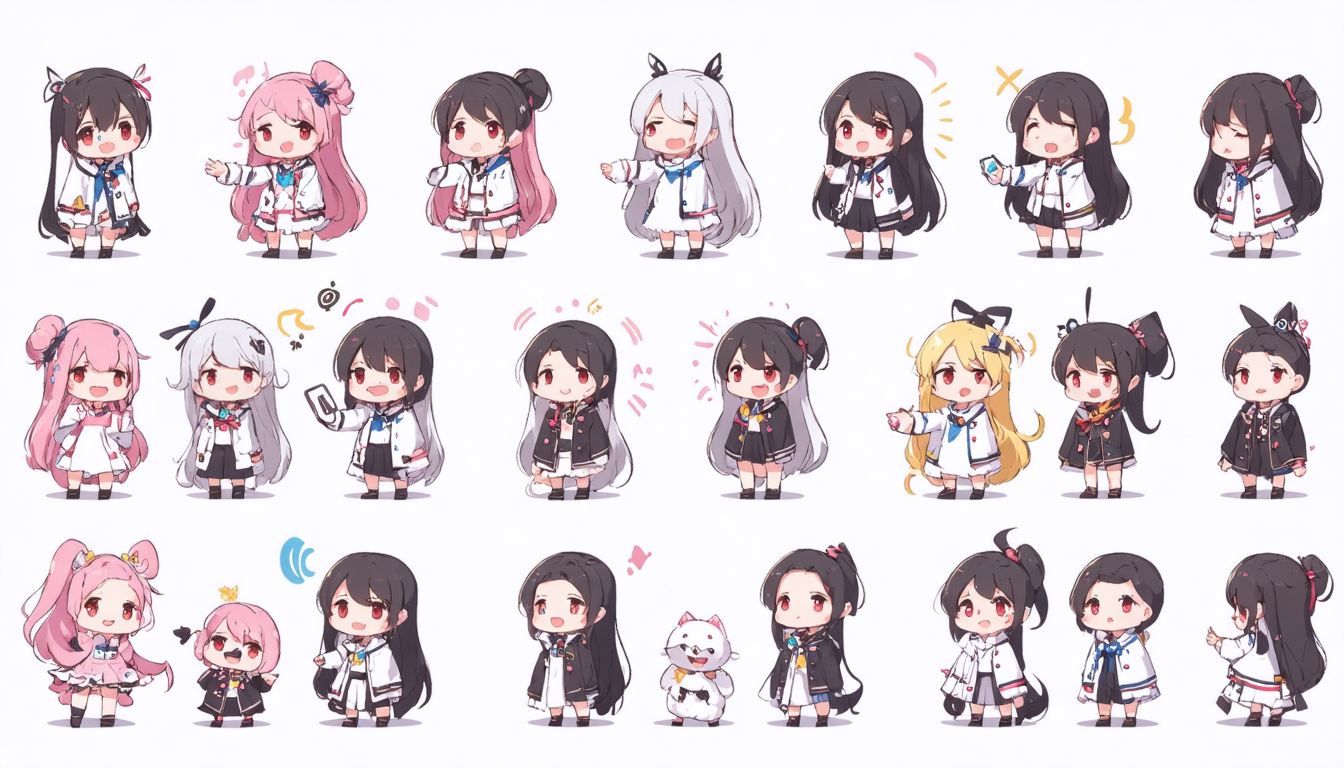
The use of the chibi style in Scooby-Doo! Gokko marks a strong aesthetic break from the original series. This style, very popular in Japanese animation, is characterized by deliberately exaggerated proportions: large expressive heads and a compact body. This visual identity allows instant transmission of an emotion or reaction, which is an indispensable strength for a short format.
In Scooby-Doo! Gokko, this graphic choice has three main objectives:
- Visual immediacy: the characters are easily identifiable, even on small screens, thanks to simplified but very expressive silhouettes and expressions.
- Enhancement of visual comedy: the exaggeration in facial expressions and exaggerated movements favor slapstick humor and physical gags.
- Adaptation to modern trends: by aligning with the visual codes of popular video games and hundreds of mini animated series on social networks, the series naturally speaks to the contemporary youth audience.
The simplification of the design also allows accelerating the production pace and multiplication of episodes. This is essential in a content strategy focused on digital content that requires responsiveness and constant renewal to maintain the interest of young consumers.
The chibi style conveys a kind of immediate tenderness to the characters. Scooby and Shaggy, for example, are revisited in miniaturized and ultra-expressive versions that emphasize their close friendship and comic clumsiness. It is a fertile ground to explore light and wild stories rather than long and mysterious investigations.
To give you a concrete idea, the Tom & Jerry Gokko series achieved a 30% increase in its audience among 8-14 year-olds after shifting to the chibi style. This success highlights the relevance of this approach for timeless heroes thus offering a new youth to timeless classics.
With Scooby-Doo! Gokko, Warner Bros. relies on a formula that combines visual innovation and fidelity to the spirit of slapstick, a recipe that should appeal to enthusiasts, whether novices or already fans of the franchise.
Short format and distribution strategy of Scooby-Doo! Gokko in 2027
The format offered by Scooby-Doo! Gokko fully fits into a strong trend in the animation industry: the development of short content adapted to mobile consumption. Each episode, rich in visual gags and a sustained pace, lasts only a few minutes, offering a quick and pleasant experience to consume.
This short duration directly impacts the narration and episode construction. Long classic investigations with complex puzzles are no longer found, but rather standalone scenes revolving around funny or absurd situations involving Scooby, Shaggy, and the rest of the gang. Immediate laughter takes precedence over suspense, with dynamic sequences where gestures and expressions are essential.
The quick consumption perfectly aligns with the habits of younger generations who often favor digital platforms such as YouTube, TikTok, or other social networks. Scooby-Doo! Gokko seems tailor-made for these environments, with a release horizon set for 2027, a period during which demand for this type of content continues to grow.
This orientation also manifests in the choice of the Gokko label, a brand that already offers another very successful variant with Tom & Jerry. The table below summarizes the main characteristics of the Gokko franchise:
| Characteristic | Scooby-Doo! Gokko | Tom & Jerry Gokko |
|---|---|---|
| Visual style | Chibi / super deformed | Chibi / super deformed |
| Episode duration | 3-5 minutes | 3-5 minutes |
| Tone | Slapstick, physical gags | Slapstick, slapstick comedy |
| Target audience | Youth audience, mobile consumers | Youth audience, mobile consumers |
| Broadcast | Not yet confirmed (probably web) | Digital platforms, local TV in some countries |
On the broadcast side, the mystery remains. Warner Bros. has not yet announced which channel or platform will host the series. This lack of information fuels the idea that the series could be broadcast exclusively online, like other successful short-form productions. It will be necessary to closely follow announcements over the next 18 months.
The Warner ecosystem thus seems to be experimenting with this short and edgy format, seeing Scooby-Doo! Gokko as an ideal testing ground to reach a younger audience, particularly sensitive to this type of product that does not require a significant time investment.
Scooby-Doo! Gokko and its narrative stakes: from mysterious investigation to immediate gag
The Scooby-Doo franchise is traditionally centered on solving mysterious investigations, where the gradual discovery of clues kept viewers on the edge of their seats. With Scooby-Doo! Gokko, this classic approach is revisited to favor a lighter narrative form oriented towards physical comedy. The format change requires each episode to act as a micro humorous story rather than a long mystery spread over several minutes.
This evolution positions mystery in the background, never making it central, which transforms the role of the characters. Scooby and Shaggy remain at the heart of the plots, but the focus shifts from fear or reflection to awkwardness and fun. Humor becomes a key value, shared through slapstick situations where chases, falls, and exaggerated expressions create an immediate comic effect.
Consequently, the dynamic of the Mystery Inc. gang is also revisited. Each protagonist appears in a simplified and adorable version, opening the door to many funny and fast interactions, exploiting their caricatured traits to generate quick laughs. This reprise stems from the observation that the target audience favors instantaneity in entertainment rather than constructing a complex plot.
We can illustrate this transformation by citing Tom & Jerry Gokko, where the duo competes in very expressive slapstick games, with few or no dialogues. Here, Scooby-Doo! Gokko seems to borrow the same mechanic where visual humor reigns supreme.
This narrative turn does not mean a complete abandonment of mystery or adventure in the franchise but rather a diversification of forms. Warner Bros. is simultaneously developing feature films or more developed series like Go-Go Mystery Machine, another anime project where adventure and puzzles occupy a central place. Scooby-Doo! Gokko positions itself as a complementary alternative, focused on gag and quick entertainment.
Warner’s overall strategy around anime adaptations: Scooby-Doo! Gokko, a key link
The launch of Scooby-Doo! Gokko fits into a broader Warner Bros. strategy aiming to revisit its flagship franchises through the lens of Japanese animation and short formats. This orientation reflects several deep trends:
- The growing popularity of anime worldwide, which appeals to diverse audiences, including in the West.
- The rise of short formats, adapted to social networks and today’s fragmented consumption.
- The desire to renew classic licenses to avoid saturation and capture the attention of new generations.
Analyzing the portfolio of recent projects shows that Scooby-Doo! Gokko is accompanied by other initiatives like Go-Go Mystery Machine, announced in 2024, which offers a longer and more narrative anime experience. This duality between short formats and long episodes reflects a diversification strategy to reach multiple market segments.
Warner also seems to capitalize on the growing appeal of the public for more dynamic and expressive graphic styles. By materializing this turn through chibi and slapstick variations, the studio creates new entry points into its universes, facilitating access for novices, particularly children or fans less familiar with the historic franchise.
This approach is also accompanied by an interest in the link between Western and Japanese cultures, illustrated by Warner’s involvement in projects like The Suicide Squad Isekai or collaborations around well-known licenses such as JoJo’s Bizarre Adventure. These cultural crossroads fuel a very promising creative renewal.
Through this strategy, Warner now has a diversified arsenal to bring Scooby-Doo to life in a multitude of formats and registers: from purely visual comic short form with Gokko to more in-depth and darker adventures in other projects. This guarantees the franchise’s ability to continuously adapt to changes in the animation and entertainment market.