
Reanimal immediately establishes itself as a must-experience for fans of cooperative horror games. This new adventure by the creators of Little Nightmares offers an intense immersion into a universe that is both dark and terrifying, designed for two players. You play as an orphaned brother and sister, plunged into the heart of a nightmarish island where survival depends on collaboration and managing suspense. This experience stands out for:
- A unique split-screen camera mechanic that enhances tension and limits escape routes, strengthening the claustrophobic aspect of the game.
- A refined aesthetic close to childhood traumas, with 2.5D environments where every corner holds secrets.
- Fragmented storytelling, leaving behind a mysterious lore to uncover through scattered clues.
- A release planned for February 13, 2026, on PS5, Xbox Series X|S, PC, and Nintendo Switch 2, accompanied by a free demo already available on several platforms.
- Open multiplayer options, from solo to local and online co-op, to combine thrills and strategy with friends.
We invite you to explore together why Reanimal promises to become a benchmark in multiplayer horror games and how it builds on the heritage of Little Nightmares to offer an unforgettable adventure.
- 1 Reanimal: innovative cooperative gameplay serving shared fear
- 2 A fragmented story and dark universe for a unique adventure
- 3 A poignant artistic universe reflecting childhood traumas
- 4 Release, editions, and bonuses: everything you need to know to fully enjoy Reanimal
- 5 What are the major survival challenges in Reanimal and how to overcome them?
The gameplay of Reanimal is based on the fundamental principle of cooperation, featuring two players embodying a brother and sister who must navigate together through a world as hostile as it is bewildering. This gameplay choice creates a rare dynamic in horror games, where solo experience is more common.
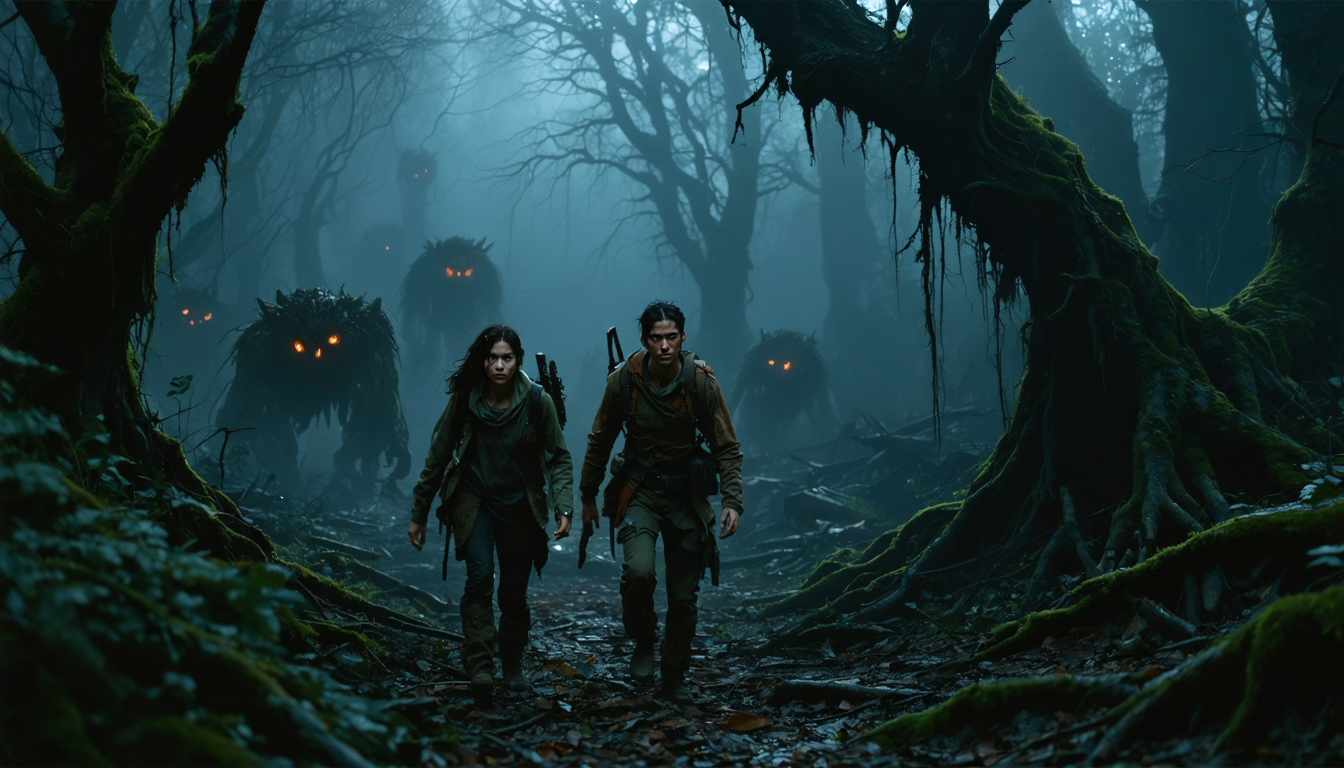
The main innovation lies in the shared camera. Unlike games where each player has an independent view, here, the camera follows both protagonists simultaneously, imposing constant vigilance and collective effort. The direct consequence is permanent tension, because if one strays too far, visibility decreases, exposing the duo to numerous dangers. This mechanic encourages gameplay paced by synchronization and communication, a challenge in itself against the oppressive environment and unpredictable enemies.
Let’s imagine a concrete example: during a section taking place in the mill, players must advance while avoiding a deformed creature. The narrow visible frame forces careful and coordinated movements—if one of the two tries to explore a corner, they risk losing sight of their partner, which immediately triggers an increased sense of danger. The strategic aspect is thus reinforced, as progression demands as much reflection as reactivity.
This setup does not only generate tension: it also fosters a social experience. Being immersed within the same window, sharing every movement and every emotion, creates a particular chemistry between participants. Moments of fear are amplified by the complicity or quarrels born from coordination errors, making Reanimal an effective title to strengthen bonds between friends or family around the controller.
Accessible in local and online co-op, but also solo for those daring enough to take on the challenge alone, the game adapts to different player profiles. This choice highlights the desire of the Tarsier studio to make terror accessible, without denying the complexity inherent in such an immersive and deep adventure.
A visceral immersion thanks to constrained cooperation
The shared camera creates a rare form of digital claustrophobia, making every room, every corridor, every corner a potential deadly trap. In Reanimal, horror does not only come from monsters but from managing the shared space itself, where any deviation can be fatal.
The distinctive feature of this gameplay also lies in the impossibility of “running off separately.” The player cannot separate for long: separation is akin to an extreme risk, and this constant tension is what makes the experience so captivating. In a game where suspense reigns, this mechanic acts as a powerful narrative and gameplay engine.
A fragmented story and dark universe for a unique adventure
Reanimal transports us to a troubling island, the setting of a dramatic story between an orphaned brother and sister, who set out to find their mysteriously missing friends. The plot unfolds through a series of dark and oppressive zones like the Mill or the Railway Depot, spaces that actively contribute to the distressing atmosphere. The geographical isolation is not just a simple backdrop but a character in its own right that shapes the game’s ambiance.
The storytelling favors a fragmented approach, through many clues, easter eggs, and fragments of dialogues left to the player to piece together the story. This technique stimulates the imagination, requiring an active reading of the universe, where every detail matters. The lore, minimalist but dense, inspires a constant unease, reinforced by the implicit rule of silence and unspoken words in the adventure.
To illustrate this point, consider the example of collectible masks such as Foxhead and Muttonhead, which are not merely aesthetic elements: they are part of a symbolic discourse linked to the children’s past, revealing deep psychological aspects. These masks are a window onto the childhood traumas haunting every corner of this cursed island.
This atmosphere is reinforced by the artistic style, a clear continuity with the studio’s cult titles. The threatening silhouette of monsters, the insufficient details that feed intuition more than reason, all this creates a universe where fear is as much a setting as an emotion shared between players.
A universe where fear becomes a narrative tool
The scenario outlines a waking nightmare, where terror acts as a lever to explore childhood memories, buried fears, and the vulnerability of the human soul. This leads to moments of tension that go beyond a simple jump scare to engage the emotional. It is an experience where fear engages players at a deep level, making each discovery as chilling as it is meaningful.
A poignant artistic universe reflecting childhood traumas
This new cooperative horror game openly links to Little Nightmares. Tarsier studio perpetuates a dark and distressing style, inspired by childhood nightmares, in which aesthetics play a fundamental role. The 2.5D environments offer a perspective that exploits contrasts of shadow and light to evoke deep discomfort.
The creature designs are particularly evocative, echoing childhood fears through distorted silhouettes. These monsters are not ordinary enemies; they symbolically embody the anxieties and traumas children may feel, offering a more psychological approach to terror. This method increases the emotional impact and immersion.
Given the success of previous titles, it is interesting to note that the artistic direction favors subtlety over spectacle. The labyrinthine environments, blind spots, and staged details contribute to a universe as fascinating as it is unsettling. The feeling of being constantly watched or spied upon adds another layer of stress that restrains exploration yet also makes it addictive.
The places speak for themselves. The Mill, for example, echoes childhood memories both dreamlike and unhealthy, while the Railway Depot suggests endless journeys through a hopeless night. This duality between beauty and horror weaves the dramatic fabric of the game.
Artistic influences from Little Nightmares and beyond
With Reanimal, Tarsier Studios situates itself in a stylistic lineage dear to genre fans, while pushing the limits of cooperative gameplay. The blend of dark aesthetics and challenging gameplay offers a renewal of horror games that favors suggestion over explicitness. This recipe has already won over a broad audience and seems destined for similar success in 2026.
Release, editions, and bonuses: everything you need to know to fully enjoy Reanimal
Reanimal is scheduled for an official release on February 13, 2026, on major next-gen consoles: PS5, Xbox Series X|S, PC (via Steam), and the Nintendo Switch 2. The latter will see a slightly delayed launch compared to other platforms. For those who want to get a feel before purchasing, a free demo has been available for several months already on PS5, Xbox Series, and PC, offering a clear preview of the gameplay and atmosphere of the game.
The game is offered in several editions, adapted to different buyer profiles:
| Edition | Main content | Price |
|---|---|---|
| Standard | The base game | €39.99 |
| Deluxe (digital) | Base game + Season Pass + cosmetic bonuses | $59.99 |
| Physical Collector (France) | Game content + exclusive undecorated items | €199.99 |
Preorders on PS5 also grant access to exclusive bonus masks, Foxhead and Muttonhead, which add an aesthetic and symbolic dimension linked to the game’s lore. This thematic bonus between prey and predator well illustrates the duality players will have to manage throughout the journey.
The PEGI 16+ rating ensures that the title remains accessible, while maintaining sufficient intensity for thrill-seekers. Thanks to multilingual localization including English, German, Spanish, and Chinese, Reanimal promises an international reach, thus broadening its audience.
With this launch, Tarsier Studios bets on a controlled approach combining quality, accessibility, and intensity. Players can therefore expect a multiplayer horror game where suspense and survival merge in a one-of-a-kind adventure.
What are the major survival challenges in Reanimal and how to overcome them?
Surviving on the nightmarish island of Reanimal requires much more than mere skill. Coordination between the two characters is at the heart of progression, and every encounter can turn into a desperate fight or a tactical escape. The main challenges are based on:
- Managing visibility imposed by the shared camera, which conditions movement and communication.
- Exploiting environments where blind spots and narrow passages demand cautious exploration and anticipation.
- Progressive understanding of the lore, which helps avoid certain traps and better anticipate enemy behaviors.
- Collecting masks and other items that provide indirect advantages and enrich the narrative experience.
- Controlling deformed monsters, which embody fears and represent obstacles both psychological and physical.
A striking example of survival occurs in the Railway Depot sequence. The duo must move quietly, avoiding alert signs that would trigger attacks from terrifying creatures. The experience demands patience and caution, with a pace that keeps suspense at its highest level.
Cooperation is not an option but a vital necessity. Those who try to play independently will quickly experience forced scares or permanent death, emphasizing the importance of fluid communication and shared strategy in the service of survival.
Finally, the game’s design encourages curiosity despite the terror. Every discovery, no matter how small, can hide a key secret to advancing or a new layer of mystery to unravel, inviting players to explore methodically while staying on their guard.