
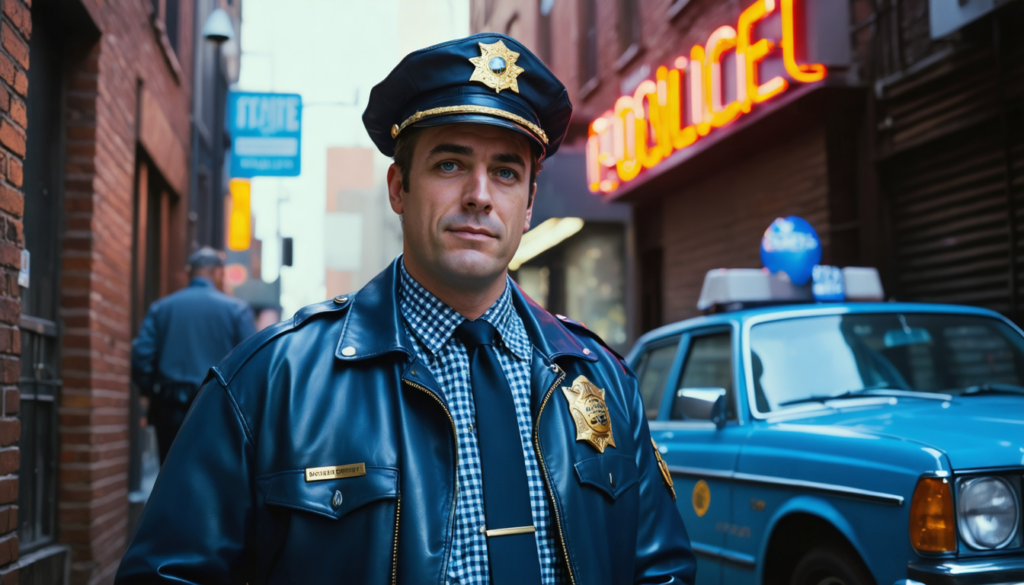
The film Police Flash 80 promises to be an original and nostalgic police comedy, led by François Damiens, who plays an old-school cop as endearing as he is hilarious. Released in cinemas in March 2026, this feature film showcases a colorful police squad in 1980s Paris. By exploring strong themes such as 80s nostalgia, offbeat humor, and a tightly woven police plot, this film promises to breathe new life into the police film genre.
Here are the points we will cover in this article:
- The immersive reconstruction of 1984 Paris and the retro world of Police Flash 80.
- The central character Yvon Kastendeuch played by François Damiens, an old-fashioned cop with singular charm.
- The unprecedented workings of the “Police Flash 80” unit and its comedic group dynamic.
- Cultural references to the 80s, between period technologies and pop culture.
- The strong cast, critical reception, and anticipation around the cinema release.
Each of these aspects reveals a facet of the creative approach that makes Police Flash 80 a work as funny as it is touching, enticing viewers to discover this film upon its release.
- 1 A magnificently reconstructed 1980s Paris for a dive into retro police cinema
- 2 François Damiens as Yvon Kastendeuch: an irresistible and comedic old-school cop
- 3 Police Flash 80: an unlikely and endearing squad at the heart of the police comedy
- 4 80s in cinema: a playful homage between technological gadgets and iconic pop culture
- 5 A rich cast and promising reception as the theatrical release approaches
A magnificently reconstructed 1980s Paris for a dive into retro police cinema
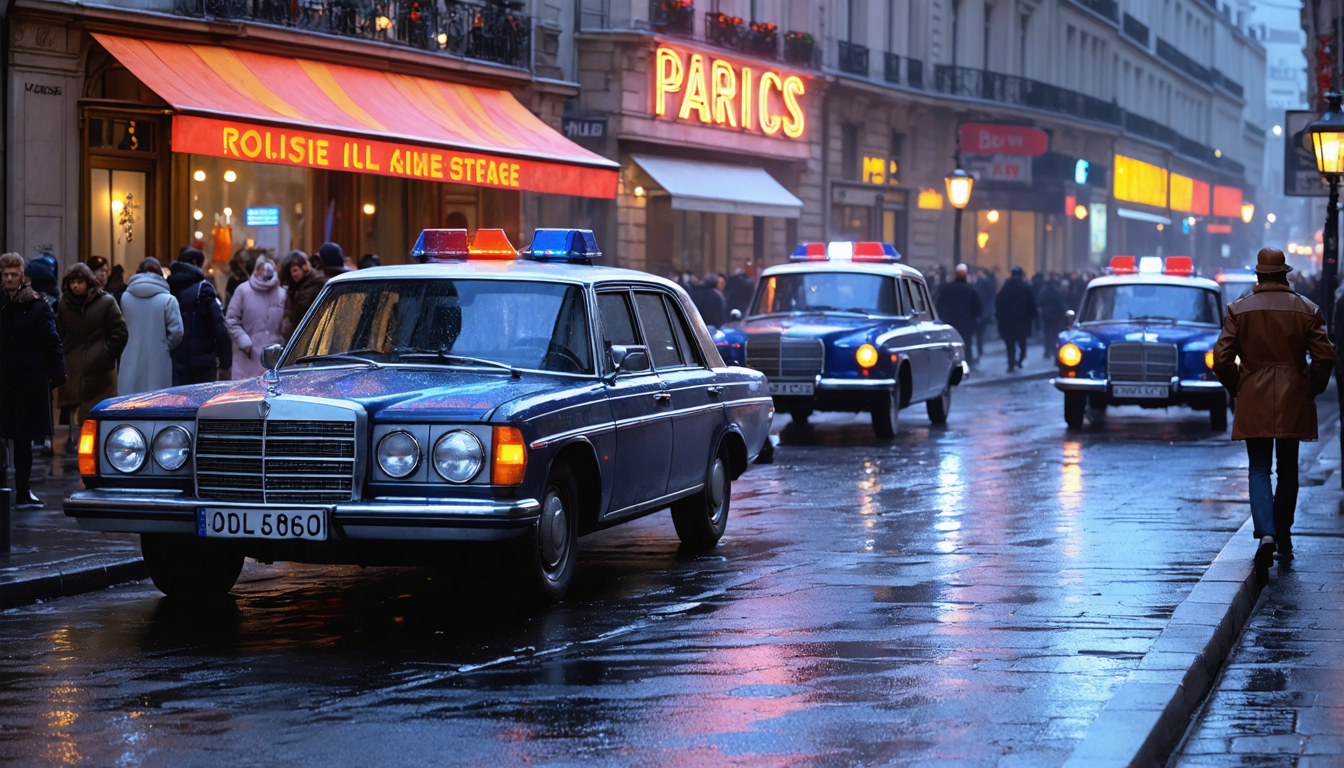
From the first scenes of Police Flash 80, the viewer is transported to Paris in 1984, a pivotal era where heroin trafficking floods the streets, creating a realistic and tense backdrop for the police investigation. This visual reconstruction goes far beyond mere scenery: it makes time a character in its own right.
Iconic elements from the 80s appear: neon lights, wide jackets, period cars, and especially the famous Minitel, a symbol of emerging technology. These details infuse the film with an authentic charm and an offbeat twist that generate constant humor.
The Parisian setting, both in its working-class neighborhoods and more emblematic locations, creates a believable universe but also one conducive to comedic situations, where the clash between emerging modernity and outdated police methods is palpable.
The choice of the year 1984 is no coincidence: it places the characters at a time when the police experiment with innovative tools but still must contend with often archaic methods, creating a constant tension between ambitions and on-the-ground realities.
In summary, this set serves a dual purpose: on the one hand, providing a realistic framework for a police plot; on the other, highlighting the incongruities and eccentricities of protagonists immersed in a changing world.
François Damiens as Yvon Kastendeuch: an irresistible and comedic old-school cop
One of the major strengths of Police Flash 80 is the lead role given to François Damiens, a Belgian actor renowned for his ability to blend humor and authenticity. He plays Yvon Kastendeuch, an old-fashioned policeman, passionate about Michel Sardou and with an appetite for andouillette, instantly creating a funny and endearing portrait.
Yvon is not just a stern cop: he represents an era, a mindset, and a certain sense of authority. His character, far from the polished heroes of modern police films, manages to capture a form of tenderness through his clumsiness and offbeat side.
After the sudden disappearance of his colleague Johnny Lansky, he finds himself at the head of an experimental elite unit, the famous Police Flash 80. This paradoxical situation – entrusting the future to someone who embodies the past – becomes a constant comedic device and a key narrative driver.
François Damiens manages to inject an energy that is sometimes outdated but deeply human and funny, creating an immediate connection with the audience. His performance portrays an imperfect but determined character whose misjudgments contribute as much to the investigation as his successes.
He also illustrates the gap between now outdated methods and the evolution of the police profession, while making us laugh thanks to a range of expressions, mimics, and cultural references from the 80s.
Police Flash 80: an unlikely and endearing squad at the heart of the police comedy
The film’s strength also lies in the formation of a heterogeneous team that advances the plot through their varied temperaments and often chaotic interactions. Yvon Kastendeuch leads this experimental unit, whose members each bring a dose of humor and uniqueness.
Here is the main composition of this squad:
- Guilaine: an overwhelmed but strategic mother, who manages logistics and organization. Her role highlights the delicate balance between professional life and mental load.
- Marfoud: a technology expert who introduces the Minitel as a revolutionary gadget of the era, embodying the gap between the old world and new police practices.
- Roberto: an infiltrator with a mullet look, adding a comedic and visual touch, often engaged in rocambolesque missions but always with a certain boldness.
This team, far from the classic models of serious crime films, generates situations where the declared ambition of being an elite unit clashes with the limits of its means and actual skills. Clumsiness, improbable strokes of genius, internal conflicts are all driving forces of energetic and fresh storytelling.
Humor arises from the opposition between their desire to “be modern” despite their archaic setting, giving rise to a fluid and dynamic group comedy where each character adds their nuance.
This collective dynamic recalls other works in the vein of comedic police series or group comedies, where success does not rest on a single protagonist but on an alchemy between temperaments.
80s in cinema: a playful homage between technological gadgets and iconic pop culture
The film employs an overt retro style that doesn’t just try to evoke the 80s through sets or costumes but fully exploits the pop culture and landmark technologies of the period to enrich the experience.
Thus, at the heart of the narrative, we find several emblematic elements such as the Minitel, the internet ancestor, which becomes a central tool in certain scenes, symbolizing the novelty and sometimes the ridiculousness of that era.
Musical references, with Michel Sardou as a backdrop, as well as fashion styles – wide jackets, mullet haircuts – contribute to an atmosphere imbued with nostalgia and subtle humor.
Far from being mere scenery, this reinterpretation serves as a comedic device by creating a gap between the characters’ desire to appear competent and the often off-kilter reality of their methods, rooted in 80s reflexes.
The 80s thus become a playground on which dialogues, situations, and aesthetics rely to convey both satire and affectionate homage. These visual and sound combos foster a universe where the audience can recognize themselves and smile at this bygone era while enjoying accessible and well-thought-out humor.
A rich cast and promising reception as the theatrical release approaches
Besides François Damiens, the main cast of Police Flash 80 includes actors such as Audrey Lamy, Xavier Lacaille, Thomas Ngijol, and Brahim Bouhlel. This diverse choice of actors from various comedic backgrounds enriches the group dynamic and increases narrative richness.
Supporting roles, played by Philippe Rebbot, Yan Tual, and Hamed Souna, in turn add a density that avoids any monolithic feel and maintains interest around the plot and interactions.
The film was premiered at the 2026 Alpe d’Huez International Comedy Film Festival, an important event presided over by Audrey Lamy. This particular context highlights the importance given to this turning point in police comedy, at a time when audience expectations are high.
Early reviews describe a work mixing sincere nostalgia, efficient satire, and “pure directorial joy.” The reception emphasizes a “retro trip” full of humor and energy, highlighting a group of endearing characters sometimes overwhelmed by events.
The table below presents some key elements of the film and their expected impact:
| Element | Description | Impact on the film |
|---|---|---|
| Release date | March 18, 2026 in theaters in France | Meeting with a broad audience, aligned with the prime cinema season |
| Director | Jean-Baptiste Saurel | Clear direction focusing on comedy and retro setting |
| Production | Nolita Cinéma and Pathé Production | Important support for distribution and promotion |
| Genre | Police comedy, 80s tribute | Blend of serious investigation and comedic situations |
| Main cast | François Damiens, Audrey Lamy, Thomas Ngijol | Comedic strength and variety of registers |
For series lovers, this retro and police universe recalls expectations around Marshals: A Yellowstone Story and the richness of investigative comedies. This parallel highlights a growing enthusiasm for series and films blending police action and offbeat humor.
The scheduled release in March 2026 will undoubtedly be a highly anticipated moment to see if this troupe of characters manages to seduce beyond its nostalgic aspect and to establish a new breath for police comedies in cinema.