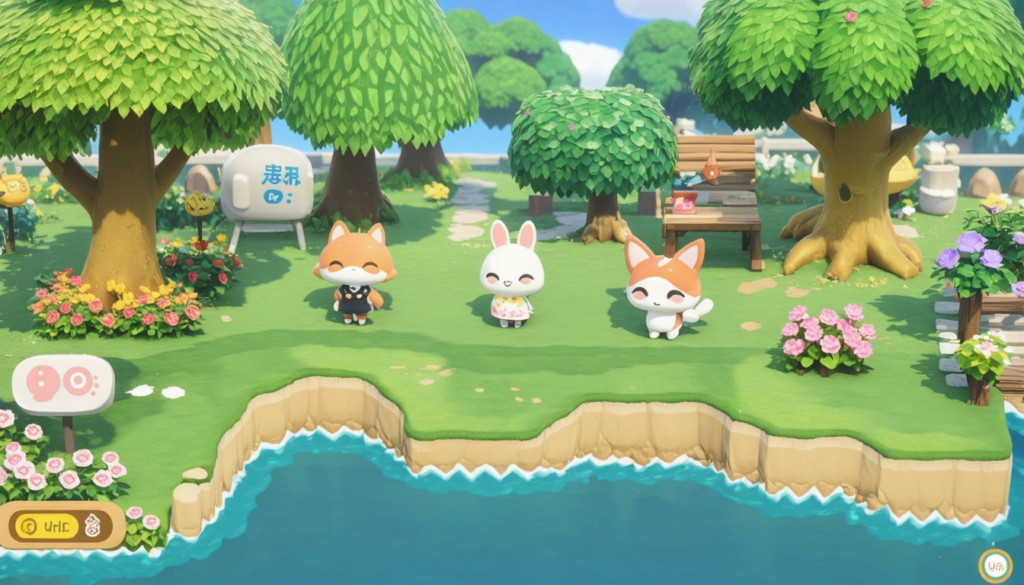
Pokopia, scheduled for March 5, 2026 on Nintendo Switch 2, is announced as a major turning point in the Pokémon video game universe, offering a unique life simulation experience. Its inevitable blend with Animal Crossing’s gameplay is intriguing: similarities in a calm pace, extensive customization, day/night cycle, and social interaction, accompanied by an open world where players can create and manage an environment reflecting themselves. This article precisely analyzes the mechanics and scope of Pokopia through several key aspects:
- The exclusivity and technical ambitions of Pokopia on Switch 2.
- The bold narrative choice of a Ditto as the protagonist.
- The profound differentiation from Animal Crossing thanks to a dynamic ecosystem.
- The innovations in using Pokémon abilities for simulation gameplay.
- The prospects and implications of this new approach for Pokémon fans and simulation game enthusiasts.
Through this lens, let’s explore together how Pokopia could reinvent the genre, or on the contrary, fit into a deliberate repetition of an already popular model.
- 1 Pokopia, a major stake for Nintendo Switch 2: a strategic and ambitious launch
- 2 The innovative narration of Pokopia: Ditto, a hero like no other
- 3 A living and dynamic ecosystem, far from Animal Crossing’s static villages
- 4 Pokémon abilities as tools: rethinking simulation gameplay
- 5 Pokopia vs Animal Crossing: two visions of simulation gaming with the same peaceful breath
Pokopia, a major stake for Nintendo Switch 2: a strategic and ambitious launch
Pokopia is much more than a spin-off in the Pokémon galaxy: it is the first exclusive title for Nintendo Switch 2, scheduled for release on March 5, 2026. This clear position illustrates the determination of The Pokémon Company and its partners, Game Freak and Koei Tecmo via Omega Force, to establish a new technical and gameplay benchmark. The choice of total exclusivity and a large-scale production (the game weighs about 10 GB) shows that it is a cornerstone for this new console generation.
The commercial strategy, notably with a price set at €69.99 for the digital version and confirmation of a standard physical card, reflects a clear ambition: Pokopia is not content with being a simple derivative game but a cornerstone intended to attract diverse audiences. In this, it aims to quietly challenge the giant Animal Crossing: New Horizons, which sold 45 million copies and redefined the concept of a “comforting game.”
At this stage, signs suggest that Pokopia relies on a thoughtful approach, with a robust production roadmap and tightly controlled publication. The collaboration between longstanding Pokémon license studios and an action-strategy specialist like Koei Tecmo also opens the door to more elaborate gameplay, capable of going beyond the usual contemplative or decorative elements associated with simulation games.
Finally, the release planned on Switch 2, rather than on an older console, allows maximizing graphic and technical performance, offering players an immersive graphic and sound universe, meeting contemporary expectations for open-world games and social interaction. This technical framework thus constitutes an ideal takeoff to introduce Pokopia as a revolution or an alternative to the well-established Animal Crossing universe.
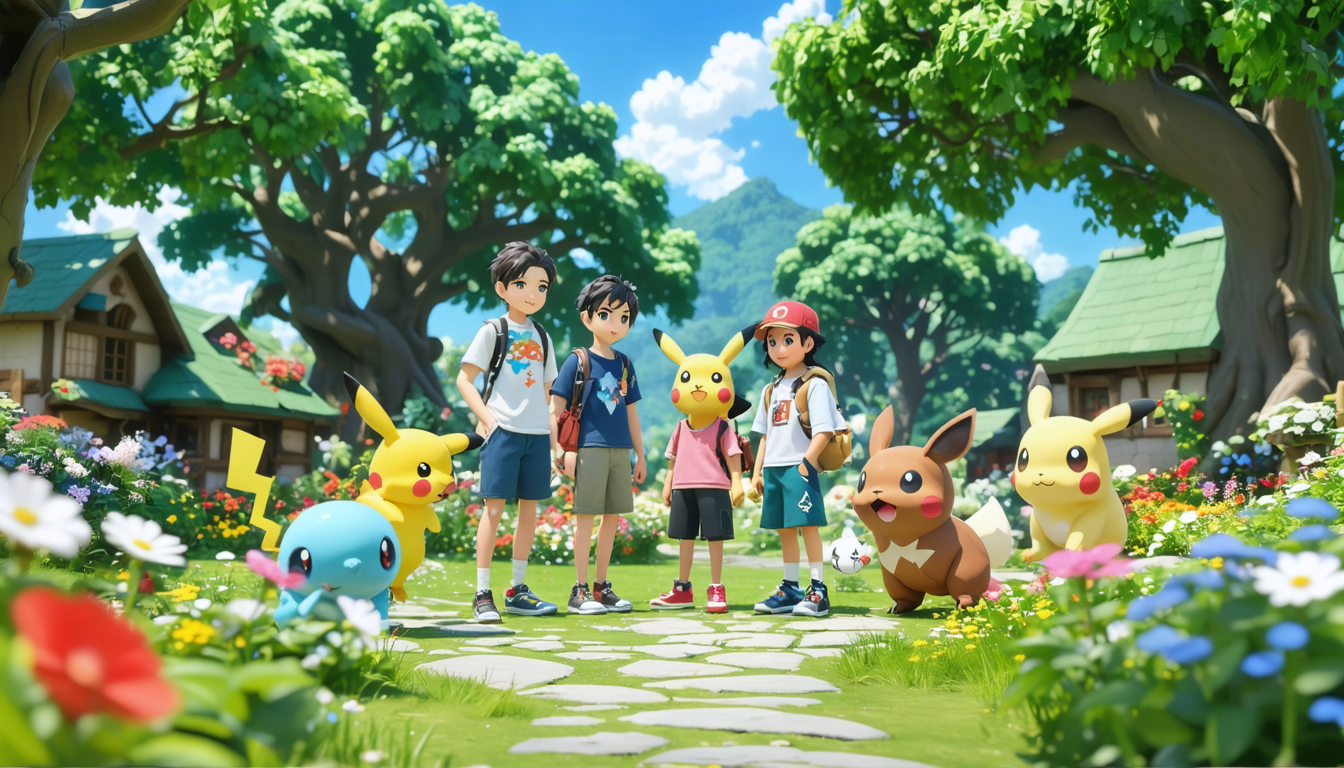
The innovative narration of Pokopia: Ditto, a hero like no other
Instead of a vague customizable human avatar, common in life simulation games, Pokopia features a Ditto capable of transforming into a human. This surprising narrative choice profoundly alters the experience. It is no longer simply about inhabiting a place, but embodying a form of permanent metamorphosis symbolizing an identity shift.
This transformation establishes a close link with the Pokémon universe, emphasizing the idea that the player is not a simple human but a hybrid creature. This approach also feeds the gameplay, since Ditto can learn and directly use Pokémon moves, thus fully integrating franchise’s emblematic mechanics.
The use of abilities like Bulbasaur’s Razor Leaf or Squirtle’s Water Gun to modify the environment goes far beyond simple aesthetics. Here, it is a reinterpretation of the open world construction and maintenance system taking place. Instead of classic manual tools, organic powers intervene, adding a living, almost magical dimension to terraforming.
The main identity of Pokopia rests therefore on this permanent interaction between transformation, adaptation, and intelligent use of abilities. It is neither a gimmick nor a mere wink: it is a deep mechanic that redefines the player’s role in the virtual world.
This idea proposes a clear break with the Animal Crossing model, which favors a simple simulation of human life in an anthropomorphic setting. Thanks to its Ditto protagonist, Pokopia establishes a balance between familiarity and innovation that could capture both Pokémon fans and those seeking a more immersive simulation experience.
For example:
- By using Water Gun to irrigate the lands, the player enables the active growth of flora in diverse biomes.
- Thanks to Ditto’s ability to learn new moves, interactions with other Pokémon become more dynamic, leading to evolutionary behaviors in ecosystems.
- The transformation is also narrative, supporting themes of identity and coexistence between humans and Pokémon.
A living and dynamic ecosystem, far from Animal Crossing’s static villages
Pokopia abandons the concept of an isolated isle occupied by fixed villagers to immerse players in a universe structured by varied biomes: prairies, forests, mountains, and beaches. This environmental diversity highlights ecological richness and sustainable development, two notions rarely explored in life simulation games.
Pokémon are not extras but full-fledged inhabitants capable of evolving and changing their behavior in response to player care and decisions. This cohabitative dimension is part of an organic process where the ecosystem integrates growth, reproduction, and social interactions between species.
The following table summarizes the main differences between Pokopia and Animal Crossing concerning the management of inhabitants and the environment:
| Aspect | Pokopia | Animal Crossing |
|---|---|---|
| Characters | Living and evolving Pokémon | Fixed anthropomorphic villagers |
| Ecosystem | Structured by varied biomes | Single, flat island |
| Interaction | Influenced by player care and choices | Preprogrammed behaviors |
| Natural cycle | Real-time day/night and weather influencing ecosystem | Day/night cycle and fixed events |
| Focus | Ecological sustainability and cohabitation | Decoration and static friendship |
This more living and organic model marks a clear advance for simulation fans where ecological responsibility and connection with living beings are at the core of gameplay. The strong and evolving dynamic of Pokémon, with iconic species like Bulbasaur, Eevee, or Psyduck, makes the universe more interactive than a simple scene to decorate.
Pokémon abilities as tools: rethinking simulation gameplay
Pokopia’s major innovation lies in the use of Pokémon abilities as means of interacting with the world. It is a conceptual transformation substituting traditional tinkering with quasi-organic management. For example:
- Bulbasaur’s Razor Leaf allows arranging and shaping the terrain naturally.
- Squirtle’s Water Gun irrigates fields and promotes plant growth.
- Various attacks influence weather or clear areas, making the ecological cycle dynamic.
This mechanic encourages constant interaction with Pokémon, who play the role of active collaborators rather than mere companions or collection trophies. The manual activity is thus renewed, becoming more immersive and better anchored in the original Pokémon universe.
It is also worth noting the absence of traditional combat and capture during the simulation. This choice refocuses the experience on care and hosting, differentiating Pokopia from other Pokémon titles grounded in competition. This calming strategy supports slow, comfortable, and sustainable gameplay over time.
We can see this as an elegant balance that renews the life-sim form. It is not just about managing a place but cultivating an ecosystem in symbiosis with active and engaged creatures.
Main gameplay innovations in Pokopia:
- Use of Pokémon abilities to terraform and maintain the environment.
- Day/night cycle and weather impacting Pokémon growth and life.
- Focus on cohabitation and care, without combat.
- Cooperative building possible for up to 4 players.
- Ecosystem structured by biomes allowing a wide variety of natural interactions.
Pokopia vs Animal Crossing: two visions of simulation gaming with the same peaceful breath
Although Pokopia shares DNA with Animal Crossing through its calm pace and pressure-free creativity, the philosophy of each game differs clearly. Animal Crossing has established itself as a master of playful comfort, focusing on arrangement, decoration, and meditative collecting. On the other hand, Pokopia bets on an organic integration of gameplay thanks to Pokémon’s active participation in shaping the world.
Customization here is done through collaboration with creatures rather than DIY. It is also notable that Pokopia offers a multiplayer mode designed for ambitious cooperative projects, fostering social interaction around common goals, while Animal Crossing remains focused on the individual and occasional exchanges.
In short, the temptation to judge Pokopia as a clone or a mere copy of a proven model dissipates as soon as one takes into account the complex and innovative nature of the gameplay. This new iteration places Pokémon in a novel form of simulation game, offering players an immersive, evolving experience deeply linked to a living ecosystem.
Here is a comparative table summarizing the respective strengths of the two titles:
| Criteria | Pokopia | Animal Crossing |
|---|---|---|
| Type of customization | Collaborative with Pokémon, evolving environment | Individual decoration, wide choice of objects and furniture |
| Gameplay | Ecological and social simulation with active abilities | Collecting, arrangement, seasonal events |
| Social interaction | Up to 4 players in cooperation, common projects | Visits, exchanges, item trades |
| Setting | Varied ecosystem in an open world structured by biomes | Isolated island dedicated to relaxation |
| Atmosphere | Active slowness and continuous evolution | Zen and meditative atmosphere |
It is clear that Pokopia does not borrow only from Animal Crossing but also draws inspiration from other life simulation experiences like Stardew Valley, with a focus on ecology, cooperation, and a strong identity. For players, this diversity promises a wealth of activities and a deep renewal of the genre.