
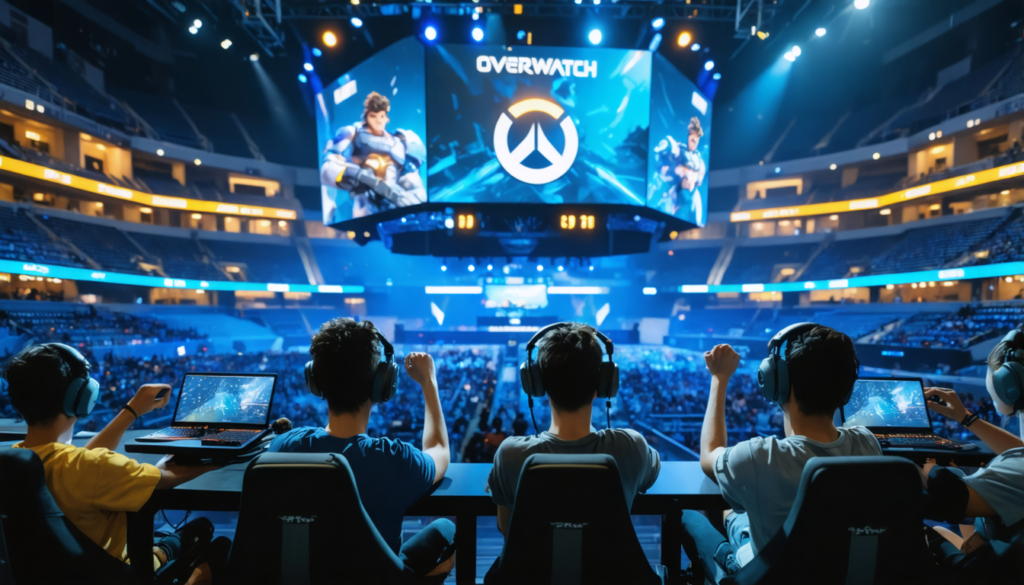
The return of Overwatch to the multiplayer video game scene is simply exceptional, with a massive influx of players breaking unprecedented records on Steam. This spectacular resurgence is explained by several key factors that have captivated both amateurs and experienced players alike:
- The launch of a revolutionary Season 1, the biggest update in the game’s history
- The unexpected but effective rebranding that replaced Overwatch 2 with Overwatch
- The arrival of five new heroes and innovative passive abilities
- Increased visibility on Twitch, catalyzing enthusiasm and renewing the community
In the following sections, we will explore these elements from all angles, analyze the impact of this triumphant return, and understand how Overwatch has managed to attract and retain a massive audience in an increasingly demanding competitive landscape.
- 1 A historic peak of players on Steam: understanding the exceptional Overwatch phenomenon
- 2 Season 1: five new heroes, renewed gameplay, and a strategic metamorphosis
- 3 The unexpected rebranding: Overwatch 2 becomes Overwatch again, a symbolic turnaround
- 4 The impact on Twitch: the showcase effect that propels Overwatch’s popularity
A historic peak of players on Steam: understanding the exceptional Overwatch phenomenon
February 10, 2026, will remain etched in the memories of Overwatch fans and multiplayer video game observers. On this day, the title recorded an unmatched peak of 165,651 simultaneous players on Steam. This figure is much more than a simple new high: it represents a staggering increase of 120% compared to the previous record of 75,361 players reached in August 2023.
This record was not built by chance. The previous day’s figures already indicated strong anticipation, around 68,000 to 69,000 active simultaneous players. The “appointment” effect was palpable, reflecting the anticipation surrounding the release of Season 1. As soon as the update was published, the community responded massively.
Multiplayer games have often experienced peaks linked to specific events, such as major releases or tournaments. Here, the combination of new features and strategic communication created an extraordinary dynamic. This increase in player numbers is a perfect example of the potential that a game once thought to be in decline can still offer.
Within this dynamic, the comparison with other hits is telling. For example, on Steam, Overwatch surpassed Marvel Rivals in the number of active players, expressing a temporary supremacy in a highly fragmented market. This victory on a major platform highlights the importance of constant updating and content renewal to maintain an engaged community.
Key data to grasp the scale of the return
| Date | Record simultaneous players | Change compared to previous record | Monthly average players | Platform comparison |
|---|---|---|---|---|
| February 10, 2026 | 165,651 | +120% | 35,310 (+7,360 compared to the previous month) | Outpaces Marvel Rivals on Steam |
This table reveals how Overwatch repositioned itself at the top thanks to a massive influx of players that reflects both short-term impact and a long-term trend.
Season 1: five new heroes, renewed gameplay, and a strategic metamorphosis
Season 1, launched in early February, deploys unprecedented content that is the main driver of this triumphant return. The integration of five new heroes not only involves adding characters but also causes a complete upheaval of the multiplayer video game metagame.
These new heroes bring not only distinct styles but also introduce passive abilities never before seen in the Overwatch arena. These novelties force all players, whether amateurs or experienced, to rethink their approach and strategies. This season was presented as the heaviest and most complete ever offered by Blizzard Entertainment in Overwatch’s history.
This massive renewal creates a dynamic gaming experience where every match becomes unpredictable and tactile. The community praises this renewal, with the feeling of exploring a game both familiar and deeply transformed boosting the enjoyment of playing.
These changes have also fueled renewed interest on social platforms and sites dedicated to competitive gaming, like on Gamers Land, where debates about the best builds and strategies take center stage. The dense and strategic content of this season thus acts as a powerful factor for loyalty and attraction.
Reasons why the new heroes revolutionize Overwatch
- Increased tactical diversity: Multiplied passives enrich real-time adaptation
- Revaluation of individual skills: New characters demand mastery and creativity more than ever
- New challenges for the meta: Team compositions must be continuously reinvented
- Renewed interest in competitive play: Tournaments and streamings revive around these novelties
The unexpected rebranding: Overwatch 2 becomes Overwatch again, a symbolic turnaround
The decision to revert from the name Overwatch 2 back to simply Overwatch is a bold and rare move in the industry. This change, implemented around February 9 and 10, is much more than a graphic modification; it creates a strong narrative that accompanies the game’s resurgence.
In a market where recognition and image carry weight, renaming Overwatch 2 as Overwatch represents an effort to reset public perception and regain attention. This symbolic gesture gives new momentum to the project and aligns with the current mechanism created by Season 1.
This turnaround marks a clear differentiation from the past, inviting players to rediscover the game in a refreshed but familiar form. This synchronization between content and name increases media reach and fuels conversation within the digital community.
The phenomenon brings a valuable lesson: sometimes, a strong sign with symbolic resonance can awaken a player base and reignite enthusiasm on a scale comparable to a major content release. It is also an inspiring model for other titles seeking reconquest.
The impact on Twitch: the showcase effect that propels Overwatch’s popularity
The Twitch platform plays a crucial role in this rebirth, acting as a true barometer and amplifier of success. The observed peak of 185,055 viewers over 24 hours, with around 64,260 connected during peaks, reveals strong popular enthusiasm and renewed media attention.
On Twitch, watching a game live fosters engagement and stimulates the desire to join the movement. New mechanics and characters create spectacular moments to comment on, discussing and sharing experiences that continuously feed the game’s visibility.
This phenomenon perfectly illustrates the virtuous circle of multiplayer games: strong content generates spectacle on Twitch, which attracts new players, thereby increasing gaming sessions and visibility. This loop is all the more effective when it accompanies as marked a return as Overwatch’s.
Some figures revealing Twitch dynamics
| Date | Peak number of viewers over 24h | Number of simultaneous viewers recorded | Effect on the community |
|---|---|---|---|
| February 2026 | 185,055 | 64,260 | Increased visibility and call to join the game |
Overwatch’s success shows how the synergy between content, rebranding, and video showcase can create lasting success, or at least a true rebirth.
At this stage, we can measure the power of this wave of freshness in the competitive video game landscape. Overwatch’s return is a case study proving that even well-established titles can regain massive success thanks to strategic reconsideration and targeted innovations.
To support this enhanced experience, it is advisable to use appropriate hardware, including quality equipment such as mechanical keyboards for gamers, in order to fully benefit from gameplay nuances.