
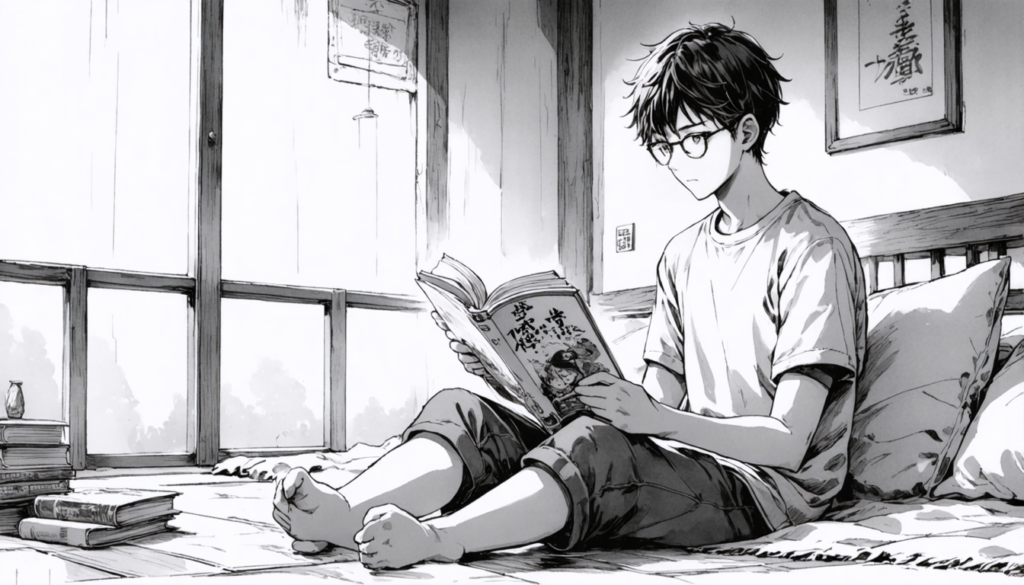
Starting to read manga may seem complex, but it is a universe that is both rich, intense, and accessible to all. To get off to a good start, we offer you a practical and simplified guide that will accompany you at every step. Here are the essential points we will cover:
- Understanding the particularities of manga reading and its differences with anime.
- Discovering the visual and narrative codes to familiarize yourself with this specific graphic art.
- Choosing titles suitable for beginners for a gradual and enjoyable initiation.
- Exploring tools and resources for an optimal reading experience.
- Demystifying terminology and learning to read emotions and actions through manga drawing.
Along the way, we will share concrete examples and insightful advice that will allow you to navigate with ease this new universe that will undoubtedly captivate you.
- 1 Understanding the basics of manga reading: direction, format and specifics
- 2 The first steps in manga drawing: decoding the style and manga terminology
- 3 Choosing your first mangas: practical advice and recommended titles for beginners
- 4 Good practices to enrich the manga reading experience from the start
- 5 What manga reading brings: immersion, culture, and emotions to discover
Understanding the basics of manga reading: direction, format and specifics
The main peculiarity that strikes a Western reader facing a manga is its reversed reading direction: you start reading from the “last page” typical of our European comics, from right to left. This uniqueness applies to each page and even to the reading order of the panels, which must be followed from top to bottom then right to left to fully grasp the story. For a beginner, this inversion can be confusing, but it is at the heart of the manga format.
This reading mode corresponds to a graphic and narrative logic unique to Japan. A manga is most often presented in black and white, a historical constraint that has given birth to a very precise pictorial style where black and white is not a limitation but a form of intense expression. The contrasts, the use of screentones, the so-called “manpu” effects (graphic symbols expressing an emotion or movement) contribute to this unique visual richness. For example, a burst of light or an action vibration will often be represented by flashes or dynamic lines rather than onomatopoeia.
In addition to the printed format, digital reading is gaining popularity thanks to platforms such as Manga Plus or the Crunchyroll Manga app, which offer legal reading with access to many series, while respecting this original format. Digital facilitates discovery with zoom and annotation tools. For those who prefer paper, the reader’s touch on the medium offers a sensory pleasure, with often thick paper and a neat layout, also allowing extended reading by incorporating cultural or artistic notes sometimes present at the end of the volume.
Let’s consider a table that summarizes the main differences between manga and anime, the latter often being the gateway to this universe.
| Criterion | Manga | Anime |
|---|---|---|
| Format | Printed or digital black and white comic book | Colored animation broadcast on television or video platforms |
| Reading/Following | From right to left, at one’s own pace | Viewing from left to right, pace imposed by production |
| Content | Often original version with exclusive arcs | Collaborative adaptation with music and dubbing |
| Artistic freedom | Often solitary work of the mangaka, marked personal style | Collective work, more standardized adaptation |
This understanding of the basics ensures you a calm start in manga reading, avoiding the common confusions encountered by beginners.

The first steps in manga drawing: decoding the style and manga terminology
A practical beginner’s guide would not be complete without familiarizing you with the visual and narrative elements that make up manga drawing. You will find specific expressive shapes, recognizable character types, and a genre classification that guide towards a targeted experience.
Manga drawing is notably distinguished by:
- Exaggerated expressions: large eyes to show innocence or wonder, sweat drops for embarrassment, or visible veins for anger.
- Dynamic layout: panels vary in size, intertwine, sometimes even overflow, to accentuate movement or tension.
- Onomatopoeic effects: very present in manga, these written signs illustrate sounds (footsteps, flashes, impacts) and contribute to immersion.
Terms derived from Japanese vocabulary then become useful:
- Shōnen: manga intended for young boys, often focused on action, adventure, and self-improvement.
- Shōjo: mainly targeting a female audience, focused on emotions, relationships, and romance.
- Seinen: manga for adults, with more mature themes and often a more realistic style.
For example, a manga like My Hero Academia, classified as shōnen, perfectly illustrates the lively, colorful, and rhythmic style, whereas a shōjo like Fruits Basket favors emotion over elegant drawing. Knowing how to identify the genre will help you choose a story that speaks to you according to your tastes.
When one is interested in manga drawing, understanding that each drawing conveys an emotion or a state of mind is fundamental. The attention paid to the gaze, postures, or backgrounds is the richness of this graphic expression. This also explains why some mangas, like One Piece, enjoy immense success by perfectly combining story and aesthetics.
Choosing your first mangas: practical advice and recommended titles for beginners
To get started well, choosing a manga at your level is crucial. Our main advice is to start from your personal tastes, linked to anime series you have appreciated, as the anime-manga connection is often a favorable bridge. You will then discover new narrative arcs, sometimes exclusive to the manga.
Here is a list of mangas particularly recommended for beginners, accompanied by some explanations:
- Mashle by Hajime Kômoto: a mix of humor and magic, perfect for those who like originality and comedy in a quirky shōnen context.
- Demon Slayer / Kimetsu no Yaiba: accessible and dynamic, with a very visual fantasy universe, easy to follow for those who enjoyed the anime.
- Naruto: the iconic ninja learning saga, ideal to discover the codes of classic shōnen.
- One Piece, a long and rich adventure: if you like exploring vast universes and the progressive development of characters.
- My Hero Academia for its contemporary superhero universe, and its balance between action and emotion.
- Fruits Basket, perfect for fans of sentimental stories and slices of life.
Using official apps makes starting easier: services like Manga Plus, Shonen Jump, or Crunchyroll Manga allow legal access to excerpts and complete series, often free or at a low cost.
Another tip is to favor one-shots, these short stories in one volume, or limited series to avoid feeling overwhelmed. Titles like “Solanin” by Inio Asano or “Your Name”, adapted from the famous film, are ideal entry points. The table below offers a simple comparison of common formats to help you choose better.
| Format | Advantages | Disadvantages | Recommended examples |
|---|---|---|---|
| One-shot | Quick reading, perfect for testing | Less narrative development | Solanin, Your Name |
| Short series (2-5 volumes) | Immersion without long commitment | May lack depth | RuriDragon, Sakamoto Days |
| Long series (10+ volumes) | Rich universes, developed characters | Significant time investment | One Piece, Naruto |
Good practices to enrich the manga reading experience from the start
Engaging in manga reading is not just devouring pages, it is also entering a complex and fascinating culture. To maximize your pleasure and understand the nuances, here are some practical tips:
- Respect the reading direction: Getting used to reading pages backward takes a little time, but publishers clearly indicate it on most Western editions so you don’t get lost.
- Analyze graphic symbols: Manpu and visual effects are essential keys to deciphering emotions and scene intensity, don’t hesitate to linger on these details.
- Vary genres: Don’t limit yourself to just one type of story. Try shōnen, seinen, shōjo, romance, thriller… This diversity is a richness that offers a vast palette to readers.
- Participate in the community: Exchanging on forums like Manga Sanctuary or MyAnimeList will open perspectives and personalized recommendations. Checking recent rankings such as those present on Gamers-Land also helps to see current trends.
- Vary reading supports: Try both paper and digital to see what suits you best. Official apps often offer free chapters to test different series before committing.
This approach will allow you to build a rich and tailored reading experience, in tune with your desires and personal rhythms. For example, some enthusiasts enjoy rereading and analyzing the same scene multiple times, while others prefer to move quickly through the story.
What manga reading brings: immersion, culture, and emotions to discover
Reading a manga is diving into a world that is both visual and narrative, extending the imagination through varied artistic styles and often very elaborated storytelling. Beyond simple entertainment, manga reading culturally enriches, develops your artistic sensitivity, and offers you new perspectives on graphic narration.
Mangas are not just a collection of images and dialogues; they also reflect a culture, its traditions, taboos, and social evolutions. A series like Demon Slayer well illustrates this point, blending refined aesthetics, Japanese historical background, and endearing characters. This cultural dimension is often softened or altered in animated adaptations; choosing manga therefore means rediscovering the mangaka’s original vision.
Reading manga also develops attention to detail, which is not always demanded in classic reading. The link you create with the work is personal, as the reading pace is entirely controlled by you. You can stop on a drawing, interpret a silence, go back to better understand a plot, or savor the drawing. This direct and intimate contact with the work provides a unique and often very enriching experience.
You will also gain an understanding of manga terminology and archetypes specific to this artistic form, facilitating exchanges with other enthusiasts and discovery of new series. For example, the term “tsundere” or “yandere” describes types of characters you will soon instinctively recognize, thus enriching your reading.
The manga experience is more than a simple pastime; it is an invitation to a creative, emotional, and cultural journey, accessible from the very first steps with this simplified guide. If you are looking to enrich your reading universe, this vast world is within reach.