
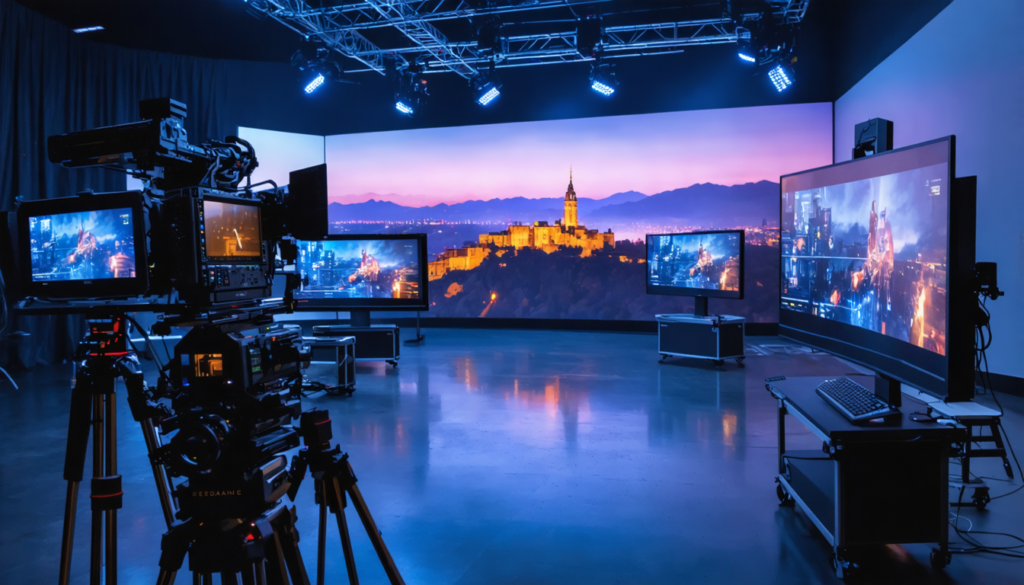
The audiovisual revolution is underway with Seedance 2.0, this innovative video technology developed by ByteDance that is shaking up Hollywood’s codes by offering impressive videos generated by artificial intelligence. Here is what we will explore together:
- The unprecedented capabilities of Seedance 2.0 in audiovisual production
- The media and industrial impact on Hollywood
- Issues related to copyright and digital creation
- The new perspectives offered for innovative cinema
- The challenges and opportunities for digital creativity on a global scale
By discovering these aspects, we will understand how this advancement redefines the way audiovisual content is designed, produced, and consumed, posing new questions as much as opening a vast field of innovations.
- 1 The capabilities of Seedance 2.0: video technology at the service of spectacular audiovisual production
- 2 Seedance 2.0 and Hollywood: a media and industrial impact that disrupts the balance of traditional cinema
- 3 Legal and ethical issues related to Seedance 2.0: between digital creativity and copyright protection
- 4 Seedance 2.0 and the new era of innovative cinema: opportunities and challenges for digital creativity
The capabilities of Seedance 2.0: video technology at the service of spectacular audiovisual production
Seedance 2.0 establishes itself as a revolutionary tool thanks to its ability to generate impressive videos from simple text descriptions. This video technology relies on artificial intelligence capable of combining text, images, sounds, and videos to create high-definition sequences of about 15 seconds. This level of realism is unprecedented, far surpassing the early iterations of generative AI which were limited to abstract or stylized clips.
Thanks to Seedance 2.0, a user can create spectacular fight scenes, fantasy universes filled with rich visual details, or dramatic scenes worthy of a feature film, simply by providing a written prompt. The videos reach a 2K resolution, giving them a visual rendering close to Hollywood standards. This level of quality clearly marks a turning point in video technology at a time when artificial visual effects are becoming increasingly convincing.
In practice, this capability translates into professional and amateur uses:
- Studios can prototype visual sequences without resorting to the heavy traditional production means, which reduces delays and costs.
- Independent creators benefit from simplified access to tools that push the boundaries of their digital creativity.
- Brands and communication agencies can quickly generate innovative marketing content with a strong immersive dimension.
For illustration, Seedance 2.0 outperforms competitors like Google’s Veo 3 or OpenAI’s Sora 2, not only by the quality of the videos but especially by the speed at which it produces rich and credible content. This combination reflects a radical change where audiovisual production is no longer measured by the length of shoots or the budget of visual effects, but by the speed of execution in a 100% digital environment.
The available features also include the possibility to choose varied styles: from cinematic realism to fantasy, or even to animated style. Cloud generation makes the experience smooth, accessible remotely and almost in real time, which is an additional asset that accelerates content distribution.

Seedance 2.0 and Hollywood: a media and industrial impact that disrupts the balance of traditional cinema
Since Seedance 2.0 was presented by ByteDance at the beginning of February 2026, the media impact has been immediate and considerable. The whole world, and particularly Hollywood, has seen a new dynamic emerge in audiovisual production. Impressive videos quickly flooded social networks, generating millions of views in a few days. These sequences embodied a powerful paradox: images close to cinema, but created in record time by an AI.
This situation has activated a strong industrial reaction. Hollywood, guardian of the strict codes of innovative cinema, perceived this technological breakthrough as a threat on several levels:
- Protection of original works: generated videos sometimes reproduce scenes “in the style of” existing films, with faces of stars and protected universes.
- The economic value of catalogs: these unofficial creations cause confusion and can devalue the artistic and financial work of studios.
- Management of rights and intellectual property: the legal ambiguity surrounding deepfakes and AI-generated content raises many questions.
The impact is also felt in the speed with which these viral videos spread, notably via TikTok, an app itself owned by ByteDance. This virality seems exacerbated by cult sequences like a fictional fight between Tom Cruise and Brad Pitt or alternative scenarios featuring Will Smith or Jack Dawson — whose digital presence triggers a mixture of admiration and fear in the industry.
This viral effect continues to blur the line between artistic tribute, parody, and unauthorized appropriation. Hollywood must now balance the innovation offered by Seedance 2.0 and the protection of its digitally embodied creativity.
In this race to rapid content production, the legal debate quickly intensified. Hollywood, through the voice of the Motion Picture Association (MPA) and its main studios such as Disney, Paramount, and Netflix, issued precise claims against ByteDance. These studios denounce the use of protected works without consent and the production of deepfakes that infringe artists’ rights and intellectual property.
The controversy highlights several complex issues:
- The way Seedance 2.0 may have trained its model on a considerable number of protected cinematic contents, without transparent filtering mechanisms.
- The legal framework around automatically generated videos and the conditions of use of images and digital identities of famous actors.
- The potential dangers of malicious use to spread false information, or manipulate public opinion via realistic deepfakes.
The urgency established by the studios resulted in formal notices sent to the Chinese giant, including an ultimatum set for February 20, 2026, to ensure respect for rights. ByteDance responded promising strengthened safeguards to avoid abusive uses and counterfeiting. This legal battle announces a new era where digital creativity will have to coexist with renewed legislations adapted to artificial intelligence realities.
These issues go beyond the strict framework of the film industry. They question the role that video technology must play facing artist protection, AI developers’ responsibility, and viewers’ expectations regarding authenticity.
| Actor | Position | Main demands | ByteDance’s response |
|---|---|---|---|
| Disney | Formal notice | Stop unauthorized use of protected works | Strengthening safeguards |
| Paramount | Formal notice | Protection of copyright | Upcoming technical commitments |
| Netflix | Ultimatum | Guarantee on traceability & image control | Ongoing dialogue |
| MPA | Official communication | Public claim against rights violation | Promises of measures |
Seedance 2.0 and the new era of innovative cinema: opportunities and challenges for digital creativity
Beyond tensions, Seedance 2.0 opens an unprecedented landscape that could profoundly transform innovative cinema and digital creativity. Easier access to audiovisual production is no longer limited to a few industry giants, but extends to all those with internet access and an idea to express.
Here are some avenues where Seedance 2.0 brings major advances:
- Democratization of production: Creators, whether independent or located outside major production centers, can now quickly materialize their visual projects.
- Cost reduction: By eliminating part of the costly processes related to filming and special effects, the production budget decreases, making bold projects possible with fewer resources.
- Narrative innovation: AI adaptability allows testing alternative versions, exploring new worlds or characters, giving rise to enriched and exploratory creativity.
- Training and prototyping: Film schools and studios can integrate these tools to train new generations in tomorrow’s audiovisual techniques.
Despite these advantages, Seedance 2.0 also imposes sensitive challenges. Controlling malicious uses, respecting rights, and the need for new rules to frame these digital productions are on the agenda. The future of cinema depends on a close collaboration between video technology, law, and artistic creation.