
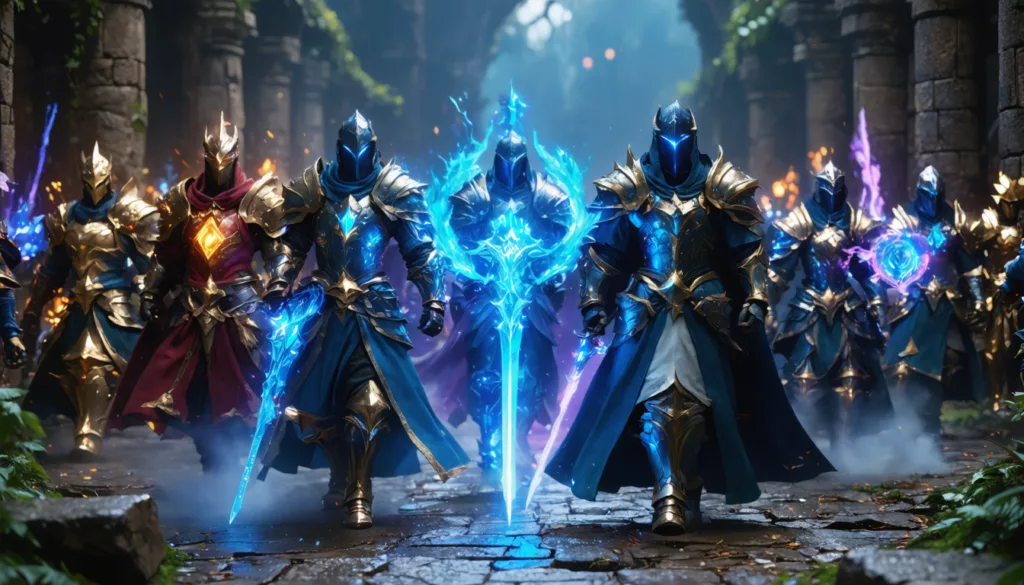
Teamfight Tactics Set 16, named Lore & Legends, officially launched on December 3rd, opening a new horizon for strategy enthusiasts in this rich and evolving universe. With over 100 champions available and the brand new mechanic of unlockable champions, this update establishes itself as a major revolution in the auto-battler video game developed by Riot Games. We invite you to discover together:
- The progression and stakes of the PBE phase preceding the official release
- The unprecedented workings of the Unlockables mechanic and its strategic implications
- The new synergies and classes drawn from the rich universe of Runeterra
- Competitive perspectives with the introduction of Set 16 to esports
- Tips to quickly master this strategic behemoth
Each section of this article develops these themes with a detail-oriented approach that is both educational and in-depth to guide both amateurs and experienced players in discovering this captivating new chapter.
The PBE phase: an essential step to discover TFT Lore & Legends Set 16
Early access to Set 16 via the PBE (Public Beta Environment) platform allowed enthusiasts to test in preview the many novelties introduced by Lore & Legends. From the night of November 17 to 18, the servers went live, offering a full immersion in this substantial set, providing content already active at the moment many players launched their Riot client.
This setup facilitated a two-week phase rich in feedback, balancing, and fine reading of mechanics. Players on PC and Mobile thus explored a wide range of over 100 champions, among which 40 are units to be unlocked under specific in-game conditions. This approach sparked a proliferation of ideas, particularly on the best ways to optimize synergies and take advantage of these unique champions appearing according to various criteria.
Here are some figures that testify to the scale of this phase:
- 14 days of access to PBE content, offering substantial time for experimentation
- More than 100 champions including 40 unlockables, a record for TFT
- Daily feedback collected by Riot to perfect the launch
- PC and Mobile compatibility ensured during the testing period
During this period, theorycrafters particularly focused on the dynamics of unlocking champions, a factor that profoundly changes how to compose one’s board. Actively participating in the PBE thus allowed the most passionate players to refine their strategies before the official December release.
Moreover, this phase helped identify potential imbalances, notably in the synergy between champions from Runeterra regions, which led to major adjustments. After these two weeks, Set 16 presented itself with a much stronger balance and a broad consensus around its main mechanics.
Unlockables: understanding the revolutionary mechanic of unlockable champions
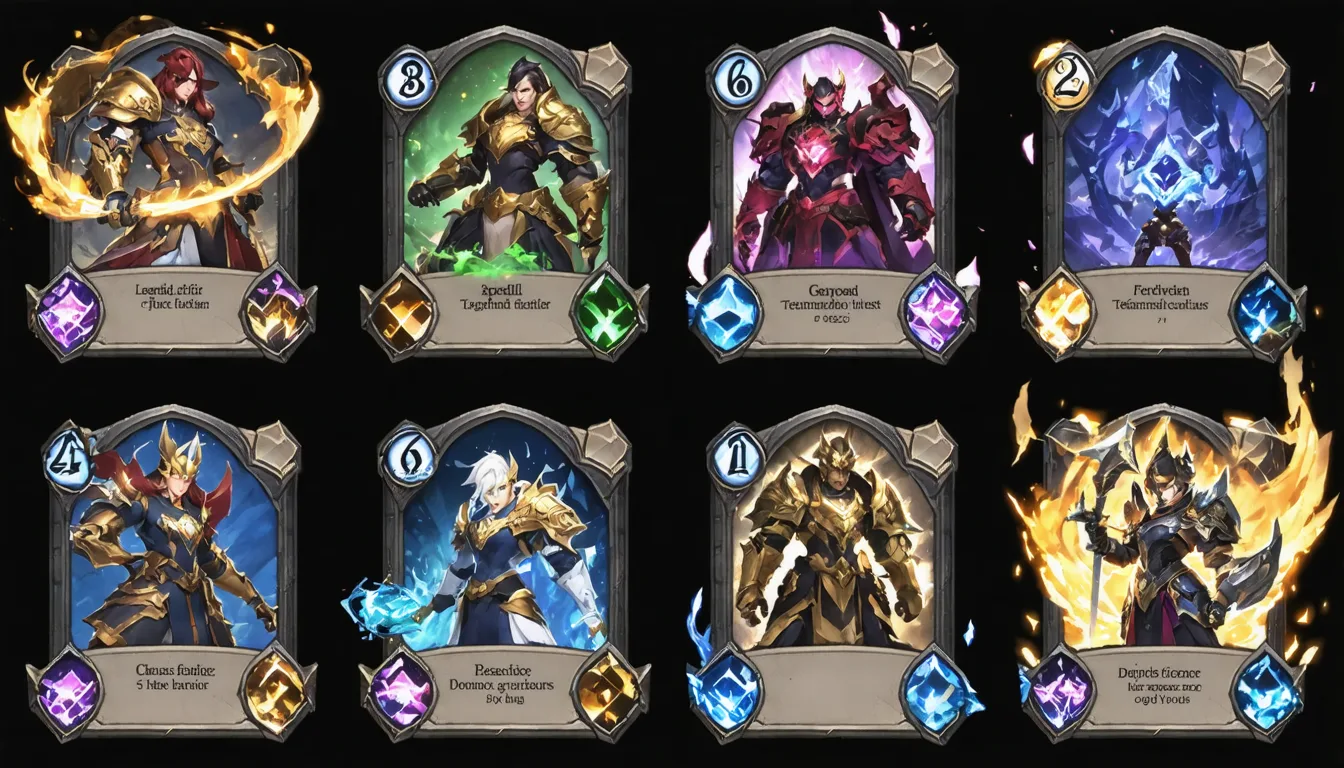
The heart of this update undoubtedly lies in the so-called Unlockables mechanic. It disrupts the traditional way of accessing all champions in TFT. In 2026, proof of its innovation, over 40 champions out of the 100 offered by Set 16 are not immediately available at the start of a game. Specific conditions must be met for them to appear in your shop and remain playable until the end of the match.
To illustrate, let’s take the example of a legendary champion like Baron Nashor, a must-have whose arrival in composition can completely change the game. Rather than being immediately accessible, it is necessary to complete a specific game objective, such as defeating a certain number of opponents or accumulating an amount of gold invested in a particular trait. This system forces players to diversify their game plan depending on the champions considered, fostering creativity and tactical decision making.
The advantages of this mechanic are multiple:
- A constant renewal of strategies: matches never resemble the previous one.
- Increased importance of resource management to meet unlock conditions.
- A reward for adaptability, because you must know when to prioritize an objective to unlock a key champion.
- An enrichment of gameplay with unprecedented interactions between locked and free champions.
Set 16 also contains a high proportion of high-cost champions, with more than 24 units costing 4 or 5 gold coins. These powerful units participate in forming strategic compositions where early-game economy management proves increasingly decisive. The Unlockables system therefore pushes to recalibrate every step of progression in the match, as simply waiting for the unlocking of a major unit can weigh heavily in the equation.
To better understand, here is a simplified table of unlock conditions for some flagship champions of Set 16:
| Champion | Rarity | Unlockable Condition | Gold Cost | Main Trait(s) |
|---|---|---|---|---|
| Baron Nashor | Legendary | Defeat 3 enemy champions at once | 5 | Dragon, Monster |
| Atakhan | Legendary | Accumulate 20 attack points | 4 | Assassin, Noxus |
| Lucian | Rare | Maintain an active Soulbound pair | 3 | Sentinel, Piltover |
| Annie | Common | Ignite 10 enemies with her spells | 2 | Yordle, Mage |
This unlocking dynamic has been praised for its originality and strategic depth, giving a new breath to the game’s metagame.
The new origins and classes of Set 16 that enrich TFT gameplay in 2026
Lore & Legends draws heavily from the beloved universe of Runeterra to craft a set of synergies and classes that clearly renew the gameplay. Iconic regions such as Shurima, Piltover, Void, Targon, or Noxus join the automated combat table, each imposing a particular style and exciting interactions.
For example, Shurima offers pharaonic units like Azir, capable of deploying his sand soldiers to control the battlefield. The legendary Soulbound duo of Lucian and Senna, who provide mutual bonuses as long as both are present in combat, illustrate the finesse of the Set’s design. This novelty allows a systematic link never seen before in TFT, strengthening the narrative aspect while being strategically relevant.
Class and origin mechanics extend as follows:
- Classes: Assassin, Mage, Sentinel, Warrior, Monster, among others to diversify playstyles.
- Origins / Regions: Shurima, Piltover, Void, Targon, Noxus, and more, each with distinct bonuses.
- Combined Traits: some combinations unlock skirmish abilities or unique protections.
This abundance of combinations is a constant invitation to renew compositions without fearing redundancy. Here is an overview of the impacts of the new synergies:
- Shurima: terrain control with ephemeral but powerful units
- Piltover: focus on technology and resource control
- Void: debilitating abilities that penalize opponents
- Targon: focus on healing and reinforcements
- Noxus: aggressive scouts and sustained damage
Players like the Arma team have already begun creating detailed guides that they share around these synergies. These mechanics are designed to offer great depth both for newcomers wanting to get started and for competitors seeking sophisticated reworks.
This video content aims to illustrate in detail how to best exploit the new classes and origins to maximize your chances in games.
Set 16 Lore & Legends and its place in the TFT competitive scene
The arrival of Set 16 immediately found its place in the esports ecosystem, notably with the holding of the Open TFT Paris from December 12 to 14. Hosting no less than 768 players on LAN, this event constitutes a first major challenge for the freshly installed meta. The temporal proximity between the official release and this event ensures a very short adaptation period, favoring players able to exploit the Unlockables mechanics and quickly compose effective teams.
The launch of Set 16 is also accompanied by CompeteTFT.com, a central platform that brings together events, rankings, and news. This initiative reflects Riot Games’ desire to further structure the competitive scene and facilitate access to information for all players eager to follow the best or progress themselves.
Here are the implications of this direction:
- Quick transition from PBE to official competition, accelerating the rise of optimal strategies
- Intensive learning phenomenon to decode the new synergies and items
- Increased visibility of the game thanks to a major event in Europe
- Encouragement of tactical creativity via the Unlockables mechanic often front and center in drafts
This dynamic competitive scene awaits major innovations sparked by this wave of new champions and traits. Experienced players must now arm themselves with responsiveness to adapt and take advantage of a roster of units larger than ever.