
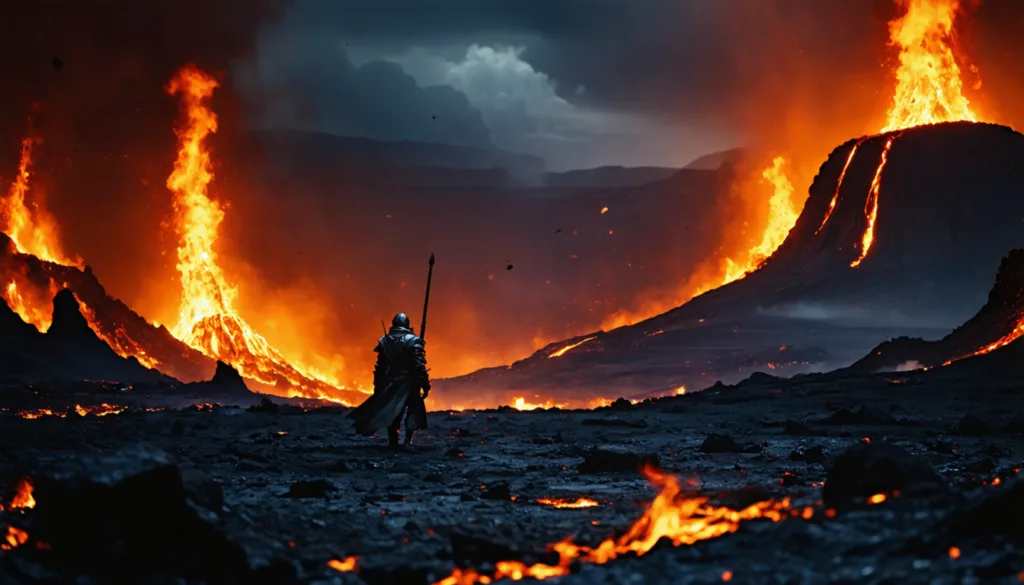
Avatar 3, the highly anticipated new installment of the saga created by James Cameron, is indeed announced as darker and more intense than its predecessors. This science-fiction film plunges us again into the Pandora universe, but with a heavier emotional and narrative tone. We will explore together the main reasons for this evolution, through:
- The symbolism of fire and ashes as major metaphors of the film.
- The appearance of the Ash People, a Na’vi clan with a more aggressive character.
- The artistic and narrative choices that strengthen the intensity of the scenes.
- The more complex treatment of emotions and internal conflicts within the Na’vi.
These points will be illustrated with concrete examples, critical feedback, and in-depth analyses to understand how this third installment transforms and enriches the famous franchise.
Symbolism of fire and ashes in Avatar 3: a powerful metaphor of violence and consequences
One cannot discuss Avatar 3 without mentioning the deep meaning of the title “Fire and Ash.” James Cameron explicitly evokes fire as a symbol of hatred, anger, and trauma. It is not a mere promise of violent or gory scenes, but rather an embodiment of the characters’ inner conflict. This approach distances us from a simple spectacle to explore the emotional mechanisms that drive the protagonists.
The ashes complement this symbolism by embodying lasting pain and the consequences of past deeds. They suggest that the events of the saga, notably Neteyam’s death in the previous installment, leave an indelible mark, fueling a cycle of violence and resentment. James Cameron himself pointed out that this notion reflects a “vicious circle where violence breeds more violence”.
In a cinematic context often blending action and emotion, this dimension appears even more innovative as it invites us to perceive the saga as a reflection on the effects of trauma and grief, rather than just a simple succession of epic battles.
This theme directly influences the overall tone of the film, making it rougher, tougher, which even impacts the perception audiences have of it, sometimes evoking an experience harsher than the first installments.
This fire/ash duality also plays a role in the aesthetics: the film’s visual effects stage volcanic landscapes of the newly introduced clan, as well as a Pandora universe where natural beauty borders on areas ravaged by both internal and external conflict.
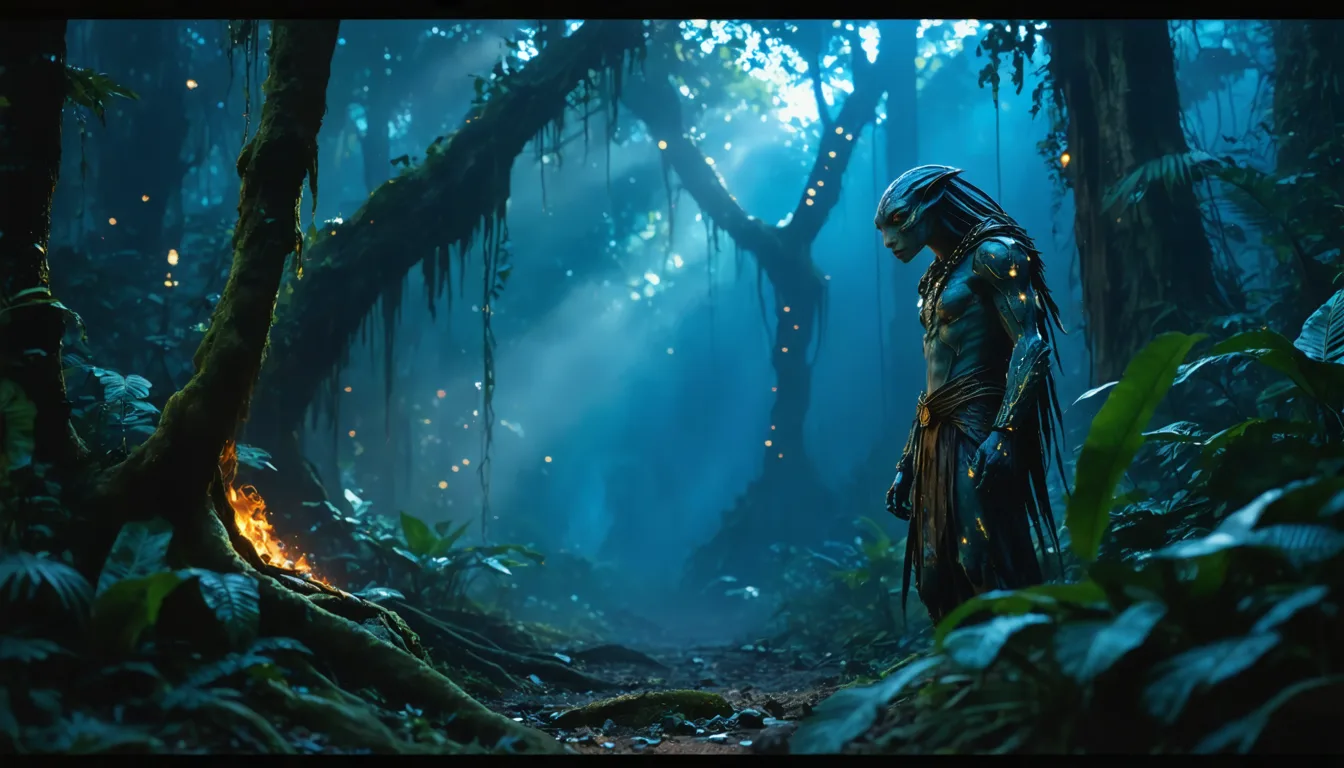
A major turning point in Avatar 3 is the spotlight on the Ash People, a Na’vi faction different from the harmonious tribes we knew until now. Led by Varang, this volcanic clan stands out with a belligerent temperament and aggressive nature, which disrupts the traditional dichotomy between invading humans and peaceful Na’vi.
This inclusion of a group with more conflicting motivations invites a richer moral debate. It presents the Pandora universe in a less black-and-white light, where internal divisions reflect tensions sometimes as strong as those with humans. This upheaval adds additional depth to the narrative, as it forces the main characters, notably Jake Sully and Neytiri, to navigate a context where the enemy is sometimes found within their own people.
The Ash People embody this new facet of a changing world where the very nature of the Na’vi evolves. It accentuates the feeling of a living, complex, and sometimes destructive universe. This new clan resonates with the current trend in cinema to offer more nuanced heroes, where internal conflict mirrors external war.
For example, during spectacular clashes within the tribe or against humans, their volcanic temperament deploys unprecedented military strategies, enhancing the feeling of urgency and danger. Several critics have pointed out that these scenes intensify the violence displayed on screen without tipping into gratuitous escalation, but by adding a real dramatic weight.
This narrative choice is even more interesting as it changes the perception we have of Pandora, a world now expressed through internal tensions as much as external ones.
Stunning visual effects enhancing intensity without losing the contemplative aspect
The Pandora universe is known for the quality of its visual effects, and Avatar 3 does not fail this rule, offering a grand and immersive spectacle. The use of cutting-edge technologies for fire scenes, ashes, and volcanic landscapes accentuates this sensation of roughness felt throughout.
There is also a significant increase in combat scenes, with a faster narrative pace. This reflects James Cameron’s clear intention to offer a more martial spectacle, where dramatic tension no longer relies solely on contemplative immersion but also on sometimes breathless action.
The film, with a announced duration close to 3h17, partly abandons the long contemplative sequences of the first installments to deliver a tighter narrative centered on conflicts and ruptures. This focus on the intensity of confrontations gives the impression of a film that carries its emotional and physical stakes high.
Here is a comparative table of the durations and tones of the first three installments:
| Film | Duration | Dominant tone | Estimated number of combat scenes |
|---|---|---|---|
| Avatar (2009) | 2h42 | Contemplative and epic | Less than 10 |
| Avatar: The Way of Water (2022) | 3h12 | Emotion and action | About 15 |
| Avatar 3: Fire and Ash (2025) | 3h17 | Darker and more intense | More than 20 |
This increase in confrontations is offset by the mastery of visual effects that never lose the viewer in gratuitous spectacle. Every image serves the narrative and the emotion carried by characters confronted with their personal demons and Pandora’s untimely upheavals.
The narrative continuation: heightened dramatic stakes and deeper exploration of characters
The film does not settle for a mere escalation of effects and tension. The screenwriters worked to deepen the heroes’ emotional journey, generating an unusual dramatic density in the saga. Neteyam’s prior death plays a fundamental role here. It acts as a trigger for collective and individual mourning that permeates every decision and alliance.
The main characters, like Jake Sully and Neytiri, are more tormented, torn between rage, the quest for peace, and pain. This work on emotions makes the story harder to follow but also noticeably richer. Mourning is omnipresent and acts as a corrosive force, which is far from common in a mainstream science-fiction film.
To illustrate this dramatic intensity, here is a list of strong emotional themes present in Avatar 3:
- Anger and revenge pushing to extreme choices.
- The difficulty of forgiving and reconciling opposing clans.
- The weight of the past and mistakes on Pandora’s future.
- The ambiguous nature of justice in the face of repeated violence.
- Sacrifice and resilience at the heart of human and Na’vi relations.
These themes give the film a multiplicity of emotional shadows, distancing the viewer from a superficial vision to plunge them into a complex struggle between light and darkness, always with visual wonder as a backdrop.
An intense and contrasting viewing experience depending on the spectators
The critical reception around Avatar 3 is particularly polarized on the roughness of the experience. Some viewers appreciate the emotional maturity and stronger moral complexity, while others mention a certain saturation due to the intensity and frequency of action scenes.
It is useful to recall that the film remains accessible to a wide audience, without exceeding the boundaries of a classification that allows a supervised family audience, which nuances the perception of increased violence.
The table below presents some contrasted points noted by the press and critics upon release:
| Aspect | Positive points | More critical points |
|---|---|---|
| Overall tone | Richer emotionally and more adult | Sometimes perceived as too dark for some fans |
| Action scenes | Spectacular and well choreographed | Few breathing moments, felt as suffocating |
| Characters | Deeply worked and nuanced | Plot sometimes complicated at the expense of pacing |
| Visual effects | Impressive, state of the art technology | Can distract from the story due to their abundance |
This diversity of opinions shows that the shift towards a darker and more intense universe impacts differently depending on expectations and sensibilities. The evolution chosen by James Cameron with Avatar 3 clearly offers a fresh perspective on the adventure, favoring the weight of emotions and conflicts over mere visual prowess.