
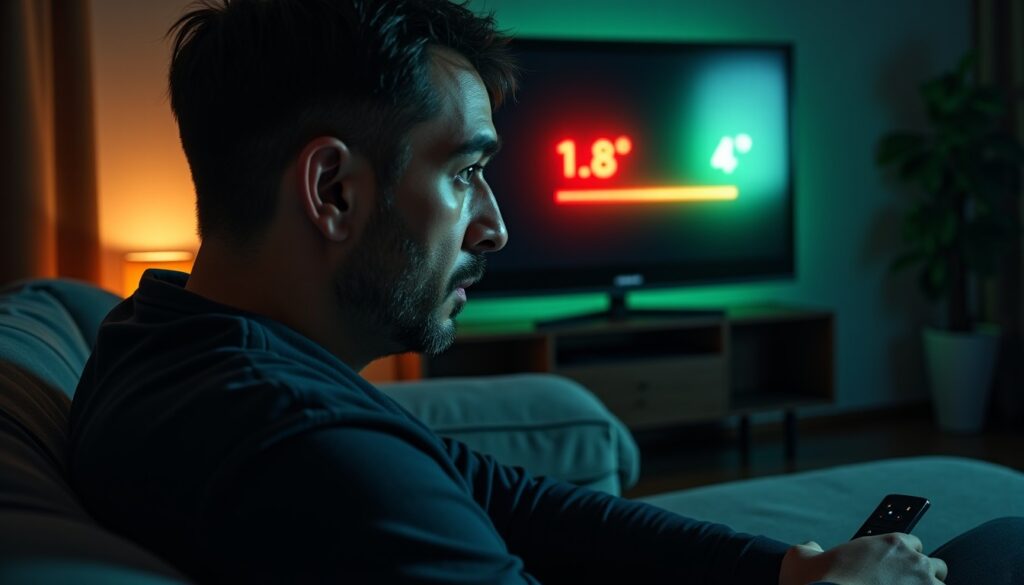
The gap is explained by two different expectations: the press review judges the construction, originality, and treatment of violence, while the audience’s opinion mainly rewards the effectiveness of a thriller led by Chris Pratt. On AlloCiné, the available data shows a score of 1.8/5 given by nine press outlets and a score of 4/5 based on 1,319 viewer ratings. These figures describe a marked divergence in reviews, but they do not measure exactly the same experience.
To understand this reception, we therefore have to look beyond the average: the story cultivates paranoia, the hunt, and revenge, with a seriousness that appeals to action series fans while leaving some journalists unsatisfied. The challenge is also to distinguish the criticisms aimed at the narrative mechanisms from the pleasure generated by its pace and its hero. This reading makes it easier to grasp what the audience comes to look for in The Terminal List, and what the press expects from a military thriller TV adaptation.
- The press score is based on a limited number of editorial reviews.
- The audience score aggregates a much larger volume of personal ratings.
- The central disagreement concerns the priority given to narrative novelty or the effectiveness of the spectacle.
Why The Terminal List season 2 scores differ so much
A gap between 1.8/5 and 4/5 seems spectacular, but we must first examine what each average represents. In the data associated with the series on AlloCiné, the press score relies on nine titles, whereas the audience average gathers 1,319 ratings. The first measures a limited set of professional views, generally accompanied by arguments about writing, directing, or acting; the second reflects satisfaction expressed by people who do not necessarily have the same criteria or viewing habits.
This difference in scale is not enough to invalidate either result. Nine reviews can highlight a pronounced editorial disagreement, but their average remains sensitive to each individual assessment. With 1,319 votes, a public score reflects a broader range of reactions: some viewers evaluate tension, others attachment to the character, the pleasure of action, or their desire to continue to the final episode.
We can compare these scores to two distinct questions. Professional criticism often asks whether the work renews its codes and whether its narrative choices produce a convincing result. The public may instead wonder whether the series offered the expected thriller for their evening: a hunted hero, a conspiracy to unravel, and a progression toward confrontation.
| Indicator | Provided value | What it highlights |
|---|---|---|
| Press review | 1.8/5, nine titles | Writing, originality, directing, and story limitations |
| Audience opinion | 4/5, 1,319 ratings | Overall satisfaction, pace, and adherence to the genre |
| Observed gap | 2.2 points out of 5 | Two different ways of evaluating the same proposition |
Imagine a viewer, Claire, who chooses the series after a busy day. She wants a tense story, without having to look for a comedy or an intimate drama, and appreciates the steady progression of an investigation toward a confrontation. A journalist may watch the same episodes by judging the clarity of clues, the credibility of twists, and the depth of supporting characters. Claire may emerge satisfied while the critic notes familiar clichés: their reactions do not contradict each other, they respond to different viewing contracts.
The score of 4/5 therefore does not prove that the press’s reservations are unfounded, nor does the average of 1.8/5 signify that the series has not found its audience. The number summarizes a reaction, while the criteria explain the disagreement.
A conspiracy plot dividing the press critics
The story of The Terminal List relies on an effective device: James Reece, member of a special unit, returns from a disastrous operation with fragmented memories and the feeling that elements escape him. Doubt falls both on what he has experienced, on what he is told, and on his ability to interpret his own perceptions. This setup quickly establishes an atmosphere of threat but forces the series to distribute answers cautiously.
For part of the press, this method can give the impression that the plot delays its clarifications. The investigation progresses through clues, flashbacks, and suspicions, while several narrative threads intersect: the search for truth, surveillance by authorities, and the decisions taken by Reece to escape his pursuers. The viewer receives pieces of information but does not always immediately know which piece should become a priority.
Take the case of an episode alternating a scene related to the initial mission, an exchange with a journalist, and an escape operation. Each sequence feeds suspense, but the progression may seem diffuse if the links between the three are not yet perceptible. For a mystery lover, this delay is an invitation to formulate hypotheses. For a critic who expects a very readable structure, it may be a detour that slows down the demonstration.
The second criticism concerns the familiarity of some elements. The hero discovers a conspiracy, the institutions inspire mistrust, and the investigation leads him toward officials he wants to bring down. These codes have long belonged to the American thriller, from political stories to tales of isolated soldiers facing their hierarchy. The Terminal List assembles them seriously but does not always transform their rules: the audience may appreciate the comfort of a recognizable genre, while the press questions the amount of novelty.
Does the suspense work despite its detours?
Yes, when the shadows give a reason to keep watching. A delayed revelation is productive if earlier clues change meaning or if it sheds light on a character’s behavior. It becomes frustrating when the story seems to withhold information solely to postpone the moment when the plot can advance. This borderline explains part of the critics’ divergence: viewers who are most sensitive to intensity may accept the slowdowns that attentive readers of the narrative mechanics sanction.
The series can also take advantage of its episode format to establish an investigation in stages. At each sequence, Reece confronts a new version of the facts against what he believes he remembers; the audience is thus placed in a position close to his. But this choice requires precise directing so that the character’s confusion does not become that of the story. Tension is the script’s greatest asset, and its readability remains its main test.
This structure highlights the presence of Chris Pratt, whose acting transforms the question “what happened?” into a more intimate question: what remains of Reece when his certainties collapse? This is where the evaluation of his performance comes into play.
Chris Pratt as James Reece: a closed-off hero who appeals to the public
For part of the audience, Chris Pratt’s shift in tone is one of the reasons to follow the series. The actor, associated with lighter characters and often self-deprecating humor, adopts here a restrained presence: low voice, closed-off face, economical gestures. This contrast immediately gives James Reece a different identity from those that made him popular in comedic or adventurous roles.
This transformation does not win unanimous approval. Some critics may see it as an overly immobile, almost distant interpretation, which leaves little room for emotional variations. Eight episodes with a protagonist who speaks little and hides his reactions require the viewer to accept minimal expressiveness. If one expects a hero who verbalizes his inner conflict, Pratt’s restraint risks creating a barrier.
Another reading is to consider this closed-off nature as a character trait. Reece seems cut off from his surroundings and former life; his silences then translate less a lack of acting than a way to represent trauma. The viewer observes a man who no longer knows if his memory is reliable and who gradually transforms his pain into action. This interpretation has its limits, but it gives coherence to the choice of an austere performance.
A tone without much breathing room
The series maintains a serious atmosphere, where moments of relief remain rare. This approach reinforces the impression of urgency: after a revelation, the story shifts toward a new threat rather than a long comedic break. For fans of dark thrillers, this continuity can make the universe more immersive. For others, the lack of contrast accentuates fatigue and makes episodes less varied.
This effect can be compared to music that holds a tense note throughout a scene. It sustains anxiety, but returning to calm sometimes becomes necessary for the tension to regain strength. The audience’s reception suggests that a significant part of the public accepted this sustained tone, perhaps even sought it out. The press, on the other hand, may see monotony if the characters and situations do not provide enough nuance.
The comparison with other action series available on platforms helps clarify The Terminal List’s choice. Some stories alternate operations, lighter exchanges, and personal stakes; here, the hero remains largely locked inside the threat. This is not just a question of pace: this strategy asks the audience to stay with a character who is not very demonstrative without a promise of forthcoming breathing space.
To illustrate the gap, imagine Marc, who likes military thrillers and wants to see Chris Pratt move away from his usual roles. He may appreciate the transformation precisely because it is radical, while a critic will prefer to judge the range of nuances offered by the acting. The same closed-off face then becomes, depending on expectations, a convincing embodiment or a dramatic limitation.
This tone is fully understood only by observing the place of violence. It is not just a backdrop for action; it reveals the moral choices that the series invites—or does not invite—the public to question.
The violence in The Terminal List: effective spectacle or moral blind spot
Brutality occupies a central place in the series experience. The confrontations are not limited to illustrating the danger of a military operation: they accompany Reece’s transformation, whose quest for truth progressively merges with a logic of revenge. This evolution gives the story a clear direction and explains why some viewers speak of sustained tension. Each new step seems to bring the character closer to a point where return to his past life becomes impossible.
The problem raised by critics is not only the level of violence. It also concerns the adopted point of view. When the directing remains very close to Reece, his acts may appear as an almost natural response to the suffering and betrayal he believes he has endured. The story then gives little distance to the public to measure the consequences of this method or examine possible mistakes by the hero.
This closeness can produce a powerful effect: we understand the urgency felt by Reece and perceive the world as he does, in terms of immediate threats. It also raises an ethical question. Can revenge be presented as a form of justice when the character acts with incomplete information? If the series does not sufficiently confront his certainty with other points of view, the action risks being taken for unconditional approval.
When violence serves the story
In a thriller, a brutal scene can have a dramatic function when it reveals the character’s state, changes a relationship, or produces lasting consequences. It becomes harder to defend when it mainly serves to repeat the same emotion, without advancing the plot or evolving the stakes. The difference is visible in the treatment of after-effects: wounds, reactions of close ones, and psychological consequences give depth to the action, whereas their absence can reduce it to an efficiency spectacle.
The audience giving 4/5 may give more weight to immediate intensity. A tense sequence, a carefully prepared operation, or the progression toward a target can exactly meet their search for suspense. The press, attentive to the relationship between form and content, may instead ask whether the series really examines the spiral it depicts. Both reactions can coexist: appreciating the impact of a scene does not necessarily mean approving Reece’s behavior.
We must also distinguish representation from glorification. A work may show a character crossing limits without claiming his acts are just; yet the story must convey those limits. When voices contesting Reece are underdeveloped, the interpretation becomes more ambiguous and the critical unease increases. Some viewers see immersion in the anger of a broken man, others a lack of distance from this anger.
The directing of violence thus sheds light on the general disagreement about the series. Those who value action find there a direct energy and a strong connection with the protagonist. Those who expect more balanced moral exploration stop at the story’s blind spots. Intensity is part of the promise, but critical distance determines the depth attributed to it.
This distinction also matters for what’s next: a new season could resume the engine of action while broadening the place given to consequences and opposing points of view.
What season 2 will have to prove after the mixed reception
Broadcast information announced the return of The Terminal List on Prime Video in France on October 21, 2026, with eight episodes. They cite David Digilio and Jack Carr among the screenwriters, as well as several directors, including Ben Wheatley, Marcos Siega, and Kate Dennis. These elements provide a framework for the continuation but are not sufficient to guarantee artistic evolution: the real challenge will be how the team renews the devices that have already divided critics and viewers.
The first challenge is to avoid the hero’s progression reducing to a succession of targets. A hunt offers a simple and readable narrative engine, but its effectiveness can wear off if each step repeats the same pattern: discovery of a culprit, preparation of an operation, confrontation, and a new name to pursue. To overcome this repetition, the series can evolve Reece’s goals, complicate his alliances, or make his decisions more costly.
The second stake concerns the consequences. If Reece’s choices have a lasting effect on his surroundings and on his capacity to act, the story gains a dimension that goes beyond the mechanism of revenge. A weakened relationship, information that calls into question his interpretation of events, or a tactical decision that backfires can move suspense. The audience then retains the appeal of the thriller, while critics have richer material to evaluate the character’s development.
Three avenues to narrow the gap between press and public
- Clarify the investigation’s progression: better hierarchized clues can preserve the mystery without giving the impression that the plot artificially withholds its answers.
- Vary the pace: calmer sequences can make action scenes more striking and give characters space to evolve.
- Give voice to contradictory points of view: credible allies or adversaries can confront Reece’s certainties without reducing the story to simplistic judgment.
These avenues do not mean that the series should be turned into a legal drama or give up its identity as an action series. They would rather strengthen what already works: tension, Pratt’s presence, and the feeling of a tightening threat. By giving real weight to consequences, the season could retain its energy while opening a more nuanced debate on the acts of its hero.
The two scores alone do not predict the result. The 4/5 shows that a large audience found the offer a satisfying experience; the 1.8/5 press average signals that several critics found its choices too familiar or insufficiently controlled. A television adaptation can meet genre expectations without convincing on all formal criteria, and the gap between these ratings makes this tension precisely visible.
For enthusiasts, the question to follow is therefore less whether the series will keep its shootouts than what they will advance. If the continuation turns Reece’s anger into a true dramatic dilemma, it can preserve its audience while responding to editorial reservations. The next test for The Terminal List will be to evolve its hero as much as its narrative arsenal.