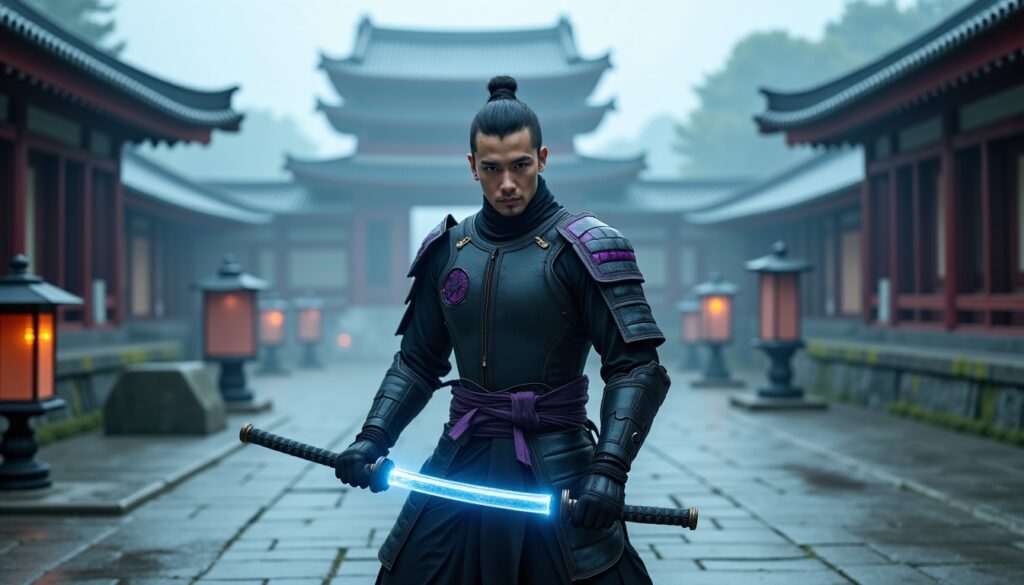
Phantom Blade Zero will be released on October 29, 2026, on PlayStation 5 and Windows PC, with a simultaneous launch on Steam, the Epic Games Store, and the PlayStation Store. This action game by S-Game relies on fast-paced combat inspired by Chinese martial arts, but its success will also depend on its story, honor system, and performance quality.
The information already presented outlines an ambitious project: you will play as Soul, a warrior who has only 66 days left to live, in a dark fantasy universe fueled by wuxia. The gameplay footage highlights intense duels, dodges, and parries that seem to require careful reading of opponents’ movements. One announcement particularly catches our attention: certain choices could lead to cascading consequences on the narration and main quest.
- Release date: October 29, 2026.
- Platforms: PlayStation 5 and Windows PC.
- Pre-orders: open since August 12, 2026, at 4 a.m. in France.
- Game promise: martial action, wuxia story, and decisions that can alter the adventure.
We can therefore examine what is confirmed, what the demonstrations reveal, and the points that will need to be verified firsthand. If you also follow upcoming console releases, our selection of anticipated PS5 games helps place this launch among the events to watch.
Phantom Blade Zero: release date, pre-orders, and editions
The release date of Phantom Blade Zero is set for October 29, 2026, with a launch on the same day on PS5 and Windows PC. For French players, the schedule is clear: the game will be available on Steam and the Epic Games Store, as well as on the PlayStation Store. This simultaneous release avoids having to wait for a PC or console version after the initial launch.
Pre-orders opened on August 12, 2026, at 4 a.m. French time. Players can choose between a Standard edition and a Digital Deluxe edition, but the French pricing has not been disclosed in the available information. Before purchasing, we therefore advise verifying the price displayed on the chosen store and carefully comparing the content of the editions: the name “Deluxe” alone does not determine the value of the possible additional elements.
The schedule also provides a concrete reference for those who have followed the game since its first presentations. The period between the opening of pre-orders and the release leaves several weeks to examine the released sequences, the announced technical features, and the content of the versions. For a game based on precise parrying, these details matter as much as cosmetic bonuses: a stable PC version or a smooth PS5 experience will directly influence gameplay enjoyment.
| Information | Known detail |
|---|---|
| Release date | October 29, 2026 |
| Platforms | PlayStation 5 and Windows PC |
| PC stores | Steam and Epic Games Store |
| Pre-order opening | August 12, 2026, at 4 a.m., French time |
| Announced editions | Standard and Digital Deluxe |
| French price | Not disclosed in available information |
This multiplatform release broadens the potential audience without covering all consoles: no Xbox version is announced in the available data. PS5 and PC players will thus be able to discover the title at the same time but will have to choose based on their habits and hardware. On console, the simplicity of a common configuration can reassure; on computer, settings and performance will depend more on the machine.
If you pre-order, keep in mind that the known date does not answer all practical questions. Unlock times may vary depending on stores and regions, and the available information does not confirm early access. The essential fact remains the announced global launch for October 29, rather than a possible advance reserved for a particular edition.
The appointment is now precise, but a date alone says nothing about the quality of the game: to understand that, we need to look at what the combat actually promises.
Phantom Blade Zero Gameplay: a wuxia fight to read at the right moment
S-Game describes the identity of its game with the term “kungfupunk”, a formula that combines Chinese martial arts, a dark universe, and spectacular energy. The released sequences showcase quick movements, dodges, counters, and combos. The visible principle is not limited to hitting relentlessly: you also have to move around the opponent, spot their intentions, and choose the right moment to respond.
In a duel, a clearly readable animation can transform a demanding confrontation into an understandable exchange. If an enemy is preparing a strike, their shoulder, posture, or blade movement can announce the threat. You then learn to recognize visual cues, to avoid an attack or try a parry rather than hitting randomly. The presented gameplay footage gives significant importance to these movement cues, which could help players understand why a defense succeeds or fails.
This readability is essential in an action game where reaction windows seem short. Dodging too early can leave you vulnerable to the follow-up of a combo; a successful parry can, on the contrary, open a chance for a counterattack. Here we find a demand reminiscent of Sekiro: Shadows Die Twice, where observing the opponent’s rhythm was an integral part of the fight. The comparison helps understand expectations without prejudging how Phantom Blade Zero will develop its own mechanics.
The face-to-face images are promising, as the camera can keep both fighters in a relatively easy-to-read space. Fighting multiple enemies will be another challenge. When three opponents attack from different angles, targeting, camera distance, and priority given to each threat can make a parry difficult to interpret. A spectacular animation cannot compensate for an attack masked by another character.
We can imagine a simple situation: Soul faces a heavy opponent preparing a strong strike while a second enemy approaches from the side. The player must decide whether to interrupt their attack, reposition, or take the risk of a counter. For this choice to be satisfying, the game will need to clearly communicate dangers and respond without excessive latency to inputs. This is where fluidity becomes a component of the combat system, not just a technical argument.
Martial arts do not only serve to decorate animations. Varied stances, lateral movements, and rhythm changes can give each encounter a different personality. For this variety to remain interesting throughout the adventure, opponents will also have to demand distinct responses: a fast fighter should not be handled exactly like an enemy trying to break your guard.
The trailer and long sequences draw the eye with their staging, but the experience will be judged on the repetition of gestures. A failed parry must appear attributable to an understandable mistake, and a success must provide an immediate response. The gameplay’s promise therefore lies in the alliance between speed, precision, and readability; it is this alliance, more than the choreography alone, that will give weight to the fights.
An honor system that could transform the narrative
The narrative dimension distinguishes Phantom Blade Zero from many demonstrations focused almost exclusively on action. S-Game announced an honor system capable of influencing the story, with decisions likely to cause cascading consequences, including on the main quest. This idea could give lasting meaning to player choices, instead of confining them to a meter or a different dialogue line.
To gauge the ambition, imagine Soul sparing a character who betrayed an ally. If this decision then changes an alliance, closes access to an area, or alters a mission goal, the choice is inscribed in the very structure of the adventure. Conversely, if the effect is limited to a verbal reaction without practical consequence, the honor system risks seeming decorative. The difference between these two approaches will be measured by accessible events and how the world reacts to player behavior.
The hero’s context reinforces this track. Soul is presented as a warrior who has only 66 days left to live. This deadline adds immediate tension to his journey: each mission can be read as a stage in a race against time, while the values he defends may conflict with his need to survive. A generous decision can cost time or complicate a fight; a more brutal solution can help progress while changing relationships with other characters.
This contrast can feed a convincing wuxia narrative. In this genre, honor is not reduced to public reputation: it touches on obligations, oaths, and how a fighter positions themselves regarding their school or companions. By weighing these tensions on missions, the game can link narrative scenes to action. A duel then becomes more than an obstacle: it can represent the price of a promise or the consequence of a prior choice.
The first presentations do not yet detail all the ramifications across a full playthrough. We cannot therefore establish the number of endings, narrative paths, or mission variants from the provided information. What we can expect, however, are concrete clues: characters who remember previous decisions, altered routes, evolving objectives, or access becoming impossible.
A second part could also help verify the system’s scope. If choices really change encounters and progression, restarting the adventure should allow discovering different scenes or approaches, rather than just responding differently to a few dialogues. For an RPG and action game, this replayability can extend interest beyond mastering combat, provided the variations have a noticeable effect.
The narrative will need to find a balance between this freedom and Soul’s trajectory. A story too rigid would make decisions anecdotal; a structure too scattered would risk diluting the urgency of the 66 days. Honor can become the moral memory of fights if player acts truly change the path unfolding before them.
PS5 and PC: platforms, fluidity, and technical requirements
Phantom Blade Zero is planned for two platforms at launch: PlayStation 5 and Windows PC. The simultaneous release avoids a prolonged wait between versions, but each will have to meet different requirements. On PS5, the challenge will notably be maintaining a steady experience and responsive controls. On PC, results will also depend on configuration, graphics options, and optimization provided by the studio.
This technical question is especially sensitive for a game based on parry windows. A drop in fluidity when the opponent launches an attack can blur reading and give the impression that the input was not registered. Conversely, a stable frame rate helps the player identify an animation and react at the right moment. In this type of experience, performance directly contributes to the fairness of the challenge.
The available information associates the project with Unreal Engine 5. This engine allows building detailed environments and ambitious visual effects, but the final rendering depends on optimization work. PC players know well the problem: a beautiful scene can hide stutters, shader loads, or performance variations. The quality of a trailer alone does not allow knowing how the game will run on a given machine.
We therefore recommend monitoring concrete details communicated before and after release: minimum and recommended configurations, frame rate options, controller support, and potential updates. On console, it will be useful to check if several display modes are offered and what trade-offs each implies. Players who prioritize fluidity do not necessarily seek the same settings as those who want to push visual fidelity to the maximum.
The absence of an Xbox version among announced platforms limits the launch to two ecosystems. This does not prevent the game from reaching a significant audience, but players who play exclusively on Xbox will not be able to discover it at launch according to current information. For those who own both a PS5 and a PC, the choice may depend on gaming comfort, computer power, or their preference regarding stores.
The platform-specific features have not all been detailed in the available elements. We therefore avoid attributing specific options to the game that have not been announced here. The decisive points will remain rather simple to observe: loading times, stability, control precision, and action readability when the screen fills with enemies.
A spectacular production can charm in video, but its reputation is also built in repeated everyday situations: restarting a duel, crossing a zone, or reacting to an unpredictable enemy. For Phantom Blade Zero, technical consistency will be a direct condition for the success of its combat system.
Development completed: what remains to be verified before release
Phantom Blade Zero’s development has reached the “gold” stage, according to information reported by JeuxActu. In the industry, this step indicates that the version intended for sale is ready. It marks a concrete milestone in production and confirms that the October 29, 2026 release is no longer just an envisioned window but a deadline supported by a game that has reached an advanced phase.
This status does not necessarily mean that every version is free of defects. Studios can still prepare patches, improve stability, or adjust certain elements as the launch approaches. For a demanding action game, these last tasks are particularly important: an imprecise collision, a camera that loses its target, or inconsistent response times can disrupt a confrontation even when animations are successful.
The teams will also need to ensure that regular enemies remain interesting over time. Fights against imposing opponents often produce the most memorable images, but an adventure also includes more common encounters. If these repeat without variation, the rhythm may falter between highlights. Enemies with distinct behaviors, well-designed combat zones, and opportunities to use different approaches would help maintain attention.
The structure of out-of-combat phases will matter just as much. The presented world mixes Chinese dark fantasy and wuxia inspirations; exploration must give a reason to linger in locations beyond moving to the next arena. Clues about local conflicts, characters involved in Soul’s decisions, or paths revealing another facet of a mission could link world discovery to the honor system.
A guiding thread helps understand what we expect overall: imagine a player discovering a side route while pursuing an assassin. If she takes the time to help a character met on the way, this decision could change a future encounter or access to an area. In a game where Soul has only 66 days, this detour from the main road could also give dramatic meaning to the time spent. This type of chaining would make exploration, narrative, and action converse rather than juxtapose.
The project already has identifiable elements: a hero threatened by a deadline, a marked martial aesthetic, and a combat system aiming for speed. The announcement of narrative consequences opens another perspective: that of an adventure where decisions do not erase once the sword is sheathed. The demonstrations will have to be confirmed by the real variety of missions and the coherence of the world’s reactions.
To prepare for your discovery, you can keep an eye on some precise criteria: command responsiveness, attack readability, enemy diversity, visible effects of the honor system, and stability on each platform. These benchmarks help go beyond the impression produced by the most spectacular scenes and judge the overall experience.
With development complete, the course is set; the release will say whether Phantom Blade Zero turns its kung-fu promises into a lasting adventure, where every fight and every decision leave a mark.