
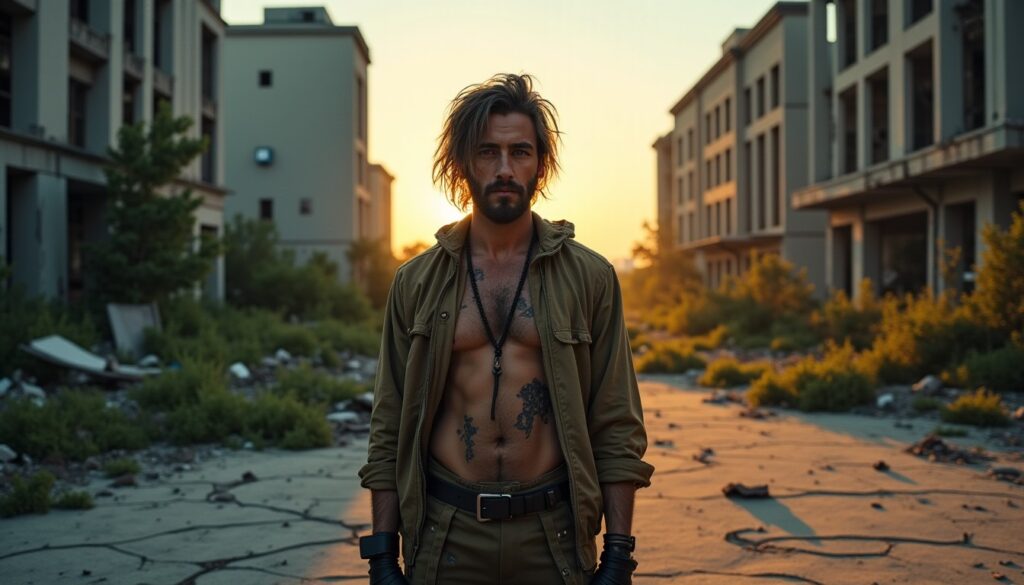
Fans of The Last of Us will undoubtedly enjoy exploring other post-apocalyptic series that delve into the core of survival, human dramas, and devastated worlds. We have selected for you five iconic series that embody these dystopian universes where humanity struggles between trials, reconstruction, and constant dangers. Here is what you will find in this article:
- A dive into the timeless classic The Walking Dead, a reference for any zombie and post-disaster plot enthusiast.
- A melancholic look at Station Eleven and its unique approach to the apocalyptic drama centered on memory and culture.
- An exploration of collective trauma and mystery with The Leftovers, a work that transcends mere survival to question the meaning of existence.
- The rigorous and poignant study of Chernobyl as a docudrama about a catastrophe with lasting repercussions, embodying a nuclear post-apocalyptic universe.
- An incursion into Fallout, the recent adaptation of a major video game franchise, oscillating between satire and survival story in a ravaged world.
These series, although heterogeneous in tone and style, are all available in France on various SVOD platforms and enrich the palette of post-apocalyptic universes, perfectly complementing the immersive experience offered by The Last of Us. Let’s discover together why each of them deserves your attention.
Survival and human conflicts in The Walking Dead, a classic post-apocalyptic series
The Walking Dead remains an essential reference for fans of post-apocalyptic series. Broadcast for twelve years, from 2010 to 2022, this series has 11 seasons and 177 captivating episodes exploring a world devastated by an epidemic turning humans into zombies called “walkers.” The plot relies on a brutal yet simple starting point, where the main challenge remains daily survival.
What sets The Walking Dead apart is its focus on interpersonal relationships and the resulting moral dilemmas. The threats are not only external: they also arise from tensions within the survivor groups themselves. For example, conflicts between rival communities show how quickly the boundary between civility and barbarism can disappear. These difficult choices continuously fuel the narrative and dramatic depth of the series.
In terms of viewership, The Walking Dead broke historic records on American cable, often gathering more than 17 million viewers per episode at its peak popularity. Its success generated several spin-offs that extend its universe, attesting to its lasting impact on the television landscape. The series also helped popularize interest in post-apocalyptic universes and issues associated with zombies.
A striking example, the relationship between Rick Grimes and Carl illustrates the transmission of values and resilience in a hostile world. It is this blend of intense action and intimate emotions that distinguishes The Walking Dead from many other productions.
Finally, the series is also attentive to scientific details about the pandemic and mutations, thus reinforcing its realism. This balance between spectacle and humanity makes The Walking Dead a must-watch for any fan of apocalyptic drama and post-disaster adventures.
Station Eleven: When survival gives way to resilience and cultural memory
Station Eleven offers another facet of post-apocalyptic series, more introspective and artistic. Adapted from Emily St. John Mandel’s novel, this mini-series aired since 2021 stands out for its nuanced approach to a world shattered by a lightning-fast pandemic.
Unlike The Last of Us or The Walking Dead, where the physical threat is palpable and omnipresent, Station Eleven emphasizes mourning, loss, and cultural reconstruction. The plot follows a traveling theater troupe wandering the ruins of a destroyed world, bringing memory and art into an environment where material survival seems miraculous.
This series focuses on three time periods – before, during, and after the disaster – which allows grasping both the brutality of the collapse and humanity’s persistence through culture. This rich narrative treatment gives birth to complex characters who embody hope and collective pain. For example, the dilemmas of Elizabeth, the troupe’s leader, reflect the struggle between loss and rebirth.
Critics have praised this production for its sensitive writing, favoring poetry and emotion over action scenes. It questions the place of art and memory in dystopian universes, providing a fresh and essential perspective for genre enthusiasts.
Another interesting element lies in the representation of human networks. Station Eleven shows how survivors build new social bonds and transmit a fragmented culture, far from the simple instinctual mechanisms linked to immediate survival. This rare and precious element precisely echoes The Last of Us, where emotional richness transcends mere dramatic tension.
The keys to Station Eleven’s success
- A miniseries format that favors quality over long-length format.
- A non-linear narration that enriches the depth of the story.
- A poetic direction that values emotions more than horror.
- A reflection on the place of culture in a broken world.
- A strong human dimension, focused on individual and collective memories.
The Leftovers: diving into the collective trauma of an inexplicable disappearance
The Leftovers stands out radically from classic post-apocalyptic universes, with no zombies or ravaged landscapes. Broadcast between 2014 and 2017, this series explores the psychological and social consequences of a mysterious disappearance that takes away 2% of the world population without any explanation.
The series focuses on how individuals and communities try to rebuild their shared meaning after an incomprehensible tragedy. This sudden loss crystallizes a collective trauma that shakes all certainties and social models. We notably follow the Garvey family and their struggle to find answers and maintain connections.
This dystopian universe, while remaining sober in its visual effects, offers a study of human behaviors in the face of the inexplicable, focusing on the mechanisms of grief, faith, and beliefs. Its emotional intensity and dramatic build-up were praised by critics and led it to be considered one of the major works of apocalyptic drama.
By comparison, The Leftovers recalls – through its rich characters and complex emotions – what makes The Last of Us successful, while freeing itself from the classic codes of the genre. It is a work to be reserved for those who enjoy deep psychological narratives and reflections on our collective reactions to crises.
The dimensions explored in The Leftovers
- Individual and collective trauma related to loss.
- The search for meaning in the face of the absurd.
- Emerging social and spiritual fractures.
- The weight of secrets and unspoken words in human relationships.
- The complexity of beliefs in the face of the inexplicable.
Chernobyl: a poignant reconstruction that resonates with post-apocalyptic universes
Although not a traditional post-apocalyptic fiction, the mini-series Chernobyl, broadcast in 2019, appears as an essential testimony for those interested in apocalyptic dramas. It recounts in five breathless episodes the 1986 nuclear catastrophe, its causes, and devastating consequences.
The heavy and immersive atmosphere of the series plunges the viewer into a world marked by a human, institutional, and environmental catastrophe that profoundly disrupts society. Creator Craig Mazin, also the showrunner for The Last of Us adaptation, signs here a work where fear, responsibility, and personal sacrifices take on an extreme relief.
Each episode highlights the chain of human errors and systemic dysfunctions that worsened the crisis while exploring the psychological impact on those involved. This rigour in reconstruction and narration creates constant tension, similar to that felt in the choral and intense scenes of The Last of Us.
As viewers, we face an out-of-control disaster where survival is played out as much on the ground as within institutional spheres. Chernobyl invites reflection on technological risks and societies’ inability to anticipate certain disasters, a crucial theme in the contemporary post-apocalyptic universe.
| Element | Details | Narrative Impact |
|---|---|---|
| Nuclear catastrophe | Explosion of reactor 4 at Chernobyl in 1986 | Representation of a technological apocalypse |
| Human responsibility | Sequence of errors and political decisions | Suspense based on consequences of human choices |
| Survivors and heroes | Characters with poignant sacrifices | Essential human aspect to underline the drama |
Fallout: a satirical and intense adaptation for post-disaster adventure enthusiasts
Fallout, available on Prime Video since 2024, establishes itself as a series adapted from a famous video game franchise, set in a particularly dark and wild post-nuclear universe. This series perfectly complements the universes of The Last of Us by offering an original and sometimes offbeat exploration of the dangers inherent to survival in a ravaged world.
The tone sometimes stands out with its irony and dark humor, while maintaining a large share of realism in depicting rival factions, irradiated terrains, and difficult moral choices. The series managed to capture the attention of the public and critics alike, becoming a notable success from its release.
The plot features different groups of survivors in a fragmented post-nuclear America, where violence and mistrust dominate. The story explores struggles for power, limited resources, and the search for a new social balance. These elements directly echo the themes explored in The Last of Us and other post-apocalyptic series.
For more information, you can consult a complete file detailing the stakes of the Fallout series and its specifics on Gamers Land.
In summary, Fallout shines through:
- Its faithful insertion into the original video game universe, ensuring narrative coherence.
- A direction that alternates between realistic tension and satirical moments.
- A gallery of characters where humanity and duplicity constantly mingle.
- A post-nuclear universe rich in dangers and surprises.
- A series that broadens the range of successful video game adaptations on television.