
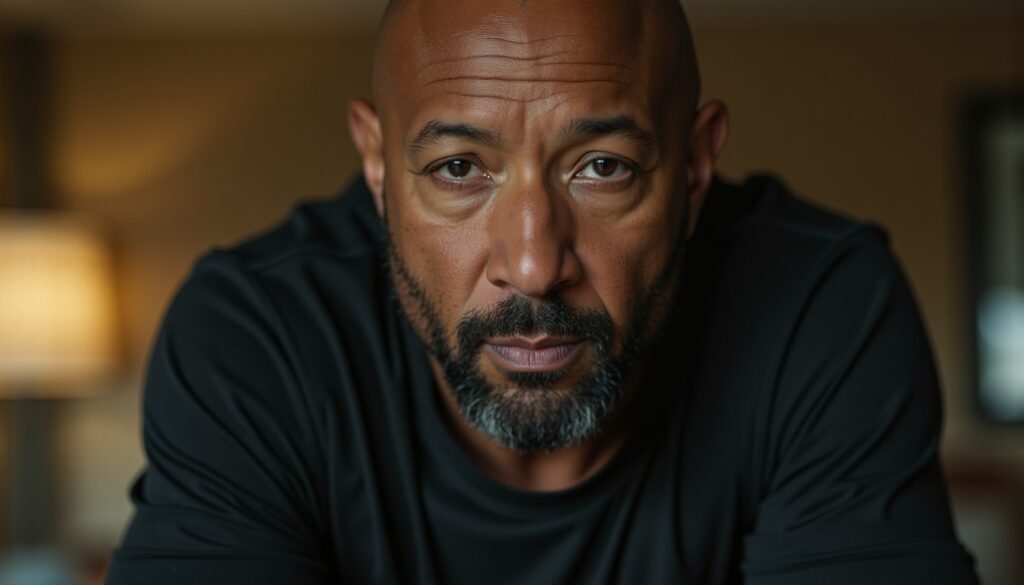
Netflix is relaunching the Riddick trilogy by making the three cult sci-fi saga films featuring Vin Diesel available from June 1, 2026. This revival offers a unique opportunity to rediscover a main character who left a mark on the science fiction universe, portrayed by a multifaceted actor. The franchise’s inclusion in Netflix’s catalog fits into a clear strategy: to renew the offer around Vin Diesel through an action and science-fiction saga that has established itself by its distinctive style and universe. Here are the main topics we will explore together:
- The narrative and stylistic construction of the three Riddick films and their impact on contemporary science fiction.
- The economic and commercial stakes related to this saga, between controlled budgets and box office returns.
- The role of Vin Diesel, from Groot to Riddick, and how his career influences this revival on Netflix.
- The prospects around the fourth film project “Riddick: Furya” and its financing.
- The special place of Riddick in the SF saga landscape and its new breath thanks to streaming.
This complete overhaul of the platform’s offer promises a fresh look at an exciting and often underrated franchise. Let’s embark on this fascinating journey into the darkness of Riddick and explore the reasons for its triumphant return on Netflix.
A cult science-fiction trilogy not to be missed on Netflix
The Riddick trilogy illustrates a unique journey in science fiction, embodied by Vin Diesel in an extremely complex role. Since 2000, Pitch Black laid the foundations of a dark and captivating universe. The story centers on an anti-hero, Richard B. Riddick, whose peculiarity is exceptional night vision. Trapped on a hostile planet inhabited by fierce creatures, the character evolves in a narrative where survival is paramount, cleverly combining horror and action. Directed by David Twohy, the film captivated with its austere and minimalist atmosphere, far from big Hollywood productions, which strengthened Riddick’s mystical aura.
Four years later, The Chronicles of Riddick significantly broadens the horizon with a turn toward space opera. The saga shifts from a near-confidential survival story to a galactic-scale military confrontation. Against a backdrop of a militaristic empire, prophecies, and universal conflicts, the main character becomes a key player in this epic context. The film intensifies its production with a budget of over 100 million dollars, illustrating a wider narrative ambition but at the risk of limiting its commercial profitability.
Finally, in 2013, Riddick returns to a more focused and darker formula, reconnecting with the spirit of the first installment. This return to survivalism with elements of manhunt reaffirms the saga’s raw and effective identity. For many fans, this third installment symbolizes a back-to-basics return, a clever blend of tension, action, and mystery surrounding a fascinating character. Today, the entire trilogy is accessible on Netflix, allowing either a new audience or early admirers to dive back into this adventure.
Here is a summary table of the three films and their main characteristics:
| Film | Release Year | Genre | Budget (millions $) | Worldwide Revenue (millions $) | Narrative Style |
|---|---|---|---|---|---|
| Pitch Black | 2000 | Survival, SF | 23 | 54 | Minimalist and intense |
| The Chronicles of Riddick | 2004 | Space Opera, SF | 105 | 115.9 | Epic and expansive |
| Riddick | 2013 | Survival, Action | 38 | 98 | Tight and brutal |
This presentation clearly shows the evolution of a saga that has adapted to the context while preserving its DNA. Netflix now offers the opportunity to reclaim this unique journey through privileged access to the complete trilogy.
The economic weight of the Riddick saga and its implications for Vin Diesel and Netflix
The financial journey of the Riddick trilogy is a telling example of the challenges faced in the film industry, especially for an SF franchise with high ambitions but a targeted audience. With a total worldwide gross of about 267 million dollars, the saga remains respectable but does not compete with big productions generating hundreds of millions, or even a billion.
The complexity of The Chronicles of Riddick film lies in its massive budget capped at 105 million, while worldwide earnings were limited to about 115.9 million. This narrow margin slowed the immediate realization of a new sequel of similar scale. The substantial investment certainly reflects a desire for a change of style, but in a world where financial risks are closely scrutinized, this approach proved risky.
The production of the third film clearly learned from this with a much more modest budget, around 38 million. This “lean” approach helps preserve the essence of the story while ensuring better profitability. The return to a more compact narrative structure favors focusing on the main character and the immediate conflict, strengthening both appeal and economic viability.
Netflix benefits from this dynamic by incorporating the trilogy into its catalog at a time when other major Vin Diesel works, notably the Fast & Furious films, are leaving the platform. This reorganization reflects a desire to offer another dimension of the actor to its audience. For Netflix, the bet relies on the potential to rejuvenate and expand the fan community around Riddick while testing interest in a return to this universe via a possible fourth installment.
The recent success of Bloodshot on Netflix is another interesting indicator. Although this action film with Vin Diesel performed less well at the box office, its first place in the platform’s Top 10 shows that streaming can offer a second life to these productions. This trend may inspire similar decisions regarding the Riddick saga, leveraging the reciprocal capital between cinema releases and digital presence.
This symbiosis illustrates a new way of considering film economics in the coming years, especially for franchises with controlled budgets and clear identification with an iconic main character.
Vin Diesel, a multifaceted actor: from Groot to Riddick on Netflix
Vin Diesel today embodies one of the most striking figures in action and science-fiction sagas. His versatility, sometimes underappreciated, is a strength for platforms like Netflix which seek to renew their catalogs by showcasing talents capable of exploring different genres. Riddick offers the image of a much darker and more complex protagonist compared to his lighter roles, such as the voice of Groot in the Marvel Cinematic Universe’s Guardians of the Galaxy films.
This contrast fascinates and demonstrates Vin Diesel’s ability to adapt to varied universes. While Groot charms with his endearing and almost childlike side, Riddick embodies a solitary and relentless survivor, immersed in dense and dangerous worlds. This disparity forms a strong argument to reintegrate the trilogy into an offering like Netflix, where content diversity is key to meeting the expectations of a heterogeneous audience.
The return of the Riddick trilogy on Netflix is part of a necessary rediscovery. By bringing the three films together around the same actor, the platform emphasizes the importance of valuing all aspects of a career, notably those that take more artistic and narrative risks. This choice opens an interesting dialogue on how actors can be redefined by their works through digital platforms.
Here are the key points illustrating the tension between public image and Vin Diesel’s varied roles:
- Cult role: Riddick symbolizes the absolute anti-hero in the SF universe.
- Mainstream career: The Fast & Furious series popularized Vin Diesel among the masses.
- Diversification: Voice of Groot, role in Bloodshot, combination of action and emotion.
- Streaming impact: Netflix leverages this range to strengthen its programming.
This digital revival of Riddick invites revisiting the image of an actor who has balanced popular franchises and more singular works in an increasingly competitive context.
What future for the Riddick saga with the announcement of Riddick: Furya?
The return of the trilogy on Netflix echoes a long-awaited project by fans: the fourth installment entitled Riddick: Furya. Announced in 2023, this film was scheduled to begin filming in Europe in 2024, financed notably through carefully negotiated international presales. The current context, marked by the entire set of films on a global platform, hints at a strategic renewal aimed at gauging public interest.
Several factors contribute to the uncertainty around the effective release of this film. Independent financing, the weight of post-production costs, and Vin Diesel’s multiple commitments to other franchises complicate production. This model contrasts with the giants of traditional studios and illustrates a more artisanal and tailor-made approach.
For Netflix, the trilogy’s broadcast functions like a laboratory. By consolidating a solid viewer base, the platform can measure precise indicators related to engagement and thus support the viability of a new episode. This dynamic reflects an evolution in the way sagas are built in the streaming era, where each stage is calculated and designed to maximize longevity.
In this context, it is worth examining what the audience can expect from this next step: a deepening of the universe, an intensification of the action, but also a more thorough exploration of the main character whose figure of a solitary survivor is the charm and uniqueness of the story. This continuity will respect the established codes while adapting to contemporary demands.
The Riddick saga thus illustrates a development model that, although modest at origin, now takes on a global and modern dimension thanks to digital relays and an iconic actor attached to his role.
The Riddick saga: a unique universe and an essential revival in today’s SF landscape
Riddick stands out for its strong identity in the science fiction landscape. The main character, alternating between brutality, taciturnity, and intelligence, represents a rare anti-hero figure, far from the stereotypes of modern major franchises. His trajectory reveals a different approach to space opera, more focused on survival, psychology, and mystery.
The availability of the trilogy on Netflix allows rediscovering these qualities with increased visibility and easier accessibility. For science-fiction enthusiasts, it is an opportunity to see or revisit a story that dares to mix tension, hostile atmosphere, and stakes both personal and galactic, served by Vin Diesel’s intense performance.
This return also emphasizes the importance of diversifying formats and modes of consumption. While shared universes dominate, Riddick offers a linear and coherent continuity, centered on a single main character, which brings freshness and authenticity likely to appeal to a broad audience.
Here are some elements that make Riddick’s singularity in the industry:
- A rich but controlled universe, between survival and space opera.
- A narration both stripped down and immersive, avoiding scenographic clutter.
- A charismatic figure at the heart of the story, portrayed intensely by Vin Diesel.
- An artistic gamble combining action, tension, and reflection.
- A digital revival that opens the saga to a new generation.
As home screens take on a growing role, this reintroduction of the Riddick saga represents a key step in renewing science fiction on Netflix and offering intense action films to increasingly demanding viewers.