
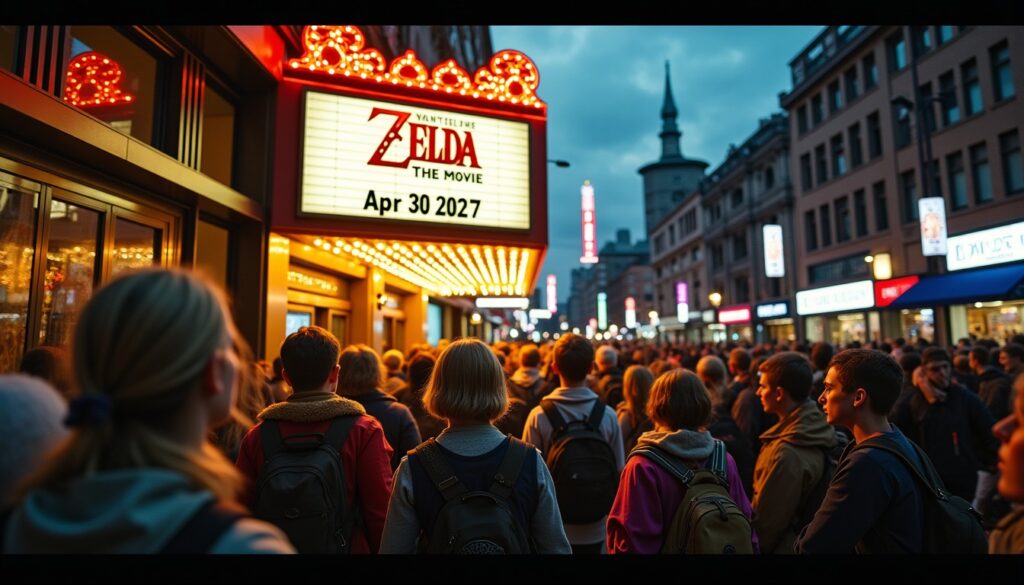
The early release of the live-action film The Legend of Zelda on April 30, 2027, is stirring excitement mixed with questions among fans and observers of video game cinema. After several delays, this new date, confirmed by Shigeru Miyamoto via Nintendo’s official accounts, seems to represent a strategic intent to refine the launch schedule while preserving the integrity of a highly anticipated adaptation. This advancement by one week compared to the previous May 7, 2027 deadline invites an examination of the reasons, implications, and realities behind this shift. Here are the key points to consider:
- The changing context of the film’s scheduling and the reasons behind this new date.
- Production details, casting, and artistic choices influencing the release.
- The impacts of this change on audience reception and competitive positioning.
- Issues related to adapting the legendary saga into a live-action film.
- Perspectives for the future of the franchise in cinema and the video game universe.
These elements will guide you through a comprehensive and nuanced analysis of what this early release truly means for the Zelda community and the world of video game adapted cinema.
Timeline and reasons for the advanced release of Zelda on April 30, 2027
Since the official announcement of the film The Legend of Zelda in November 2023, the release date has undergone several changes. Originally planned for spring 2027, the release was first announced for late March, around the 26th or 27th, before a postponement to May, set for the 7th. It is this schedule that was recently clarified by a new adjustment confirming a theater availability on April 30, 2027, exactly one week earlier.
In the world of cinema, each Friday release represents a strategic opportunity to capture the best commercial window. This late April-early May slot could notably benefit from reduced competition. For example, it avoids the cluster of traditional early May blockbusters and falls during a period when school holidays in some regions are starting, thus optimizing theater visibility and attendance. This shifted schedule could also play a role in marketing campaigns, allowing for longer and more targeted efforts consolidating the buzz around the project.
Shigeru Miyamoto, the iconic creator of the saga, emphasized during his announcement that this change stems more from a concern for optimization and a desire to fine-tune production and release rather than a real constraint linked to post-production or major delays.
In summary, this advanced release offers:
- A better placement in the spring 2027 cinematic calendar.
- A head start over certain competitors in the adventure/video game genre.
- A sign of confidence displayed by Nintendo regarding the film’s progress status.
| Key Dates | Associated Events |
|---|---|
| November 2023 | Official announcement of the Zelda film |
| March 2027 (initially) | Initial planned release date |
| May 7, 2027 | First release delay |
| April 30, 2027 | Confirmed early release |
This table summarizes the schedule evolution, a testimony to the winding path that a big-budget, long-awaited production sometimes must take, also reflecting a clear desire not to rush the cinematic adaptation.
The Zelda project: artistic aspects, casting, and production
The Zelda feature film benefits from significant commitment, especially because it involves adapting a legendary video game license that has sold over 140 million copies since its beginnings. This live-action project, supervised by Nintendo, embodies a dual responsibility: respecting the iconic universe while offering something new and appealing to a broad cinematic audience.
The choice of Wes Ball as director reflects a desire to balance modern visual sensations and intense storytelling, he who has directed “Maze Runner” and “Kingdom of the Planet of the Apes.” The screenplay by Derek Connolly and T. S. Nowlin, two renowned writers, promises a script that will capture the essence of the adventure, where the hero’s solitude and the mythical atmosphere are paramount.
Filming in New Zealand, which began in November 2025, also shows environmental and aesthetic concern: the natural, vast, and varied landscapes immediately evoke the expansive plains of Hyrule, the saga’s central kingdom. This real setting adds rare authenticity to the direction, enhancing viewer immersion.
As for the casting, it offers young talents to play the key characters:
- Bo Bragason, aged 21, in the role of Princess Zelda.
- Benjamin Evan Ainsworth, a promising young actor, in the role of Link.
Their choice aligns with the initiatory dimension and development that the film wishes to convey, potentially allowing for growth over several installments if the project finds its audience.
This young cast also provides natural communication with current generations, which energizes reception. The visual and narrative management of the franchise, which relies heavily on silences and symbols, is thus renewed with a welcome freshness.
The weight of a complex adaptation
Adapting a video game as rich as Zelda, known as much for its atmosphere as for its gameplay, requires a nuanced approach. The film will not be just a simple action spectacle but an immersive work where artistic choices translate the emotional and symbolic highlights of the game. This demands meticulous work on the script, sets, and actor performances.
The success of other recent adaptations opens doors but also imposes an additional requirement. This early release, far from being a trivial marketing gesture, reflects a balance between confidence in the delivered quality and rigorous expectation management.
Effects of an early release on the film market and the audience
Advancing the release date of The Legend of Zelda film by only one week may seem anecdotal, but in the blockbuster universe, every day carries weight.
The reasons supporting such a choice stem from several precise analyses:
- Competitive positioning: late April is a period where major spring releases slightly lose intensity, reducing direct competition. This can boost attendance, especially among young audiences and video game fans.
- Optimized commercial windows: in some countries, school holidays start at the end of April, maximizing attendance opportunities for an adventure film.
- Enhanced marketing impact: a tighter campaign around the event, with strategic announcements and partnerships, amplifies visibility at a favorable time of year.
Beyond cinema, this release also gives a boost to the Nintendo ecosystem, drawing attention to the brand’s new releases, as has been seen with other popular titles. Those wishing to learn more about the Zelda universe can consult specialized guides, notably on the best tips for Zelda Tears.
More broadly, this release affects dynamics between media, distributors, and studios. A precise and stable schedule reassures exhibitors and allows better planning of broadcasts and related events.
The mythical and cultural dimension of the Zelda adaptation in cinema
The Zelda saga transcends the simple video game status to become a true cultural icon, carried by rich storytelling and a unique atmosphere. This live-action film carries the responsibility of translating this complexity into real images, which represents a major challenge.
The themes around adventure, the initiatory quest, and the balance between light and darkness recall classical myths, presented in a modern format. The choice to include a young cast also reflects a desire to bring this timeless parable closer to present generations, establishing a contemporary dialogue on notions of heroism and destiny.
This adaptation is not limited to a faithful translation of the game’s acts but envisions narrative redefinition, exploitable over several films. It thus anchors itself in a long-term perspective, where every element – whether music, sets, or staging of fights – aims to reinforce the already existing myth.
This in-depth treatment of the source material reflects the growing interest in video game adaptations that explore more than brute action, like recent franchises that have succeeded in creating coherent and popular cinematic universes. You can discover other news related to successful adaptations on the dedicated Zelda film page.
Future prospects after the Zelda film’s release and its impact on the franchise
The film’s release in spring 2027 marks only one step in the development of the Zelda franchise, which has already enjoyed immense success in the video game world. The critical and public reception of the feature film will determine what follows, especially regarding potential sequels, series, or spin-offs.
In line with initial ambitions, the youth of the cast and the care given to the atmosphere suggest that a film saga could extend over several years. These projects allow multiplying touchpoints with a wider audience and nurturing a creative ecosystem beyond game screens.
The impact of films in a video game license is now proven to attract new players and rekindle the interest of veterans, creating a virtuous effect on sales and related products. This dynamic is combined with other operations led by Nintendo, with offerings like Nintendo Switch Online, which consolidate the community.
Moreover, if this film confirms its success, it could inspire similar structures for other ambitious adaptations, strengthening the place of video games in the global cinematic landscape and influencing production and narrative trends in the years to come.
While waiting for this release, fans can already immerse themselves in various media related to Zelda, thus enriching their franchise experience and preparing the ground for a theater session where the adventure will come to life like never before.