
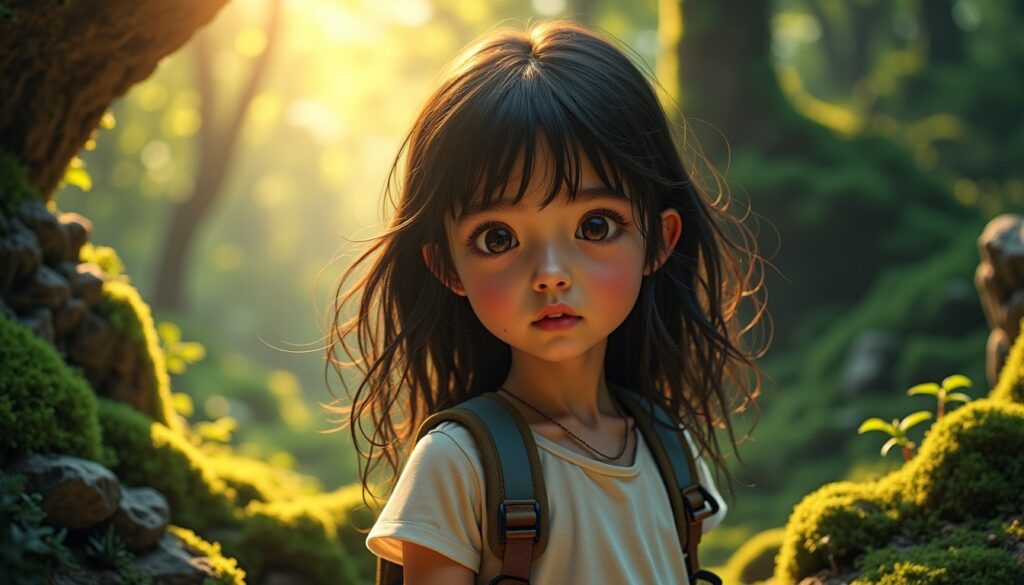
Spirited Away, this gem of Japanese animation signed by Hayao Miyazaki and produced by the famous studio Ghibli, continues to captivate a wide audience more than two decades after its release. Released in Japan in 2001 and then in France in 2002, this animated film with exceptional narrative richness still stands as a benchmark of the genre. Why does this fantastic tale still fascinate? Where and how to rediscover it in 2026? Here is what we will explore:
- The historical context and the international scope of the film, with key figures highlighting its impact.
- The deep themes addressed, centered on childhood, the quest for identity, and courage from a new perspective.
- Japanese cultural influences embodied in the setting and characters, revealing a unique world vision.
- The film’s artistic success, its handmade aesthetic, and immersive music.
- The best current platforms and means to dive into this magical universe, solo or with family.
Follow us in this detailed exploration to understand why Spirited Away remains one of the most fascinating and timeless films in world animation.
A historic and international triumph of the Japanese animated film Spirited Away
Released in July 2001 in Japan, Spirited Away quickly took an exceptional place in the history of animated cinema. With more than 23 million viewers only in its home country, it dethroned giants like Titanic, a rare performance for an animated film. This attendance proves how much the Japanese audience praised the work for its originality, magical universe, and psychological depth.
On the international stage, the feature did not take long to impress: it won the Golden Bear at the Berlin Festival in 2002, a prestigious award highlighting artistic and narrative excellence. That same year, it snagged the Oscar for Best Animated Feature, becoming the first Japanese film to be honored by the Academy Awards in this category. The film thus established itself as a genuine cultural bridge between Japanese animation and Western audiences.
Beyond the distinctions, the reach of this film is measurable in numbers. In 2026, the global box office revenue now approaches 400 million dollars, proof that Miyazaki’s magic transcends generations. Its ability to touch both young and old denotes a rare timeless power. Naturally, it serves as an essential entry point into the studio Ghibli universe for all those wishing to discover Japanese animation.
Here is a table illustrating the magnitude of the film’s success:
| Criterion | Value | Comments |
|---|---|---|
| Viewers in Japan | 23 million | Biggest box office success for an animated film in Japan in 2001 |
| Worldwide revenue | 395 million USD | Figures updated in 2026 |
| Duration | 2h05 | A dense feature film that never loses the viewer |
| Major awards | Oscar and Golden Bear | Strong worldwide recognition |
This phenomenal success is explained by its strong storytelling, its abundant visual universe, and its ability to explore universal themes while embodying Japanese culture with finesse.
Diving into a fantastic tale with multiple layers: childhood, identity, and courage
The plot explores the inner life of Chihiro, a ten-year-old girl confronted with a mysterious world after a disrupted move. This familial departure, classic yet full of symbolism, is quickly replaced by a surreal adventure in a parallel universe inhabited by spirits and supernatural creatures.
Childhood as a fragile but fertile base
Chihiro is not heroic from the start. She is lost, scared, out of place in a strange universe. This realistic portrayal of childhood humanizes the story, making the character’s development even more moving. The feature illustrates how childhood is a delicate ground where fear, curiosity, and learning intertwine.
Chihiro’s gradual transformation, gaining resilience and maturity, echoes the experiences of many viewers, making the film accessible and deeply universal. This gentle yet intense psychological development relies on key scenes, such as working in the bathhouse and confrontation with Yubaba, which foster her autonomy.
The quest for identity through the theft of the name
The witch Yubaba steals Chihiro’s name to rename her Sen, a powerful metaphor on the loss of identity in a dehumanizing society. This symbolic gesture reflects a major issue of the film: remembering one’s essence and not letting oneself be absorbed or erased by a strict and impersonal system.
This theme touches both children, confronted with building their personality, and adults, who can perceive the social or professional pressures in it. The film then unfolds a subtle discourse on the necessary fidelity to oneself in an often impersonal world.
Courage seen differently: persisting despite fear
Far from traditional heroism clichés, Spirited Away shows a fragile courage, a strength acquired by repeated efforts. Chihiro stumbles, doubts, and never wins without pain. This honest portrayal offers children from 8 years old a figure they can identify with, a model of development more realistic than an invincible hero.
Joe Hisaishi’s music amplifies these emotional progressions, with melodies oscillating between softness and tension, accompanying the viewer in a deep and sensitive immersion.
The deep roots of the Japanese spirit and Japanese culture in Spirited Away
The film fully fits into the Japanese tradition, maintaining a strong relationship with the country’s beliefs, myths, and aesthetics.
The setting: a dreamlike and spiritual bathhouse
The bathhouse where Chihiro works, created by Miyazaki, is inspired by traditional sentō, those typical public baths of Japan. It becomes the stage of a microcosm where each spirit or creature symbolizes a facet of traditions or social concerns.
This place adjoins the real world by a mysterious tunnel, recalling the Japanese concept of parallel worlds, a rich space for developing complex metaphorical stories. This bridge between tangible and imaginary juxtaposes childhood and adulthood, two worlds both harmoniously connected and deeply disjointed.
Characters and creatures from Japanese folklore
Spirits of nature, demons, fantastic animals punctuate this story. Note the presence of characters like Haku, Yubaba, and Kamaji, who symbolically embody the forces of nature and institutions. This dimension makes the film extremely impregnated with Japanese culture but also universal by its ability to translate these archetypes into a rich emotional dynamic.
Miyazaki uses these elements to create a credible world that is also timeless, inviting each viewer to a form of daydream nourished by Japanese imagination.
Artistic and sensory quality: a masterpiece of timeless beauty
One of the major assets of Spirited Away lies in its artistic direction: hand drawing, fluid animation, vibrant colors, each shot is a painting in motion. Unlike contemporary digital films, the artisanal texture confers a warm and tangible atmosphere.
Meticulously drawn backgrounds and unique character design reinforce this impression of a living world, where creatures seem to exist beyond the screen. This dimension appeals as much to emotion as to the nostalgia of viewers.
On the sound level, the collaboration with Joe Hisaishi is a total success. The original soundtrack punctuates each situation with rare accuracy, carried by now iconic melodic themes.
This visual and musical alliance makes this animated film an unforgettable sensory journey, justifying its place as a masterpiece considered a must-see classic of the genre today.
Where and why to (re)discover Spirited Away in 2026
With technological advances and the broadening of streaming offers, the film is now very accessible. Whether you are an experienced fan or simply curious, here is where to dive in to fully enjoy this masterful work:
- Netflix: available even with the Standard with Ads plan, it’s a practical and economical option to rewatch the film in its entirety.
- VOD: platforms like Canal VOD, Amazon Video, Apple TV, Rakuten TV, and Universciné offer purchases or rentals on demand.
- ARTE Boutique: streaming and download at a moderate price (€2.99), ideal for those who prefer a lasting format.
- Family or solo viewing: the film reveals several layers of reading depending on the viewer, offering renewed pleasure at each glance.
In particular, the Netflix platform has established itself as a preferred choice, doing justice to this powerful work with maximum visibility. Feel free to explore it before or after diving into imaginary universes like the science fiction series Mars 2026, for an exciting contrast between real and imaginary worlds.
The attention given to viewing quality is essential to fully appreciate the richness of images and sounds. A good screen, headphones, or a well-calibrated speaker will offer you optimal immersion in this fascinating universe.