
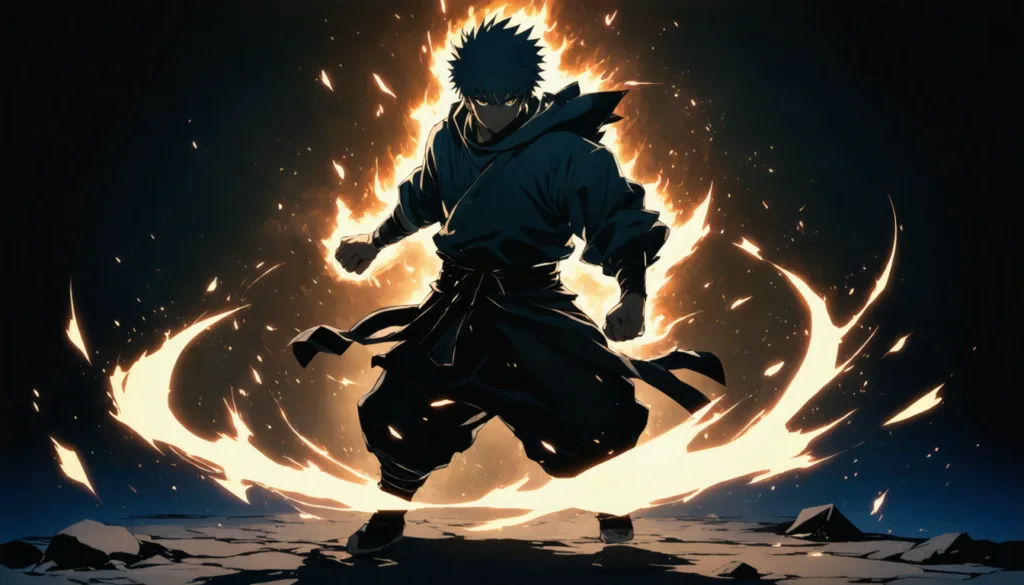
Since his debut in Modulo Chapter 21, Dabura has established himself as a character who redefines the notion of power in the world of Jujutsu Kaisen. His unique technique, “Shadow and Light – Boundary Break,” grants him an intimidating aura and immediately raises a major question: can he truly surpass the giants that are Gojo Satoru and Sukuna? This question is set within a rich and complex context and touches on several aspects of the series:
- The peculiarity of his territory extension technique, which disrupts space itself.
- The perception exorcists have of him, considering him a threat close to Sukuna’s level.
- The narrative implications surrounding his role in future major battles.
- Debates among fans and critics, alternating between overestimation and downplaying of his power.
- The subtleties of jujutsu techniques that go beyond mere physical strength.
By exploring these themes, we better understand whether Dabura can truly eclipse Gojo and Sukuna, or if he is primarily a new challenge for our heroes.
An unprecedented territory extension technique that upends the foundations of power in Jujutsu Kaisen
The attribute that puts Dabura in the spotlight is his territory extension named “Shadow and Light – Boundary Break”. To grasp the extent of this ability, one must understand that territory extensions in Jujutsu Kaisen symbolize the ultimate forms of mastery over jujutsu techniques. They do not merely increase raw power; they alter the fundamental rules of combat.
Shadow and Light – Boundary Break literally works on the border of space, merging positive and negative elements to create an environment where classical laws are distorted. This technique illustrates:
- A sophisticated control of space-time, opening possibilities that go beyond physical strength.
- A killing blow effect based on actual terrain manipulation rather than simple offensive power.
- An attack that operates beyond classical conventions, breaking traditional barriers and altering the very nature of the battlefield.
For example, while Gojo Satoru is famous for his Infinity domain, which creates an internal unattackable space, Dabura seems to offer a mechanic that directly alters these spatial limits, destabilizing both characters and spectators alike.
It is fascinating to note that this technique blends light and shadow, two opposing forces, into a single destructive manifestation. This duality attests to the refinement of his power and a unique ability to play on contrasts to achieve total control.
In the table below, we offer a comparison of the major territory extensions mentioned in the universe, highlighting the specifics of Dabura’s:
| Character | Name of the Extension | Main Characteristic | Effect on Combat |
|---|---|---|---|
| Gojo Satoru | Infinity | Impossibility of approach through infinite manipulation | Prevents direct physical attacks |
| Sukuna | Malevolent Shrine Domain | Highly effective and fast destruction zone | Massive attacks with surgical precision |
| Dabura | Shadow and Light – Boundary Break | Manipulation of spatial boundaries, light/shadow fusion | Redefinition of terrain rules and possibility of a killing blow |
This extension represents not only an innovation but also attests that Dabura is a peerless technician of jujutsu techniques, opening a new era in the competition among powers.
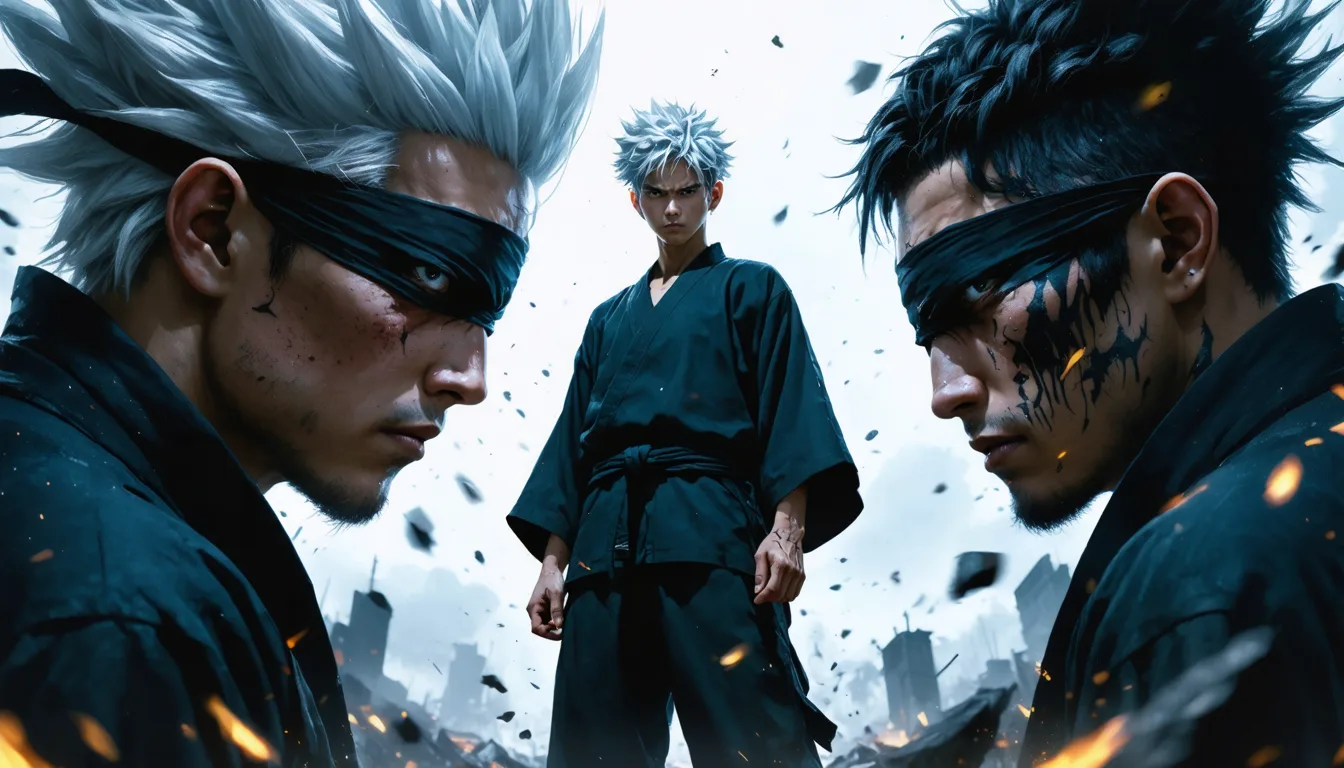
How did Dabura shake up the hierarchy between Gojo, Sukuna, and himself?
Dabura’s arrival was designed to create a shock, a disruption in the hierarchy of powers in Jujutsu Kaisen. The comparison with Gojo Satoru and Sukuna is almost inevitable, as these two characters are symbols of ultimate power and mastery of curses.
Upon his appearance, Dabura is perceived not only as brute force but as a threat calculated by the exorcists themselves. This perception is significant because, in the context of the exorcists, the threat is evaluated not simply by strength but by potential for destruction and the ability to alter the course of a fight.
The central debate revolves around:
- The possibility that Dabura has supplanted Gojo and Sukuna as the strongest, notably thanks to his territory extension directly disrupting space.
- The view that Dabura is a new standard to beat, but not a usurper of the already established positions.
Discussions on fan forums and in specialized critiques evoke a kind of narrative ambition where Dabura becomes an emblematic character who forces a rethink of combat rules. For example, some suggest he represents an “anomaly” in the established order, which gives him a unique position.
This anomaly is supported by specific details, notably his near-effortless elimination of certain powerful opponents like Mahoraga, a formidable shikigami. This fact demonstrates not only tactical superiority but reinforces the idea that his mastery exceeds that of most protagonists.
In an in-depth article on Jujutsu Kaisen Dark Fantasy, one can better understand the narrative and technical stakes pushing this character to be at the heart of debates.
A threat on Sukuna’s scale: exorcists’ perception and imminent danger
Exorcists place Dabura at a threat level close to Sukuna, which adds considerable weight to his profile. This comparison is based not only on raw power but also on the capacity to inspire fear and reshape a fight at its foundations.
Dabura is thus a rare case where fear goes beyond simple quantified fight evaluations. To illustrate this point:
- Exorcists have officially issued an alarm signal regarding him, an unusual step outside of Sukuna.
- His control over positive and negative energy grants a versatility that confuses classical expectations.
- He is capable of engaging in complex strategic battles, for example against Makura, where every decision can turn in favor of one side.
These elements explain why it is not simple to evaluate Dabura with classical criteria. His fine mastery of jujutsu techniques as well as the circumstances in which he intervenes in the series place him on an intrinsic equal footing with Sukuna.
This point translates into an emotional rollercoaster for viewers, where suspense lies in the clash of talents, each adapting their skills to imposed conditions. To deepen these strategic confrontations, you can consult Spellcasters Chronicles MOBA, which explores the dynamics of dominations and counter-dominations in battles.
The nuances in the hierarchy: Gojo and Sukuna versus Dabura, the eternal debate
It is essential to nuance the current situation. The enthusiasm around Dabura should not mask the complexity surrounding the power hierarchies in Jujutsu Kaisen. Gojo Satoru, with his Infinity, and Sukuna, with his legendary reputation, remain authority figures difficult to dethrone.
Several arguments temper those who doubt Dabura’s real superiority:
- The series is still developing, and the evaluation of characters is strongly conditioned by the scenarios.
- Gojo and Sukuna still have narrative elements and techniques not fully explored, offering room for progression and reestablishment of supremacy.
- In later confrontations, the strategic importance of opposites and imposed limitations can strongly rebalance the scales.
Therefore, Dabura’s superiority is, to date, a perception largely open to interpretation, dependent on the continuity of the story and technique development.
The fights between these characters are not simple displays of strength but fit within a logic of tactics and mastery of curses. It is within this framework that we expect each confrontation to give shape to this shifting hierarchy.
Dabura and his upcoming confrontations: narrative stakes with Makura and Yuji Itadori
Beyond the mere excitement about power, Dabura embodies a narrative nexus that strongly energizes the plot of Jujutsu Kaisen. The planned battles, notably against Makura and Yuji Itadori, are full of promise and repercussions.
The duel with Makura is particularly interesting, as it proposes a logic of constant adaptation. Makura, capable of following and countering Dabura’s actions, embodies the idea of psychological warfare within high-level fights. This aspect adds a very deep strategic dimension where victory depends not only on brute strength but on the ability to anticipate and adapt.
Regarding Yuji Itadori, he represents the ultimate hope of the exorcists. His theoretical longevity (over 80 years at the peak of his form in some predictions) and his constant progression make him a formidable opponent, potentially capable of balancing the forces against Dabura. This prospect opens a real field of analysis and raises the question of generational surpassing.
This network of relationships greatly enriches the manga and anime universe, making Dabura a catalyst for major evolutions in the story.
On this subject, many fans benefit from detailed analyses drawn from other series to better understand these stakes, such as in Kagurabachi Shonen Manga, which offers a cross-illumination on the mechanisms of epic battles in contemporary stories.