
The Bride of Frankenstein returns to the big screen with an approach that is both unprecedented and deeply moving, paying tribute to this classic of fantasy cinema while breathing new life into its myth. The film “The Bride!”, directed by Maggie Gyllenhaal, abandons the mere status of mythical silhouette to focus attention on the Bride herself. This work skillfully blends several genres, from horror to romance, including drama and musical. To grasp the richness of this proposition, we will explore several aspects in depth, notably:
- The repositioning of the Bride at the center in this unprecedented film, a true reinvention of her character.
- The temporal and spatial anchoring of the story offering a rich and electric setting, that of Chicago in the 1930s.
- The expanded cast providing a wide range of characters to enrich a complex narration.
- The hybridization of genres and bold artistic choices that redefine the codes of the cult horror film.
- The technical dimension and production, guarantors of an immersive visual experience on the big screen.
Each of these points illustrates how The Bride of Frankenstein surpasses simple homage to become an essential film blending respect for tradition and bold renewal.
The Bride of Frankenstein at the center of the story: a singular and profound reinterpretation
From the very first moments, “The Bride!” clearly asserts that the Bride of Frankenstein is no longer relegated to the background. While in James Whale’s 1935 classic classic cinema she only had about three minutes of screen time, Maggie Gyllenhaal chooses to place her at the heart of the plot, fully investing in her story and personality. This approach offers a previously unexplored perspective, illuminating the character in a new light.
The entire film revolves around a dreamed and redefined evolution: the Bride, played by Jessie Buckley, is portrayed not as a simple creature brought back to life, but as a strong, complex, almost “mythological” woman, bearing an emotional intensity and a poignant quest for identity. The film evokes her past existence, even before her resurrection, thus offering a unique double gaze: that of the victim of death and that of a being seeking to fully express herself in a hostile world.
This unprecedented treatment gives the narrative a dramatic depth unknown until then. The Bride becomes a figure of revolt against her imposed destiny, driven by a thirst for identity and expression that breaks the fatality of the mere status of creature. Leslie, an informed viewer, can thus grasp a strong commitment to a female figure usually reduced to a minor role. Especially as the film clearly sits within a spirit of homage, respecting the fundamentals of the myth while injecting a contemporary sensitivity that resonates intensely.
A list of pivotal points that make this portrait of the Bride unique:
- A substantial on-screen presence that goes beyond the simple role of opposition or accessory.
- A story that explores her identity, emotions, and past before resurrection.
- A multiple embodiment with nuances, where Jessie Buckley also plays identities like Ida and Mary Shelley, between biographical links and fiction.
- A shift of perspective favoring her humanity over the mythical and fixed silhouette of earlier versions.
- A narrative positioning where the Bride asserts herself as a full heroine.
This new approach gives viewers a rare emotional depth in the world of horror cinema, making “The Bride!” a work full of surprises and human warmth, far from the simple or even clichéd mechanics of B movies or traditional cult films.
1930s Chicago: an electric setting for a reinvented myth
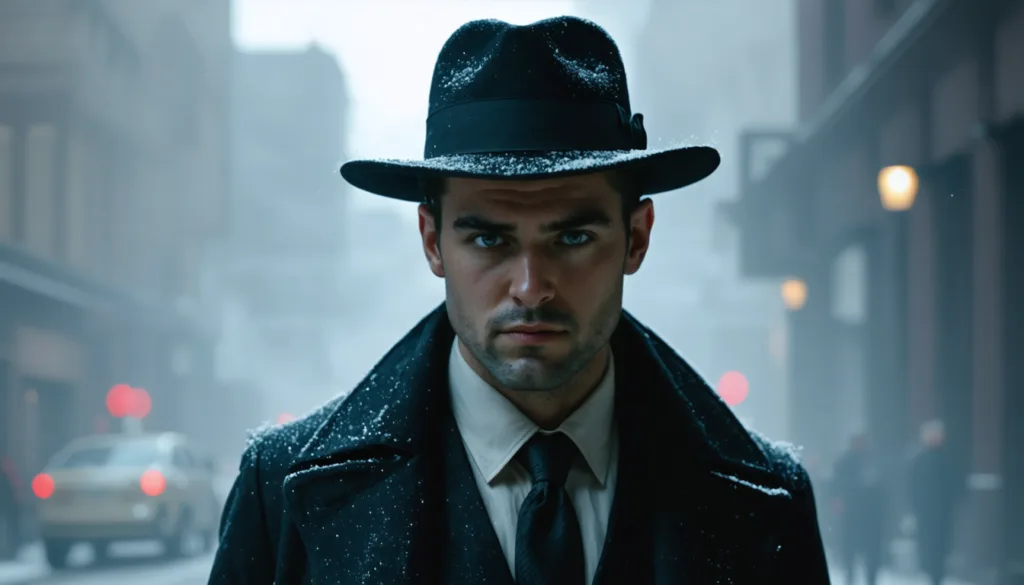
Set in Chicago during the vibrant 1930s, “The Bride!” anchors its story in a very specific historical context, carrying an atmosphere both dark and bubbling. This era is marked by a great cultural effervescence, but also by strong social and political tensions, which provides a suitable framework for dramatic tension and the emotional intensity sought.
This choice of a dynamic urban setting contrasts with the long laboratory sequences typical of earlier Frankenstein films. Here, the city becomes a character in its own right. Discovering Chicago in the midst of Prohibition and economic crisis colors the story with a palpable reality: violence, resistance, and marginality shape the trajectories of the characters. A realistic backdrop that greatly enriches the fantastic approach.
The film’s synopsis describes a lonely Frankenstein monster who turns to Dr. Euphronius, a cutting-edge scientist, to create the companion he dreams of. This new Bride is created from a young woman who was murdered and brought back to life, opening the door to a narrative escalation where murder, possession, and cultural revolt mix in chaos tinged with both savagery and poetry.
The succession of events traces a trajectory both chaotic and passionate, where the metropolis of the 30s becomes the stage for a radical cultural movement and a turbulent love story, described as “combustible.” This historical anchoring serves several functions:
- Offer a realistic and detailed setting deeply embedding the realm of the fantastic.
- Emphasize the duality between urban modernity and quasi-mythological figures.
- Create a contrast between social chaos and individual quest for redemption.
- Allow an exploration of themes of marginality and social integration.
- Add a touch of raw realism that heightens the emotional charge.
The depiction of this 1930s Chicago in IMAX settings promises an immersive experience, enhancing the visual impact of dark streets, jazz clubs, and underground milieus where this new legend is forged. The mix of aesthetics and narrative greatly energizes the redefinition of a myth too often confined to gloomy interiors, for a broader, livelier, and richly textured approach.
This teaser presented since late 2025 powerfully unveils the electric energy and complexity of the film, making tangible this atmosphere blending horror, wild passion, and enchanting music, already emblematic of this reinterpretation by Maggie Gyllenhaal.
A dense and expanded cast for a choral film with marked character
The cast of “The Bride!” is conceived with rigor and ambition, forming an ensemble where each actor brings a unique density that transcends mere screen presence. Jessie Buckley, at the forefront, is the centerpiece around which solid and recognized talents revolve, strengthening the dramatic and emotional scope.
Christian Bale lends his features to Frank, the Frankenstein monster, adding depth to a character often perceived as monstrous but here human and tormented. Annette Bening plays Dr. Euphronius, an innovative scientist, while Peter Sarsgaard plays detective Jake Wiles, a central role in the police and dramatic storyline.
The cast is completed by Jake Gyllenhaal as Ronnie Reed, Penélope Cruz as Myrna Mallow, and Julianne Hough in a major role whose details remain mysterious. This dense cast provides, through its scope and balance, an impression of a choral film where several trajectories and social spheres intersect and intertwine. We can envision:
- Varied interactions between characters from different backgrounds.
- A polyphonic narration enriching the narrative dynamic.
- The formation of a social mosaic reflecting the tensions of the era.
- An anchoring of the radical cultural movement evoked, shaped by several voices.
- An increased depth thanks to invested supporting characters.
This choice serves to balance the power of the central romance and the intensity of the drama, while infusing the film with a broad and complex breath. It also warns that the story does not merely revisit a myth but intertwines it with a rich and nuanced human fresco.
Bold genre hybridization: horror, romance, drama, and musical
The cocktail of genres offered by “The Bride!” is one of the most daring aspects of this unprecedented film. It embraces horror not only as a backdrop but as a visceral material, reinforced by its R-rating based on intense violence, explicit sexuality, and coarse language. This brutality helps make the narrative all the more tangible, far from the sanitized ghosts of old fantasy films.
Romance, meanwhile, occupies a central place but unfolds in a chaotic and deeply incandescent form, described by Maggie Gyllenhaal as “the wildest punk love” she has ever filmed. This statement highlights an outlaw, combustible relationship between two broken souls seeking each other in a threatening universe.
Drama is embodied in questions of identity, self-expression, and the existential quest of the characters. This dimension is particularly developed around the Bride, whose trajectory goes beyond the simple framework of the fantastic to touch the universal. These themes enrich the emotional and thematic palette of the film.
The surprising choice of the musical genre amplifies the impact of the story while placing the creature and his companion in a universe of body and rhythm that shifts the story toward artistic expression, performance, and vital energy. Several major dance numbers are announced and integrate perfectly into the narration, an innovative approach within the family of Frankenstein adaptations.
A summary table synthesizes the contribution of each genre:
| Genre | Narrative function | Concrete example in the film |
|---|---|---|
| Horror | Creation of an intense, visceral, and frightening atmosphere | Scenes of possession and escalation of bloody violence |
| Romance | Exploration of a chaotic and passionate relationship | Love story between the Bride and Frank, outlaw and tumultuous |
| Drama | Conflicts of identity and quest for expression | Introspective portrait of the Bride facing her rehearsed fate |
| Musical | Contribution of rhythm, performative staging, and energy | Spectacular dance numbers integrated into the plot |
This hybridization generates a high-risk cocktail, but carried by a creative team up to the task, it opens new perspectives for a cult film that renews itself without betraying its roots.
An ambitious production for an unforgettable big-screen experience
To convey this rich and complex vision, the production of “The Bride!” relied on an exceptional technical team and resources matching its ambition. Filmed entirely in New York starting March 4, 2024, the film benefits from a budget of 80 million dollars, modest compared to later Hollywood projects, but sufficient to guarantee optimal visual and sound quality.
Director Maggie Gyllenhaal, herself an established actress, is here making her mark behind the camera with remarkable mastery. She surrounds herself with prestigious collaborators: Lawrence Sher directs photography with IMAX-certified digital cameras, promising imposing frames and a spectacular materiality of the sets. This technical choice offers total immersion, transforming the spectator’s experience into a sensory journey through this dark and restless Chicago.
On the music side, Hildur Guðnadóttir carries the original score, replacing Jonny Greenwood initially announced. Her audiovisual score promises enhanced emotion, mixing mystical ambiance with more explosive outbursts, essential for a film blending horror and musical. The production design led by Karen Murphy and costumes by Sandy Powell give an authentic and worked aspect to the whole, anchoring the fantastic in a tangible and credible world.
The international release is planned for March 2026, with distribution handled by Warner Bros. Pictures after several reassignments. Promotion is already strong, with a teaser and a trailer available and a strong musical choice — the use of “Everybody Scream” by Florence + The Machine — highlighting the punk and wild energy of the film.
A list of key production elements highlights the reasons why this film is expected as a major event:
- Use of IMAX technology to enhance visual immersion.
- A strong emphasis on original music and dance numbers.
- A performant budget (80 million USD) guaranteeing careful realization.
- A recognized technical and artistic team in the industry.
- A carefully orchestrated promotional strategy over several months.
Not to mention the R-rating which prepares viewers for a raw, strong experience aimed at a mature audience. It is the promise of a vibrant return to the big screen, faithful to the spirit of the “cult film” and to the strength of this now rehabilitated figure, in a tribute as innovative as it is moving.