
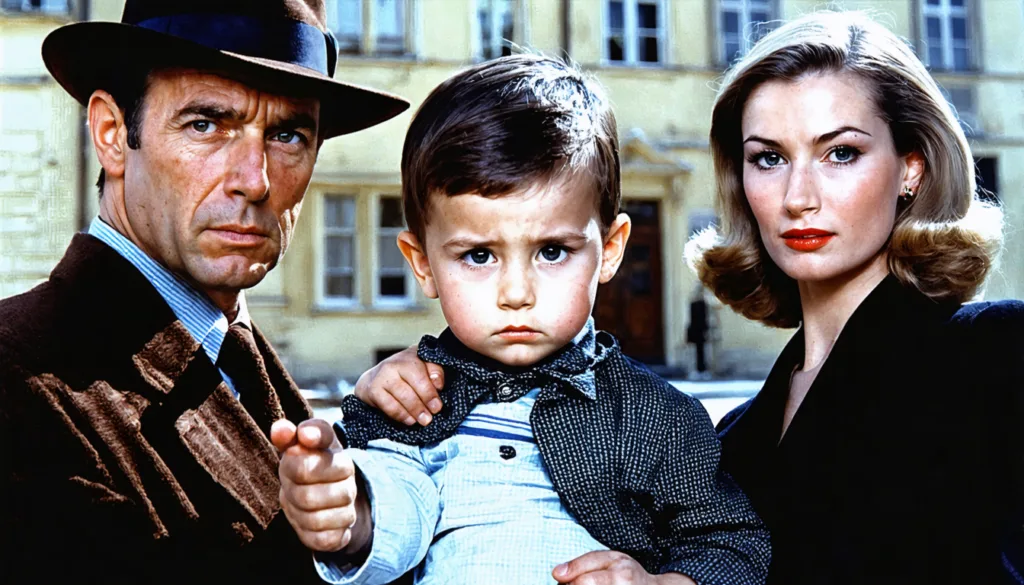
Spy x Family stands out as a global phenomenon by offering a unique blend of espionage, humor, and family dynamics. Released in March 2019, this manga breaks records by combining action and tender moments, captivating both infiltration fans and comedy enthusiasts alike. Its popularity rests on several pillars:
- an accessible and immediately understandable concept based on a secret mission at the heart of a fake family,
- endearing characters such as Loid Forger, the elite spy, his “wife” Yor, a hitwoman, and their adopted daughter Anya, endowed with telepathic powers,
- a cleverly constructed plot centered around contrasts between espionage and everyday life, with a 1960s atmosphere inspired by the Cold War,
- a publishing and audiovisual success that far exceeds the scope of traditional manga readers,
- an animated adaptation and an animated film that further strengthen Spy x Family’s place in global pop culture.
This series explores a surprising blend of thriller and family comedy, offering a universe that is both thrilling and warm. The story we are about to detail invites you to discover the multiple facets of this success: the origin of the work, the care given to creation, the unfolding of the plot, the reasons for its impact, as well as the multimedia offshoots that continue to charm a broad audience.
The Origins of Spy x Family: from Tatsuya Endō’s Journey to the Birth of a Cult Manga
Spy x Family was born from its creator Tatsuya Endō’s desire to combine his skills in espionage with his wish to approach a lighter and more accessible tone. Born in 1980, Endō went through several phases in his career before considering this stylistic shift.
Throughout the 2000s, he became known through often dark stories. His earlier works, such as TISTA (2007–2008) or Rengoku no Ashe (2014), dealt with serious, sometimes disturbing themes, featuring characters with complex and tormented psychologies, with a generally rather cold tone. This journey allowed Endō to master tense storytelling and a keen eye for detail, which pointed towards the construction of action and suspense.
In 2019, an opportunity arose with his publisher Shihei Lin who, after more than ten years of collaboration, offered him to explore a warmer work that would combine the efficiency of a spy story with a comedic and family approach. The result is a project both fresh and well-controlled, quickly approved by the publisher, reflecting the trust placed in Endō.
This turning point is not a mere change of tone: it is the culmination of experience devoted to a story that marries tension and tenderness. The mix is carefully balanced. Espionage does not disappear, but is now placed at the service of a fictitious family where each member hides a double identity.
This balance between gravity and lightness facilitates reader engagement and diversifies narrative situations, between breathless action scenes and heart-rending moments of emotion. The first volume released in 2019 was therefore the starting point of a manga whose reputation has continued to grow with each new episode, first on Shōnen Jump+, then subsequently through volume editions available in French.
The Unique Universe of Spy x Family: Espionage, Cold War, and 60s Atmosphere
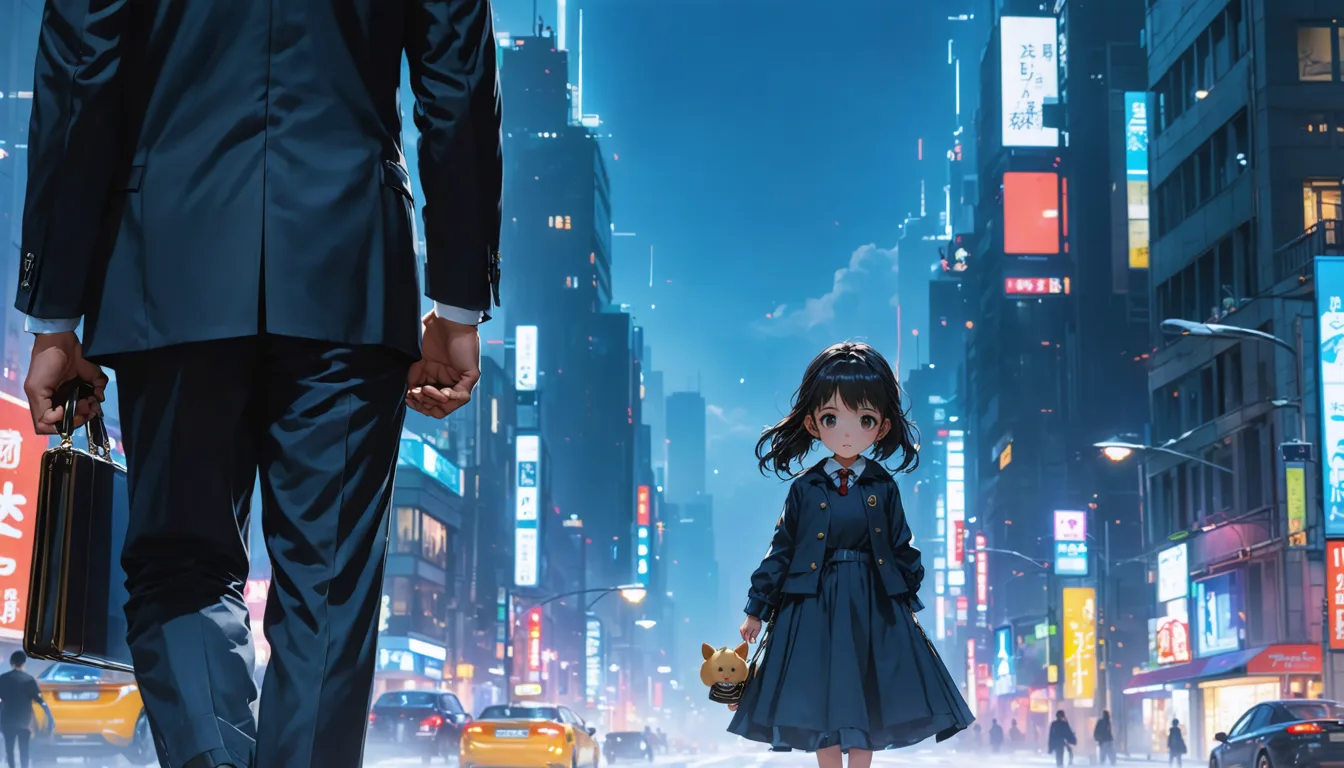
What distinguishes Spy x Family from many espionage mangas is its historically identifiable, even tangible universe, though anchored in fiction. The plot takes place in an era that explicitly evokes the Cold War, with an atmosphere inspired by divided Germany and the Berlin Wall, where two political blocs confront each other in the shadows.
The city setting is imbued with details from the 1960s, notably by a deliberate absence of smartphones, which gives the suspense a more subtle and realistic dimension. In Endō’s work, mobile phones and instant communication are replaced by old televisions and period technologies that slow the pace of exchanges and heighten tension. This temporal and aesthetic reconstruction plays a fundamental narrative role, as every meeting requires organization and discretion.
The city, although modestly inspired by Berlin, also borrows from English architecture, notably the Chelsea district, to infuse a certain charm into the locations. This duality between a politically tense context and an elegant atmosphere creates a visual dichotomy that perfectly reflects the characters’ double lives.
For a reader, this combination stimulates the imagination while remaining credible, and this choice contributes to the series’ success. The setting serves as a backdrop for the elements of comedy and action that constantly play out among social oppositions and espionage concerns. Unlike many ultra-modern infiltration series, Spy x Family returns to a form of simplicity in technology to reinforce the psychological intensity of missions and emotional closeness.
Secrets as a Narrative Driving Force: a Plot Based on Double Identities
Another fundamental aspect of Spy x Family is the permanent tension created by the potential revelation of each character’s secret identities. Loid Forger is an elite spy tasked with the most important mission of his career: infiltrating an elite school in the name of world peace. For this, he creates a fictitious family with Yor, a secret hitwoman, and Anya, a telepathic child.
This triangle of secrets maintains a unique dynamic: each tries to reconcile false appearances and sincere desires, generating at once comedic scenes, action sequences, and tense exchanges. The stakes are not only linked to the mission but to the emotional survival of this unlikely family. The reader is constantly placed in a delicate position of empathy and suspense, knowing information that the characters sometimes ignore about each other.
Tatsuya Endō’s Writing Mechanics: Balance Between Tension, Comedy, and Character Psychology
Tatsuya Endō has developed a writing method combining rigor and flexibility, blending his skills acquired on more serious projects with the lightness that Spy x Family allows him to explore. His experience as an assistant on popular series such as Blue Exorcist or Fire Punch sharpened his sense of storytelling and pacing.
Spy x Family is built on a structure that simultaneously advances the espionage plot and human relationships, giving all scenes a dual function. For example:
- a spy sequence can also illustrate the clumsiness of family life, by placing a delicate trap in the middle of a meal,
- a comedic moment often arises in the awkward management of secrets, like Anya using her telepathy to anticipate her parents’ reactions,
- social interactions at school reflect the difficulties of maintaining a facade while creating touching moments where sincerity illuminates false appearances.
This subtle mechanism distinguishes the series from other manga productions, offering a strong personality and a dynamic that makes every reader, whether an action lover or familiar with comedic stories, find their place.
Moreover, Endō cultivates particular care for the evolution of his characters, who gain depth with each volume. Their psychology is studied with nuance, making their lies more credible and their closeness more moving. The feeling of complicity within this fictitious family develops smoothly, forging lasting attachment.
Worldwide Success and the Extensions That Prolong the Spy x Family Universe
Since its launch, Spy x Family has crossed several major milestones, making the series an essential franchise. By 2026, the manga already has 12 volumes in Japan and 11 in France, with over 10 million copies sold, combining physical and digital versions. This editorial success is confirmed by prestigious awards such as first prize in the web manga category at the Next Manga Awards 2019 and the winner of TSUTAYA’s Comic Awards in 2020.
The anime adaptation has greatly contributed to expanding its audience. The care given to the animated production, supported by studios WIT and CloverWorks, received enthusiastic reception, both for faithfulness to the manga and its high-quality visual and sound direction.
The film “Spy x Family Code: White” also marked a milestone, offering fans an additional immersive experience that capitalizes on the license’s growing popularity. This diversification does not stop there: a guidebook rich in anecdotes and interviews deepens the understanding of characters and setting, while merchandise, especially figurines and goodies centered around Anya, expands the phenomenon into the merchandising universe.
| Element | Description | Impact in 2026 |
|---|---|---|
| Manga | Series in 12 volumes, serialized on Shōnen Jump+ | More than 10 million copies sold worldwide |
| Anime | Adaptation into an animated series by WIT Studio & CloverWorks | Very positive critical and public reception, millions of views |
| Film “Code: White” | Feature-length animation enriching the story | Box office success and increased notoriety |
| Merchandise | Figurines, accessories centered on Anya and the Forger family | Strengthening presence in global pop culture |
| Guidebook | Interviews, notes, and chapter analyses | Preferred immersion tool for the most invested fans |
The Recipe for Success: Why Spy x Family Appeals Beyond a Simple Espionage Manga
Spy x Family owes its impressive reach to the originality with which it combines different codes. The mix of espionage and family life creates a rich and universal theme, speaking to a wide audience. The reasons allowing the series to go beyond just action fans are multiple:
- A clear and attractive concept: the secret mission and the fake family form an immediately graspable pitch, ideal for word-of-mouth.
- Multifaceted characters: each carries their secrets and vulnerabilities, making them endearing and human.
- A balance between suspense and humor: the story gives as much importance to comedy as to action, avoiding excess in either direction.
- Careful visual quality: the 60s aesthetic with its precise costumes and settings creates a successful immersion.
- A mature narrative treatment: evolving the characters without idealizing perfection, with sometimes absurdly funny situations.
This blend of factors makes Spy x Family continue to make noise, attracting more and more new readers and viewers. The series fits into a dynamic where emotion mixes with adrenaline, making every episode a highly anticipated event.