
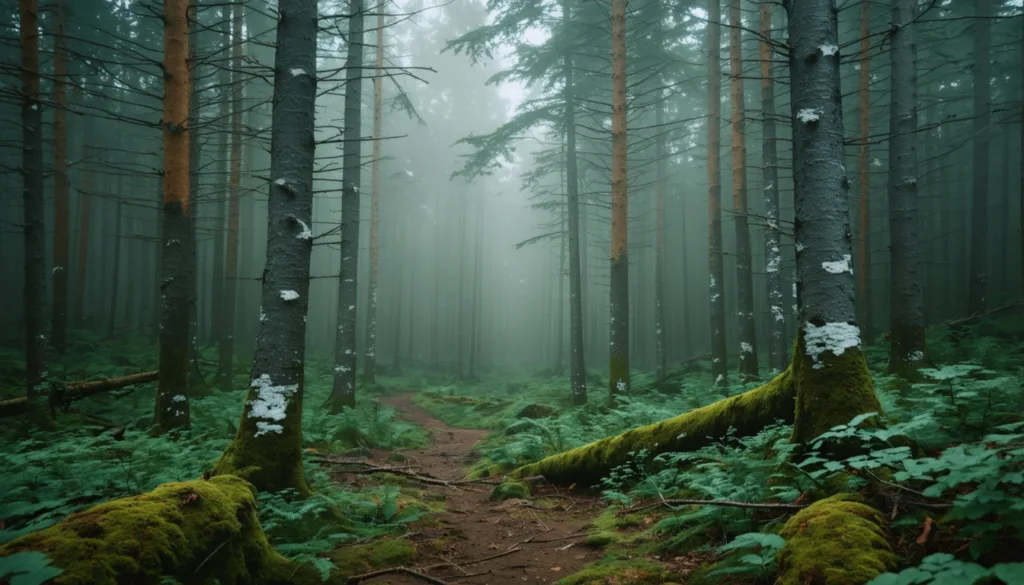
The song of the forests today stands as an unmissable cinematic event for all nature, ecology, and biodiversity enthusiasts. Released at the end of 2025, this French documentary by Vincent Munier invites us to a unique sensory immersion into the Vosges forests, a territory rich in remarkable wildlife and flora. Shown on the big screen, this 1h33 to 1h36 film promises an experience mainly driven by sensation, far from speeches, to capture the very essence of the natural environment. Here is why this unique journey deserves your full attention:
- An immersive dive into the heart of the Vosges forests with a rare contemplative approach
- The meeting of three generations of naturalists united by the same love for living beings
- The sensitive quest of the Western Capercaillie, a fragile symbol of local and European biodiversity
- A breathtaking sound and visual atmosphere that places the viewer at the center of the natural rhythm
- An exceptional public reception, illustrating the impact of a nature documentary on the French audience
Throughout the sections, we will explore each of these aspects in detail to understand why The song of the forests stands as a remarkable and different film, capable of opening minds through contemplation. Let us embark together on this unique exploration of a living universe that we must learn to listen to and preserve.
Exceptional immersion in the Vosges forests: a film inviting attentive listening to nature
The documentary The song of the forests offers a deeply immersive visual and sound experience in the Vosges forests. This choice of setting is not accidental because it is precisely in these woods that Vincent Munier, renowned photographer and naturalist, grew up and learned to observe wildlife. The film imposes a contemplative pace based on duration, patience, and silence, aligned with the habits of naturalists in the field. Rather than a rapid succession of information, it is an invitation to perceive the richness of the wildlife and flora in their natural habitat, truly listening to the long time of nature.
The viewer is immersed in hide scenes, often nocturnal, with very realistic sequences of the stag’s rut, the stealthy movements of foxes, or the song of rare birds. This sensory immersion is notably based on a carefully crafted soundtrack, faithfully reproducing the rustling of the wood and the calls, sometimes almost inaudible, often eclipsed in our hectic daily life.
Viewers’ testimonies emphasize the effectiveness of this approach: the feeling of sitting “at the heart of the moss,” waiting silently for an animal to appear between two trunks proves to be a profoundly soothing and enriching experience. Cinematographic technique subtly uses natural light, enhancing shadow play and textures, which helps strengthen the sense of immersion without ever falling into superfluous spectacle.
This way of filming, which values time and silence, may seem demanding for an audience used to more dynamic formats, yet it is also what makes the documentary’s strength. By reconnecting with a cinema of contemplation, The song of the forests becomes a real moment of encounter with the environment, while fostering a deep awareness of the fragile balance reigning in these forest spaces. This approach highlights that the environment only fully reveals itself when one takes the trouble to observe without trying to dominate or hastily interpret.
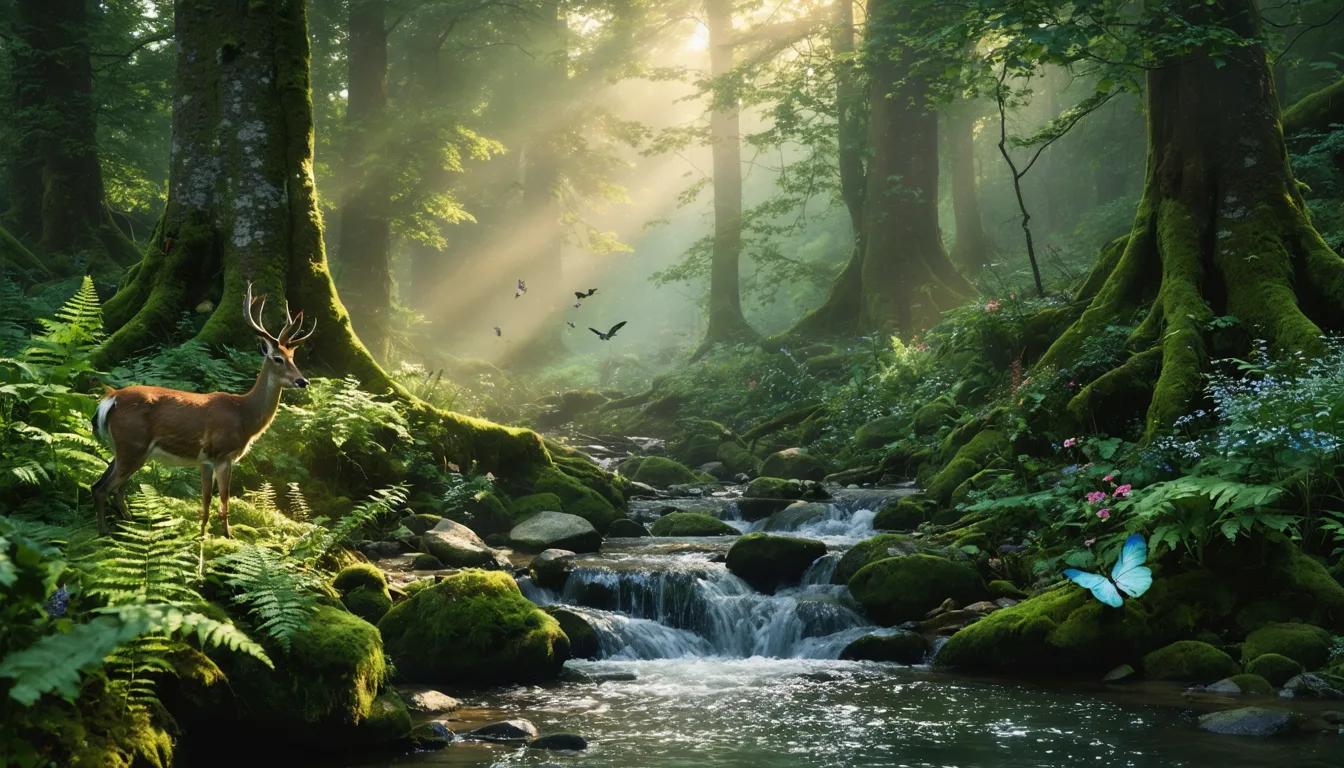
Key moments of immersion in the Vosges nature
- Nocturnal hides and the stag’s rut, moments when nature shows its most authentic voice
- Silent observation of foxes and lynx, emblematic animals of local biodiversity
- Highlighting rare birds, whose song punctuates the peaceful atmosphere of the forest
- Plenary sequences on flora and light, emphasizing the fragile beauty of ecosystems
- Immersive sound atmosphere reflecting the slightest nuances of living beings, a true sensory journey
We thus understand that the documentary is a sensitive ode to patience, inviting everyone to reconsider their relationship with nature through the prism of silence and presence.
Intergenerational transmission: a human story at the heart of wild nature
Beyond mere naturalist observation, The song of the forests highlights a deeply human story: the meeting, sharing, and transmission of knowledge between three generations of nature enthusiasts. Vincent Munier, accompanied by his father Michel and his son Simon, unfolds a discreet but intense dialogue illustrating how nature is experienced as a living family heritage and a common language.
This transmission dynamic gives the documentary an emotional dimension that goes beyond mere contemplation of biodiversity. Michel Munier, seasoned naturalist, embodies the wisdom built on years of active observation and hides, knowledge learned over time, attention, and an ability to live in harmony with the forest environment.
Moreover, Simon Munier, the younger generation, receives this natural and cultural legacy with respect and curiosity, showing the continuous passage of perspective from one to another. The coexistence of these three ages in the same setting thus gives the film a unique narrative strength, far from conventional speeches, rooted in concrete gestures and lived experiences.
This intergenerational sharing is also a way of highlighting that the preservation of nature is not merely an abstract or distant issue. It is embodied in simple moments, shared silences, and a learned gaze. The on-screen dialogue restores an authentic philosophy that sees patience, modesty, and respect as the foundations of successful ecological commitment.
This committed transmission also illustrates a different pedagogy to raise public awareness, especially young people from 8 years old, to whom the film is explicitly addressed. It shows that biodiversity protection also involves sensitive education, based on the beauty of the world and the joy of discovery, rather than fear or guilt.
Concrete examples of transmission through the film
- The father shows his son how to fade away not to disturb wildlife, sharing his hide techniques
- Vincent Munier, as a photographer, transmits the technique of attentive observation and the patience needed for strong images
- Simon learns bird songs and subtle clues to spot rare species, a living knowledge to preserve
- The trio observes together rare species like the lynx, moments of shared wonder
- The transmission of ecological and protection values through rich and authentic natural anecdotes
The Western Capercaillie: a fragile symbol between Vosges and Norway raising ecological issues
Among the emblematic animals followed in the documentary, the Western Capercaillie holds a special place. This majestic bird, long present in the Vosges forests, today seems practically disappeared from this territory. The film shows this absence as a worrying reality, placing it within a broader issue related to climate change and habitat degradation.
To illustrate this fragility, Vincent Munier extends the journey to Norway, a region where this rare bird can still be observed. This trip offers a striking contrast between two worlds: on one side, the changing Vosges forest, where the Western Capercaillie is discreet or even absent; on the other, more preserved territories still sheltering this species. Thus, the bird’s absence in the Vosges becomes a warning signal about the current state of local biodiversity and the urgent need to rethink our lifestyles to better protect the environment.
The choice not to resort to a classic scientific exposé but to convey this fragility through staging and visual poetry enhances the film’s emotional impact. The Western Capercaillie thus acts as a symbolic figure helping the spectator connect with ecological issues not through didactic perception but through emotion and contemplation.
This thematic passage also encourages awareness of how global warming and the anthropization of natural spaces modify balances, often silently but dramatically affecting fauna and flora. The dual location, between France and Norway, gives the film an international dimension and shows that biodiversity defense is a global fight.
Table of observed differences in the Western Capercaillie between Vosges and Norway
| Criterion | Vosges | Norway |
|---|---|---|
| Species presence | Almost absent, very rare | Stable population but monitored |
| Impact of climate change | Strong, degraded habitat | Less marked, more developed protection measures |
| Habitat quality | Significant fragmentation | Well-preserved forest areas |
| Protection efforts | Emerging but insufficient initiatives | Active conservation programs |
This perspective invites viewers to consider the documentary as a call to action and respect for our natural spaces, reinforcing the film’s role in contemporary ecological reflection.
Technical quality and sound atmosphere: meticulous care for a total immersion on the big screen
The song of the forests also stands out for its technical choices that fully contribute to the desired immersive experience. The image is exceptionally fine, enhanced by natural light that brings every detail of the forest to life, from the bark’s texture to the moss clouds covering the ground. This visual quality is the result of patient work carried out over several seasons to capture biodiversity in its most intimate moments.
The sound aspect is just as carefully crafted: the documentary favors an immersive soundtrack where every natural sound is highlighted. The rustling of leaves, bird songs, stag’s rut, and the subtle cracking of branches become the real protagonists of the film. An original musical composition accompanies this atmosphere without ever overpowering the forest’s real sound. This harmony between sound and image builds a universe in which one feels enveloped, almost physically present in this environment.
For viewers accustomed to fast-paced formats and nervous editing, this approach may appear as true counterprogramming, valuing slowness and respect for natural time—qualities that resonate particularly in a world saturated with images and noise. One thus lets oneself be carried by this sensory exploration, while feeling true serenity, which contributes to the documentary’s success with an increasingly broad audience.
Technical principles illustrating aesthetic immersion
- Maximum use of natural light to render each scene authentic
- Filming in real conditions with minimal external intervention
- Special care given to the soundtrack and its balance for striking realism
- Subtle original music designed to accompany without ever dominating
- Editing at a slow pace, perfectly matching the tempo of observed nature
Public and critical success: why the documentary appeals to a wide audience on the big screen
The song of the forests’s journey in theaters demonstrates that contemplative nature cinema can reach a wide audience. With over 925,000 admissions recorded in France and an average rating of 4.5/5 on Allociné based on nearly 180 reviews, the documentary establishes itself as a true phenomenon. This exceptional score for a film longer than 1h30 shows that the demand for authentic content sensitive to the environment is very real.
The film has attracted viewers of all ages, from 8 years old, confirming its accessibility and family appeal. The emotional dimension embedded in the relationship between the three generations of naturalists creates a thread that humanizes the subject and brings the audience closer to a reality sometimes perceived as distant. Technical quality and immersive experience also contribute to this engagement.
Screenings in cities such as Paris, Le Mans, and Montpellier confirm that word of mouth plays a key role in the film’s success, extending the documentary’s impact beyond specialized reviews. This dynamic highlights an audience now ready to prioritize nature films focusing on contemplation and awareness, an audience that wishes to reconnect with the beauty of our environment.
This success is part of a broader trend of rediscovering engaged and authentic films, as can also be seen in other cultural fields, for example the must-sees on the big screen. The documentary’s uniqueness is to offer an invitation to calm and reflection through attentive listening to the natural world, an experience still rare in the dominant cinematic offering.
Ultimately, The song of the forests renews the French wildlife documentary genre while bringing a remarkable poetic and human dimension, making it a now-referential film for all those concerned with nature protection and the quality of images broadcast on the big screen.