
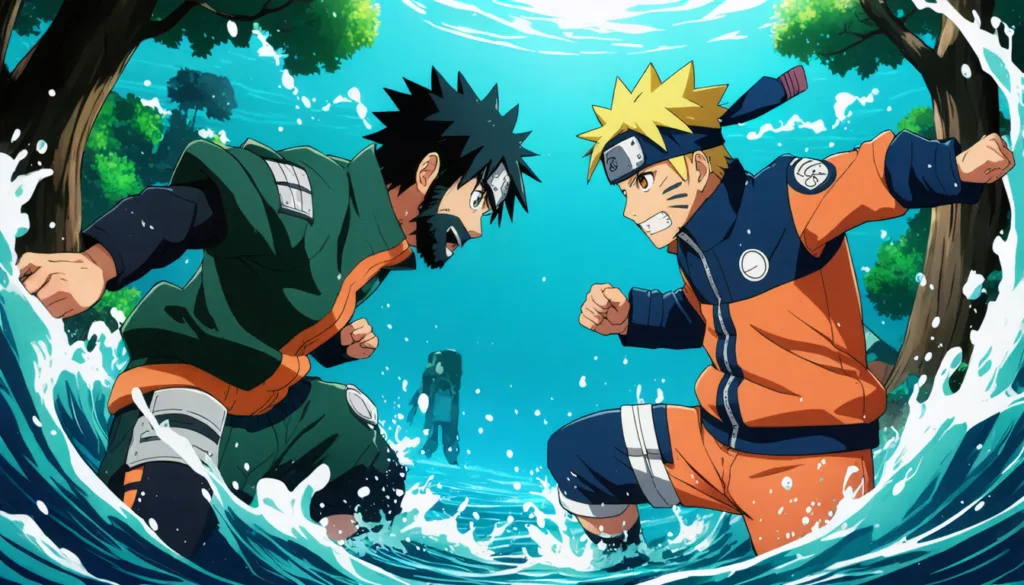
In the complex and rich universe of Naruto, our hero does not always face all his opponents in direct combat. Some powerful and influential enemies in the series have never had the opportunity to face Naruto in a personal duel. This reality highlights the collective and political dimension of ninja conflicts, where allies, circumstances, or strategic sacrifices play a key role. We will explore these nine remarkable opponents that Naruto has never confronted in person, detailing their importance, abilities, and how they were neutralized otherwise. Here’s what we will cover:
- Indirect confrontations and their implications on Naruto’s journey
- The role of other ninjas and allies in the defeat of these enemies
- Strategic, political, or personal reasons explaining the absence of direct duels
- A precise analysis of the unique abilities and stories of these adversaries
- An overview of the consequences for the ninja world and Konoha
In a shonen manga as dense as Naruto, these “unfaced” enemies reveal a lot about the nature of battles and the stakes beyond mere brute force. Let’s dive into this fascinating exploration.
The case of Naruto’s opponents defeated by other ninjas and their indirect impact
Among the emblematic enemies that Naruto has never personally fought, some were eliminated or neutralized by allies, highlighting the importance of collective strategies in ninja battles. A striking example is Kisame Hoshigaki, a feared member of the Akatsuki. His immense chakra reserve and ability to merge with his sword Samehada made him exceptionally difficult to defeat.
During their encounter, it was not Naruto who won but Might Guy, a ninja known for his spectacular physical strength. The opening of the Seventh Gate, a technique requiring an extreme expenditure of energy and causing severe aftereffects, is used to repel Kisame. This intense duel ends radically: Kisame chooses to commit suicide to protect crucial secrets related to the Akatsuki, thus preventing sensitive information from falling into enemy hands.
This type of scenario illustrates that the Naruto universe is not always limited to direct duels between the hero and his enemies. The defeat of certain opponents involves tactical and human factors that go beyond simple confrontation. This dynamic is also seen with other figures such as Kakuzu and Hidan, also members of Akatsuki. These two powerful and feared antagonists encountered Naruto within groups composed notably of his teammates. Their neutralization is not solely Naruto’s doing but a collective action, reflecting the complexity of battles in Konoha.
A distribution of victories helps apprehend Naruto’s progression and maturation, who acts in a universe where victory is often shared and set within a context of intense collaboration with other experienced ninjas. In 2026, this notion remains all the more relevant in understanding shonen stories where heroism often goes hand in hand with teamwork.
| Opponent | Method of defeat | Key participants | Context |
|---|---|---|---|
| Kisame Hoshigaki | Suicide after an intense battle | Might Guy | Protection of Akatsuki secrets |
| Kakuzu | Combination of attacks | Naruto, Kakashi, and the team | Collective combat |
| Hidan | Trap using his own curse | Shikamaru | Strategic neutralization |
This collective approach broadens Naruto’s narrative scope, making battles more realistic and unpredictable than in many other mangas where the final confrontation is almost always a duel centered on the hero.
The legendary enemies Naruto has only seen from afar or never crossed swords with
Other major figures of the manga have never had direct confrontation with Naruto. This is the case of Orochimaru, a complex and controversial character, from the early arcs of the series. Master of forbidden techniques and cruel experimenter, Orochimaru mainly fought other ninjas like the Third Hokage or Sasuke. Despite his role as a primary antagonist, Naruto has never faced him personally.
This trajectory suggests that the Shonen Naruto universe sometimes favors more nuanced solutions than the simple frontal defeat of evil. Orochimaru survives several battles, narrowly escaping destruction, which amplifies his mysterious and unsettling aura. His trajectory shows that power alone is not enough to guarantee a personal victory of Naruto against every enemy, reinforcing strategy and the story surrounding Konoha.
Itachi Uchiha, another emblematic character, confirms this profile. Known for his exceptional talents such as the Mangekyô Sharingan and his ultimate sacrifice for the village, Itachi never officially fought Naruto in a duel, even if tension between them was palpable. His death occurs in a different context and highlights deep political and family stakes, going beyond the simple opposition between heroes and enemies. This enriches the emotional and narrative complexity of the series.
Finally, Kimimaro, a close lieutenant of Orochimaru and bearer of a powerful kekkei genkai, could only be defeated by his own illness, emphasizing the idea that some battles are not won simply with ninjutsu. This perspective deepens our understanding of ninja fights as a struggle against sometimes invisible or uncontrollable forces.
| Opponent | Main ability | Mode of end | Context |
|---|---|---|---|
| Orochimaru | Forbidden techniques and partial immortality | Survival and withdrawal | Conflicts with Hokage and Sasuke |
| Itachi Uchiha | Mangekyô Sharingan, Amaterasu, Genjutsu | Natural death after battle with Sasuke | Internal conflicts in the Uchiha clan |
| Kimimaro | Kekkei Genkai of bone manipulation | Death due to severe illness | Battle against Naruto and allies |
These examples remind us that the notion of victory in Naruto is nuanced and that not all confrontations come down to a direct duel. They also illustrate the richness of the manga’s storytelling compared to other works of the genre.
Confrontations and moral choices that prevent direct clashes with certain enemies
Within this list of opponents not faced by Naruto in person, several cases stem from a more moral or political dynamic than a physical one. Konan, a founding member of Akatsuki, represents a particular opposition. Her sophisticated paper manipulation power, combined with her loyalty to Nagato and Yahiko, makes her an antagonist less focused on direct combat than on building a cause.
The absence of a direct duel with Naruto can be interpreted as a narrative choice underlining the importance of alliances, ideologies, and political reasons in the ninja world. Konan is not defeated by brute force but by a tactical analysis led by other members, notably Naruto, who acts more by influence than confrontation.
Black Zetsu illustrates an even more insidious and abstract type of enemy. As the main narrative lever for Kaguya’s resurrection, his victory is not played out on a classic battlefield. This character operates by manipulation, infiltration, and influence, making a usual “final fight” with Naruto impossible. He embodies the complexity of spiritual and historical stakes that go far beyond the traditional hero-villain fight of shonen manga.
This facet of the story thus presents the Naruto universe as a world where strategy, manipulation, and political battles are as important as spectacular jutsus. This enriches a reading where the hero must act on multiple levels to protect Konoha and the ninja world.
Akatsuki clan enemies never directly beaten by Naruto and their influence in the saga
Akatsuki is undoubtedly the most emblematic enemy organization in the Naruto saga. Among its many powerful members, several have never directly faced Naruto despite their crucial role in the story. Kisame Hoshigaki, Kakuzu, Hidan, Konan, and Black Zetsu are part of this group.
It should be noted that Kakuzu and Hidan, introduced in the same arc, had battles in which Naruto actively participated, but neither was defeated by him alone. Their defeat is part of a collective effort involving notably Kakashi, Shikamaru, and others. This sharing reflects the difficulty of facing these opponents who possess unique techniques, both destructive and complex to counter.
Kisame, with his aquatic style and synergy with Samehada, is a fighter of another caliber, standing out by exceptional endurance. Episode 80 of Naruto Shippuden well illustrates this fight where Might Guy intervenes with all his power.
Konan, for her part, embodies another Akatsuki force, linked to the ideals and secret mechanisms of the group. Her fight against Pain and the use of paper techniques make her a rarefied antagonist, far from classic duels. Her destiny underlines the political complexity of the confrontations.
Finally, Black Zetsu, the entity behind the manipulation of Madara and Obito, opens a new dimension to the saga, illustrating that enemies are not always those seen in duels. Naruto fights not only against shinobi but also against historical and spiritual forces.
Summary of characteristics and non-direct Akatsuki confrontations
| Name | Key abilities | Fights involving Naruto | Victory achieved by |
|---|---|---|---|
| Kisame Hoshigaki | Fusion with Samehada, enormous chakra | Fight against Might Guy | Guy and strategic suicide |
| Kakuzu | Heart recycling and elemental attacks | Team fight | Naruto, Kakashi and team |
| Hidan | Immortality and deadly ritual | Shikamaru’s trap | Shikamaru |
| Konan | Paper manipulation, ranged attacks | No direct confrontation | Tactical combination with Pain |
| Black Zetsu | Manipulation and historical influence | Opposes manipulation, no combat | Spiritual defeat via Naruto and allies |
This organization shows that an opponent’s role in Naruto is not limited to physical combat but extends to political and thematic influence. This feeds a manga where each enemy has a precise function in the progression of the story, often beyond the simple duel.
How Naruto’s narrative complexity makes unfaced enemies key characters of the ninja universe
The fact that Naruto has never personally confronted these nine opponents does not make them any less essential in the story’s evolution. On the contrary, they embody different dimensions of the ninja conflict that perfectly complement the hero’s journey. These enemies often trigger major events that shape both Konoha’s universe and Naruto’s psychology.
For instance, Itachi is essential to understanding the heavy history of the Uchiha clan, which Naruto must take into account in his quest for peace. The battle against Zabuza and Haku, even if Naruto does not come out victorious alone, leads our hero to mature, undergo intense moral trials, and forge his values.
Similarly, Konan and Black Zetsu add deep narrative layers linked to ideals and mythic destinies of shinobi. Their influence, less visible on the battlefield, is nonetheless decisive in the fight against Kaguya’s resurrection and Obito’s plans. These symbolic dimensions make Naruto a richer manga than the simple confrontation between heroes and villains.
Here is a synthetic list of the major impacts of these opponents on the ninja world and Naruto:
- Psychological development of Naruto through lessons learned from indirect enemies
- Evolution of alliances between ninja villages around common enemies
- Fight against threats that are physical, spiritual, and political
- Consolidation of Naruto’s legend through his allies and the collective management of crises
- Highlighting moral complexities and dilemmas within a shonen universe