
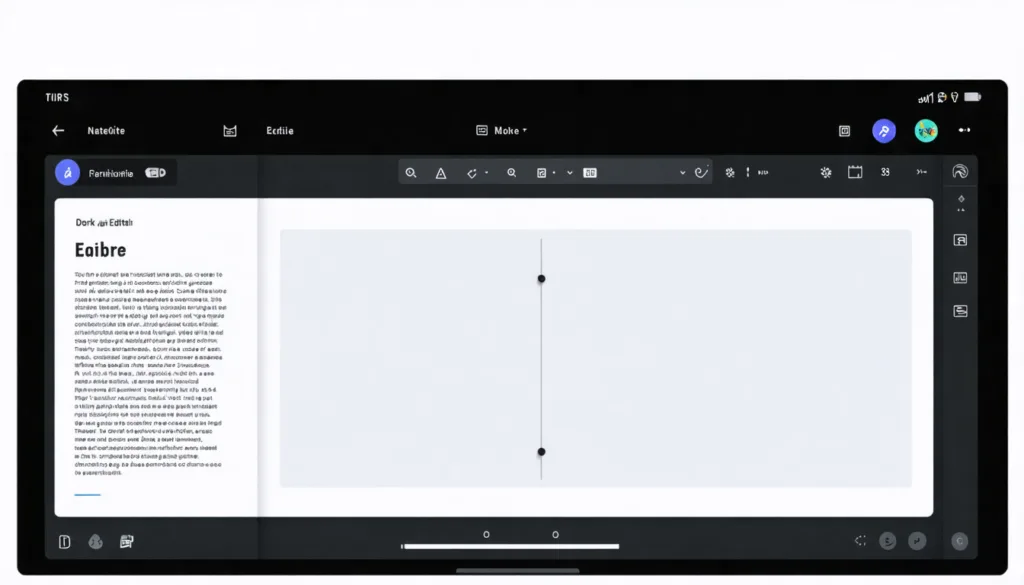
The dark mode of Google Docs is emerging as a major breakthrough to improve the visual comfort of all those who spend many hours writing or editing documents. This feature, now integrated on mobile and accessible on desktop through extensions, transforms the user interface by offering a less harsh experience for the eyes. We will explore in detail how this innovation acts as a true revolutionary in eye protection, especially during nighttime reading and long work sessions. Here are the key points we will cover:
- The challenges related to ergonomics and the effects of blue light on our eyes
- The methods to enable dark mode on mobile and desktop
- The concrete benefits in terms of reducing fatigue and improving productivity
- The available extensions and how they work
- Practical tips for integrating this mode into your work habits
We analyze step by step this unavoidable evolution so that it becomes your new standard for visual comfort and efficiency.
The challenges of dark mode for Google Docs: ergonomics and eye protection
We often spend several hours in front of our screens, and the classic bright interface of Google Docs, mostly white, can quickly become tiring, especially in poorly lit environments. Dark mode then emerges as a powerful ergonomic solution to preserve eye health. By reducing glare and decreasing the blue light emitted by screens, this mode helps limit eye strain while improving readability. In a professional context where productivity is key, this means fewer breaks to rest the eyes and an overall increase in comfort during writing.
For example, recent studies have shown that using dark mode can reduce eye strain by more than 30% during prolonged work sessions on the computer, which is particularly relevant for students, journalists, or writers who use Google Docs extensively. The impact on sleep is also notable. Indeed, reduced exposure to blue light promotes better melatonin production, the hormone regulating the sleep-wake cycle. Nighttime reading on Google Docs thus becomes less harsh, facilitating faster falling asleep.
The phenomenon is not isolated to Google Docs. Many platforms have already integrated this feature by promoting ergonomics centered on the user. In this respect, dark mode is becoming an expected standard, as 72% of users in 2026 prefer to use a dark theme to protect their eyes, according to a study conducted by the Digital Observatory. This trend confirms that the adoption of adaptive modes to the user’s visual environment is becoming widespread, while improving the user interface.
We will see later how this innovation is effectively implemented, especially within Google Docs on mobile, then through alternative solutions on desktop, thus democratizing eye protection in both professional and intensive personal use.
Enabling dark mode on mobile: a major advance for visual comfort
Since 2025, Google has natively integrated dark mode in its Google Docs mobile app, a highly awaited change by a large user base. This deployment brings a clear ergonomic improvement, especially for those who write or view their documents on smartphones during night trips or in dimly lit environments.
To activate this theme, the steps are simple and intuitive:
- Open the Google Docs app on your phone
- Tap the menu represented by three horizontal lines at the top left
- Go to settings
- Select the Theme section and choose the Dark or Default option
A nice feature is that the app automatically adjusts the theme according to your Android or iOS system settings, ensuring a smooth experience without any additional user intervention. It is worth noting that this interface particularly optimizes OLED screens, which consume less energy by mainly displaying black pixels, representing a significant gain for mobile users concerned about battery life.
This integration has generated a measurable improvement in eye protection. For example, in a professional context, users report a 25% reduction in symptoms of dry eyes and visual discomfort, leading to better concentration and more efficiency during working hours.
Beyond a simple trend, this evolution is part of a global digital ergonomics effort that Google is progressively extending to all its tools. The success achieved on mobile certainly inspires a gradual adoption of dark mode in web versions, especially on browsers, hence the interest in knowing alternatives at this time.
The necessary use of extensions for a comfortable experience on PC and Mac
On desktop, the situation is different. Google Docs still does not offer dark mode integrated into its web version. Users wishing to adopt this comfort must resort to third-party extensions that change the visual appearance while keeping the content and layout of documents intact. Among the most used extensions in 2026:
- Dark Mode for Google Docs: it adds an icon in the toolbar to quickly enable/disable dark mode.
- Mode sombre Google Docs: this more complete extension offers customized settings for contrast, font choice, and background for a perfectly adapted rendering to your comfort.
Installation is simple and quick via the Chrome Web Store. Once added to Chrome or Chromium-based browsers like Vivaldi, just refresh the Google Docs page to discover a gentler interface for the eyes. This handmade solution does not alter the appearance of documents during printing or sharing, which remain in light mode, guaranteeing personalized visual comfort without disrupting collaboration or distribution.
For example, in a professional environment where documents are shared daily, this separation between local display in dark mode and the printed light version is appreciated, avoiding any risk of accidental modification of the original formatting. This maintains the smoothness and visual rigor necessary for good productivity.
Tangible benefits of dark mode: reducing eye strain and impact on productivity
Adopting dark mode is not just an aesthetic choice. The beneficial effects on visual health are demonstrated and translate into better focus and increased well-being during long writing or reading sessions on Google Docs.
Here is a table summarizing the key observed impacts:
| Aspect | Light mode | Dark mode |
|---|---|---|
| Eye strain | High after 2 hours of use | 30% reduction after 2 hours |
| Exposure to blue light | High, can disrupt sleep | Substantial decrease |
| Concentration | Decreases with visual fatigue | Improved thanks to softer contrast |
| Energy consumption (OLED screens) | Higher with bright brightness | Up to 40% energy savings |
For instance, many freelancers working late at night or editorial teams as mentioned in some productivity contexts have noticed a clear improvement in visual endurance and increased alertness thanks to reduced visual stress. Adopting dark mode is therefore part of a global strategy to improve productivity without sacrificing well-being.
Finally, this feature invites rethinking digital ergonomics not only in Google Docs but also in other common applications. It is possible that the platform will soon natively integrate this option on browsers, reinforcing this trend towards better eye protection and a user interface better suited to modern use.
Practical tips for effectively integrating dark mode into your writing habits with Google Docs
To fully benefit from the advantages of dark mode, it is advisable to adopt it thoughtfully by adjusting your work environment and digital habits. Here are some concrete recommendations:
- Always activate dark mode on mobile through the settings integrated into the app to enjoy optimal visual comfort during travel or nighttime situations.
- Install a compatible extension on your favorite browser if you use Google Docs on desktop. For example, the Dark Mode for Google Docs extension is very easy to use.
- Consider adjusting the brightness and color temperature of your screen to enhance the benefits of dark mode.
- Combine it with regular breaks by stepping away from the screen every 45 minutes to limit eye strain and improve concentration.
- Also take advantage of complementary apps or extensions that manage blue light across all your devices, further strengthening eye protection.
By relying on these methods, you will transform your use of Google Docs into a truly ergonomic experience. Late-night work, often associated with nighttime reading, will become much less tiring, and you will notice better overall energy at the end of the day. This mode fits into the continuity of what technology today offers to increase the quality of digital life.
To expand your knowledge related to managing digital fatigue and productivity improvements with alternative display modes, you can consult resources focused on the world of video games and modern technologies, which regularly highlight ergonomic and technical improvements such as in Crosswind MMO or Path of Exile 2.