
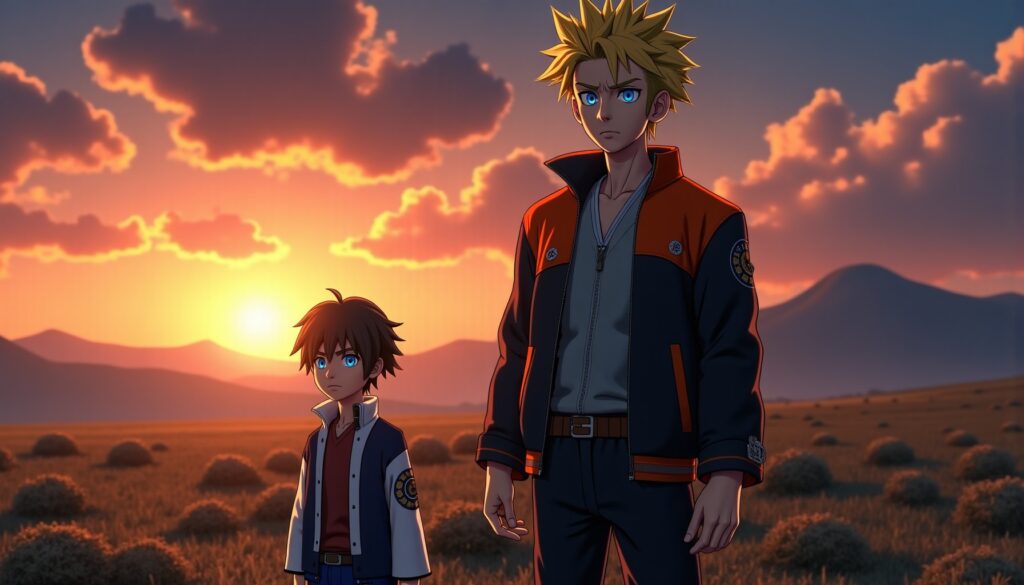
Masashi Kishimoto caused a shockwave by announcing the death of two iconic figures in the Boruto universe, deeply upsetting the manga and anime fan community. This revelation sparks intense excitement and fuels numerous passionate discussions about the consequences for the saga and its legacy. When a story as rich as Boruto reaches such a major turning point, several questions arise:
- Which characters are affected by these deaths and why does their disappearance mark a turning point?
- What narrative and emotional impacts will these losses have on the evolution of the hero Boruto?
- How does author Kishimoto envision the future of the series after such a heavy upheaval?
- What is the cultural and community significance of this announcement in the current manga landscape?
Through this article, we will explore these dimensions in detail, illuminating the reasons behind this bold choice and its repercussions on the rich and complex Boruto universe.
Boruto: the official confirmation of the deaths of two major figures by Masashi Kishimoto and its immediate impact
The revelation by Masashi Kishimoto of the official death of two key characters acts like an earthquake in the fan sphere, shaking the precious legacy left by Naruto. Never before has the Boruto universe experienced such a sudden and radical upheaval. The announcement, widely shared on social media, amplified an atmosphere of worry and anticipation among shōnen fans and experts.
Let us analyze more precisely the details of this confirmation. The first character concerned is none other than Naruto Uzumaki, emblematic hero and pillar of the ninja world. His disappearance represents an immeasurable loss, comparable to the end of an era. Kishimoto followed a narrative logic where legendary heroes give way to new heirs, but the shock remains intense.
The second probable victim mentioned, by deduction and debates, would be Sasuke Uchiha. A complex and ambivalent figure, Sasuke also symbolizes an entire aspect of shōnen, and his death suggests a profound transformation of alliances and antagonisms within Boruto. Fans are still debating the exact implications, as the character’s journey has shaped a large part of the saga. This deliberate removal of pillars offers a powerful dramatic dimension, renewing the stakes of the story.
The shock caused goes beyond the plot: it is about embracing a narrative renewal that breaks away from usual comforts. For example, some commentators evoke an “ultimate trial” for Boruto, left to his own devices in a harsher world where passing down values becomes a crucial challenge. This situation is both a tribute and a narrative boldness typical of Kishimoto.
We can group the immediate impacts into a list of key effects:
- A symbolic upheaval for the community, questioning the sustainability of the Naruto-Boruto universe.
- An important narrative turning point, elevating the protagonist Boruto into a darker and more mature trajectory.
- An intensification of suspense and dramatic stakes with the disappearance of influential mentors.
- Lively reactions animating forums, specialty stores, and networks, between nostalgia and excitement.
This narrative earthquake perfectly illustrates how Boruto: Two Blue Vortex continues to evolve, deepening its story in a more intense and unpredictable vein. To discover more details about the manga phenomenon and fan reactions, we invite you to consult our recent analyses, notably on current trends in popular animated universes as you can see in the mythical manga sagas.
The deep narrative stakes linked to the death of iconic figures in Boruto
The impact of the death of Naruto and probably Sasuke will reach an unprecedented intensity, radically changing the scenario and atmosphere of Boruto. First, we must understand that these characters played the role of mentors, protectors, and bearers of the ancient ninja values. Their sudden death destabilizes the protagonist and opens many questions detailed in this paragraph.
The loss of landmarks: an initiatory passage for Boruto
The disappearance of his historical allies exposes Boruto to a loneliness reminiscent of his father’s youth. This transition from a protected adolescence to adult responsibility marked by loss and sacrifice is an essential rite of passage. Boruto must now embody the hope of the new generation, which intensifies the initiatory significance of his journey.
This evolution can be compared to key moments in other shōnen where the hero loses a guide to become stronger, for example in the major phases of the Avatar universe, where characters must face deep losses before fully grasping their power.
Repercussions on rivalries and alliance dynamics
Without Naruto and Sasuke, coalitions and conflicts within the ninja world are reconfigured. This transformation opens the way to unprecedented tensions between old and new protagonists, as well as with antagonists such as Jura, a mystically formidable opponent who will aggravate the trials.
Alliances become more fragile and power struggles more unpredictable, establishing a conquering and almost political atmosphere where leadership is contested at every moment, as seen in some well-known arcs of today’s mangas.
Mature themes and an unprecedented dramatic atmosphere
This narrative evolution pushes Boruto toward a mature tone where loss, responsibility, and the weight of fate take a predominant place. We are far from simple stories of fights for justice: the shōnen enters a phase where the battle is also internal and moral dilemmas are at the heart of the confrontations.
For example, Boruto’s character will become a symbol of resilience in the face of adversity, where personal growth intertwines with the legacy of a world in transition.
Masashi Kishimoto’s boldness to reinvent his legacy in Boruto
Masashi Kishimoto adopts a creative stance marked by renewal, refusing stagnation that would weigh down his work. This decision to remove historical pillars fits a clear desire to redefine the shōnen of his generation and the next.
In various interviews, he has emphasized the importance of taking risks and accepting evolution to maintain narrative vitality. The death of Naruto and potentially Sasuke becomes a metaphor for this transformation, a necessary passage to evoke new horizons and themes.
To better understand this approach, one can observe the growing popularity of bolder arcs that defy expectations, propelling Boruto as a model of transition in modern shōnen. These choices also help avoid repetition of past exploits and strengthen surprise and emotion.
We thus observe a symbolic and initiatory dimension in the transmission of values, which helps deeply engage the reader in this world in full mutation. The message is clear: the new breath is forged in pain, and no legacy is established without sacrifices.
To stay informed of the latest trends in narration and evolution of manga universes, we also recommend following news and analyses on gaming subscriptions and manga culture, where the debate around Boruto and its artistic choices fuels rich exchanges.
Perspectives for Boruto after the death of his mentors: challenges and responsibilities
With the disappearance of Naruto and probably Sasuke, Boruto finds himself at the heart of a context where comfort zones have vanished. These changes impose a considerable burden linked to the duty to continue the legacy while forging his own path. The series thus promises a deepening of themes related to maturity and increased responsibilities.
Leadership put to the test
Boruto must now fight against the weight of expectations while facing adversaries of rare strategic complexity. The character will have to rely on refined strategies, a more rational use of chakra, and an enhanced understanding of the challenges ahead, notably against figures like Jura.
This trial is analogous to those faced by other shōnen heroes, confronted with the heroic task of surpassing their mentors to establish a new era.
Exacerbated rivalries between generations
Tensions crystallize between the old ninjas and the new generation, with Boruto becoming the standard-bearer. This intergenerational conflict will revolve around power, respect for traditions, and a reworking of old values. The story thus gains a political complexity sustained by intense dramatic intrigues.
The growing threat of Jura: an enemy both elusive and perilous
In the post-mortem context, Jura embodies a new threat that further destabilizes this already fragile world. This mysterious character marks a new era of darker antagonists, symbolizing the oppressive shadow over the future of ninjas and the ambitions ahead.
| Element | Description | Consequences for Boruto |
|---|---|---|
| Death of Naruto | Loss of the main mentor and historical leader | Forces Boruto to assume the role of leader and role model |
| Probable disappearance of Sasuke | End of a crucial pillar in the power dynamics | Creates a strategic and moral void for Boruto |
| Rise of Jura | Unpredictable and powerful adversary | Intensification of dangers and upcoming conflicts |
The cultural and community influence of the death of two mythical characters in the Boruto universe
The shock of these major deaths goes far beyond the boundaries of the simple plot. It is a cultural phenomenon that resonates deeply in the geek community and within contemporary Japanese culture. Masashi Kishimoto’s legacy is manifested here in the ability to arouse collective emotions:
- A generational renewal reminiscent of great traditional narrative cycles.
- A reactivation of fan passion through sharing analyses, fanarts, and intense discussions.
- An impact on specialty commerce with increased sales and greater visibility of Boruto-related products.
- A strong link between manga culture and the academic sphere, fueling debates on narration and symbolism.
For example, the phenomenon of connection between the symbolic death of figures and creative rebirth can be observed similarly in other universes such as cinema, comparable to the anticipation around projects like Zootopia 2 or the emergence of mythical sagas passionately followed over the years.
The announcement of these deaths structuring the Boruto universe propels the series into a new phase, more adult and bold, where the stakes go beyond the simple individual quest to embrace a collective vision of transmission and evolution.