
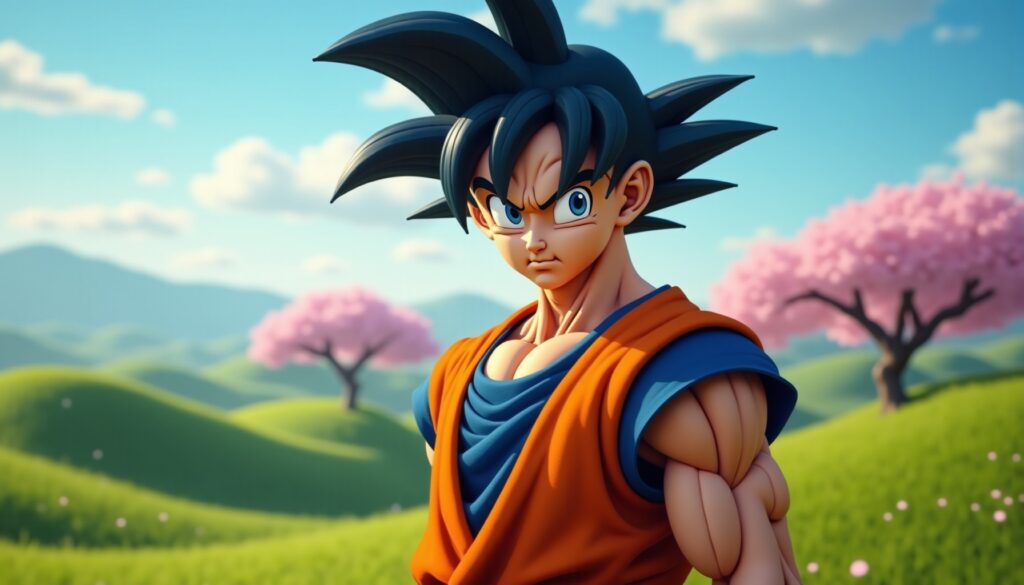
Dragon Ball is much more than just a manga or anime; it is a true mythical saga that, for over 40 years, has fascinated generations around the world. This epic centered on Goku, a young Saiyan with immense strength, takes us on an exhilarating quest surrounding the famous Dragon Balls, those crystal spheres capable of granting wishes. Through a rich manga universe filled with unforgettable characters, the work brilliantly combines epic battles, spectacular transformations, and moments of martial arts that have shaped the cult anime we know today. In this article, we will explore in detail:
- The origins and success of the original Dragon Ball
- The evolution of sagas over different eras, from DBZ to Dragon Ball Super
- The characters and their development at the core of this franchise
- The reasons why Dragon Ball remains essential in 2026
- A critical look at its strengths, weaknesses, and the global impact of the saga
Let’s dive together into this captivating universe, rich with memorable battles and a story that continues to inspire and amaze.
The legendary foundations of Dragon Ball: a globally successful shōnen adventure
The birth of Dragon Ball in 1984 within the pages of Weekly Shōnen Jump, penned by Akira Toriyama, marked a decisive turning point for the shōnen genre. From its early chapters, we discover Goku, a child with a monkey tail and superhuman strength, who embarks on a naive but passionate quest to find the seven Dragon Balls. This introduction lays the foundation for an adventure where humor and martial arts battles intertwine.
The success of this first series rests on several essential elements, including:
- A rich universe where the quest for Dragon Balls is the main driving force
- Endearing characters, such as Bulma, the eccentric genius, and Master Roshi, the funny and wise mentor
- Varied arcs blending sports challenges and fights against increasingly formidable opponents
- A theme close to the mythical “Journey to the West,” adapted to a modern context
The 42 volumes composing the original series received an enthusiastic reception, selling millions of copies and attracting an international readership. Each arc, whether it’s the formidable Demon King Piccolo or the famous Martial Arts Tournaments, maintains a perfect balance between dramatic tension and comedic moments. For example, during the 21st tournament, the confrontation between Goku and Bacterian highlights the incredible precision of the combat choreography that Toriyama gradually develops. Beyond the simple fight, techniques like the Spirit Bomb have become iconic references.
This golden period illustrates how Dragon Ball skillfully combined epic battles with a humorous and accessible universe, thus laying the foundations of a narrative style that still influences contemporary cult adventure shōnen today. The complete French edition by Glénat allows new generations to appreciate these classics, which remain essential to understanding the saga’s significance.
Dragon Ball Z: toward the universe of Saiyans and interstellar battles
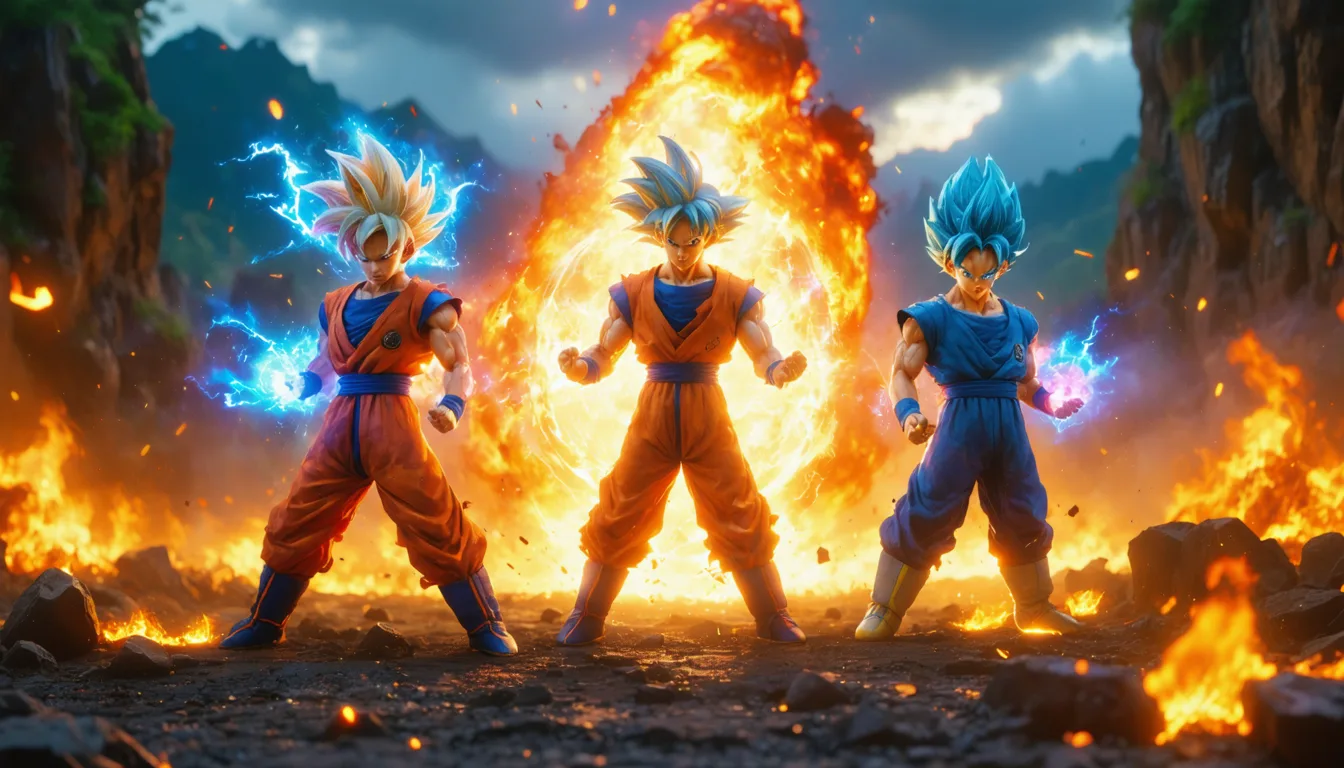
The transition to Dragon Ball Z expanded the saga’s scope, taking fans into an increasingly global and galactic universe. The stakes grow in intensity and transformations reach new heights, giving birth to icons like the Super Saiyan, instantly recognized by his golden hair and powerful aura. The series opens with the arrival of Raditz, Goku’s brother, revealing his extraterrestrial origins and triggering a sequence of dramatic events.
The major arcs of this saga illustrate the mythic rise in power of the heroes:
- The Saiyan arc, establishing fierce rivalries with Vegeta, the proud and ambitious prince, and Nappa
- The legendary battle on planet Namek against Frieza, finally revealing the power of the Super Saiyan
- The Android and Cell arcs, complex and strategic, introducing characters like Trunks and fusion as a new combat mechanic
- The Majin Buu saga, where magic and combat rage in an explosive finale
This shift toward cosmic threats re-established Dragon Ball as a leader in the action manga world, an influence visible in many modern must-see shōnen. For instance, the Tournament of Power in Dragon Ball Super pays homage to these massive multiverse battles that had already begun with Frieza or Cell. Influences are also noticeable in works like One Piece, whose season 2 explores a similar adventurous dimension in 2026.
The commercial success is colossal: Dragon Ball Z sold hundreds of millions of copies and cemented Goku’s image as a universal hero. Fans were captivated by battles blending strategy, power, and the will to unite forces to protect Earth in perfect harmony. This saga also gives Vegeta the opportunity to evolve from antagonist to complex hero, a journey that has strongly shaped how supporting characters are treated in the genre.
Symbolic transformations and the role of characters in the Dragon Ball universe
At the heart of the Dragon Ball saga, the characters function not only as iconic figures but also as symbols carrying universal values. Goku, for instance, is the hero embodying the purity of combat and the will to always improve. His evolution, from the curious and naive young boy to the man mastering Ultra Instinct, illustrates the eternal quest for self-improvement.
Several characters bring a rich narrative dimension:
- Vegeta, the Saiyan prince, whose trajectory from conqueror to protector of Earth is one of the most moving in the manga
- Gohan, Goku’s son, holder of the greatest potential within the Saiyan family, with heroic moments like his battle against Cell
- Piccolo, former enemy turned mentor, exemplifying redemption
- Female figures such as Bulma, intelligent and courageous, who play a crucial role in the scientific and human development of the saga
Transformations are also an integral part of this dynamic. Each shift from one state to another is experienced as both a moral and physical victory. For example, Super Saiyan Blue represents the fusion between divine power and relentless training, reflecting a harmony between raw strength and inner mastery.
A summary table outlines the main key transformations that punctuate the story:
| Transformation | Bearer | Main Characteristics | Narrative Impact |
|---|---|---|---|
| Super Saiyan | Goku, Vegeta | Golden hair, massive power increase | Legendary symbol, trigger for mythical battles |
| Super Saiyan 2 | Gohan, Goku | Static electricity, enhanced power | Key moment against Cell, hero’s surpassing |
| Super Saiyan Blue | Goku, Vegeta | Divine blue aura, balanced power | Integration of the divine in terrestrial combat |
| Ultra Instinct | Goku | Total autonomy of movements, extreme speed | Pinnacle of mastery, ultimate surpassing |
| Golden Oozaru | Vegeta | Giant golden ape form | Primal symbol and warrior rage |
These metamorphoses strengthen interest around the stakes and fuel fans’ passion for cult anime that know how to exploit these moments with spectacular intensity, blending emotion and adrenaline.
Dragon Ball today: a franchise that continues to innovate and captivate audiences
Despite the death of Akira Toriyama in March 2024, the Dragon Ball saga continues to shine in 2026, adapting to new generations without losing its essence. Current editions, especially in Full Color format by Glénat, attract both new readers and longtime fans. The universe is renewed with the Dragon Ball Super series, which introduces gods of destruction and the concept of parallel universes, establishing a new cosmic framework.
Recent arcs like Granolah or Super Heroes, although still ongoing, show a desire to explore new themes and threats. The anime Dragon Ball Daïma, released in 2024 to commemorate the 40th anniversary, brings fresh breath by exploring more mystical and occult aspects, while retaining the humor and dynamic of the original series.
This longevity relies on:
- A narrative capable of reinventing its codes without betraying its roots
- A constant love from fans worldwide, nurtured by events and exhibitions such as those in Paris
- A major influence on pop culture and video games, with successful franchises drawn from this universe
- An ability to inspire tomorrow’s creators and geeks
Moreover, Dragon Ball embodies a cultural monument that democratized manga in Europe, propelling Japanese animation toward global success. Among the must-see works of its genre, it shares this place alongside One Piece and other adventure shōnen that captivate audiences in 2026.
Critical perspective on Dragon Ball: immense success with persistent challenges
Analyzing the entire saga, it is clear why Dragon Ball remains a reference in the manga universe. Its richness lies in the simplicity of universal themes like friendship, rivalry, constant self-improvement, and the quest for family values. The fight choreography has remained a standard, with techniques like the Kamehameha becoming cult classics worldwide.
Additionally, the anime series has managed to impose its legendary openings and an engaging soundtrack that still accompany fans today. The addictive pace of weekly episodes in Weekly Shōnen Jump also forged exceptional loyalty.
However, certain challenges have affected critical perception:
- The regular presence of fillers in animated adaptations, such as the Garlic Jr. arc, which elongate the narration without serving the main story
- The uneven treatment of some characters, notably Gohan, whose potential was underexploited after Cell Games
- Chronological and narrative divergences between non-canonical Dragon Ball GT and Dragon Ball Super, sparking debates among purists
- A graphic style sometimes deemed caricatural and difficult for some new readers to grasp
Despite these limitations, the franchise has evolved and won over new audiences, perpetuating a legacy that still influences global pop culture. Dragon Ball has thus become a bridge between past and present, between generations of fans, who continue to unite around legendary characters like Goku and Vegeta.